
Pork rinds can be an occasional snack within a varied eating pattern, but “low carb” does not answer every nutrition question. The exact product, portion, sodium, saturated fat and the foods it replaces all matter. A bag of pork rinds is not automatically a complete meal or a weight-loss food.
If you enjoy the crunch, start with the actual package rather than a general verdict that all pork rinds are healthy or unhealthy. The same category includes different cuts, seasonings and labels, and an online product panel may differ from the bag you buy.
What are pork rinds, pork skins and chicharrones?
The names often refer to fried pork-skin snacks, but recipes and uses vary. A packaged snack is different from a prepared dish containing pork skin and other ingredients. Ask which food is being discussed before comparing nutrition figures.
The manufacturer pages reviewed here describe Golden Flake Old Fashioned Original Fried Pork Skins and Golden Flake Curly Q’s Original, sold by Utz. Their ingredient lists include fried pork skins and seasonings. These two named products are examples, not a reference for every chicharrón recipe or every pork-rind brand. Original product, Curly Q’s product.
If pork avoidance is part of your dietary, religious or ethical needs, the product name is relevant from the start. A carbohydrate count does not answer whether a food fits those needs.
What do the two online panels show?
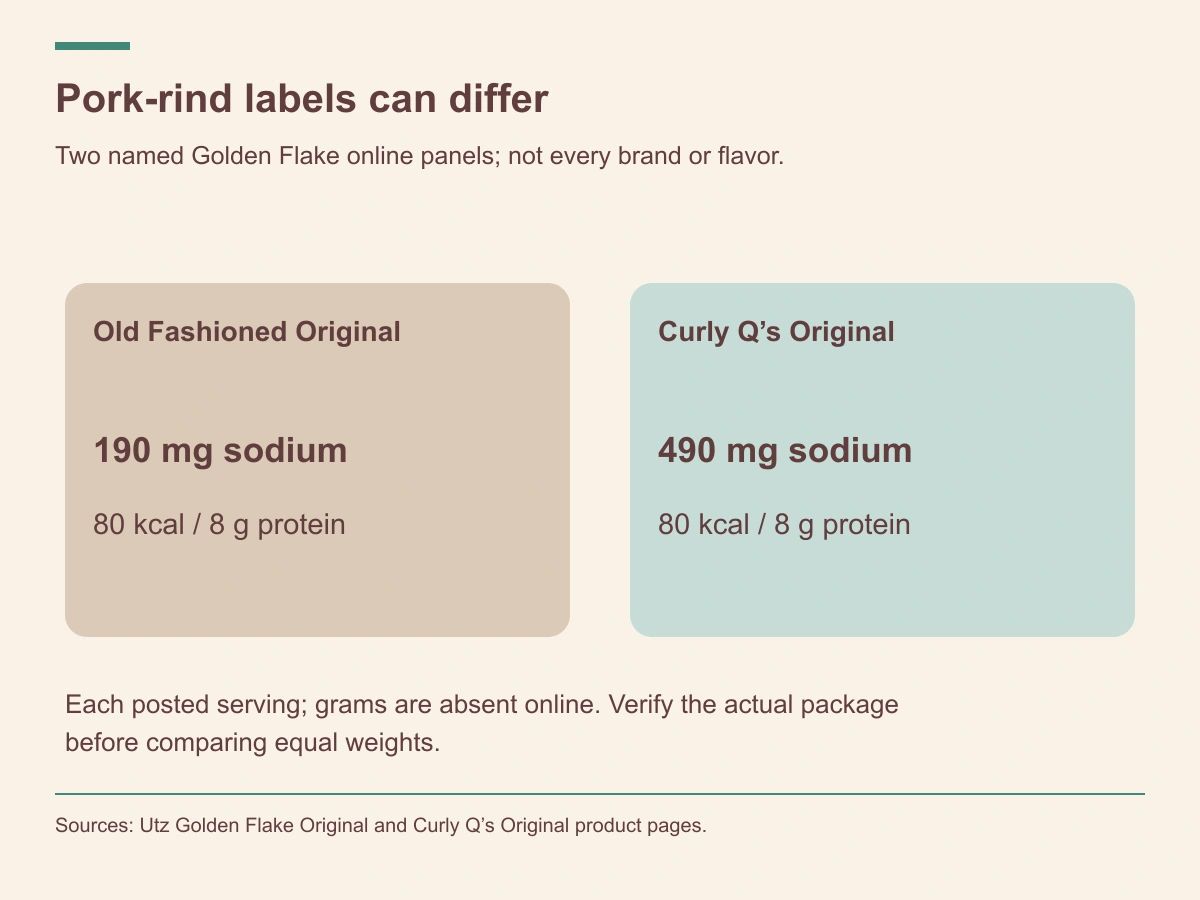
The following table transcribes selected nutrient amounts per each manufacturer’s posted serving. The captured pages did not display serving grams, so this is not an equal-weight comparison. Verify the complete current label on the actual bag before using the values for your portion.
| Posted nutrient | Golden Flake Old Fashioned Original | Golden Flake Curly Q’s Original |
|---|---|---|
| Calories | 80 | 80 |
| Total fat | 6 g | 6 g |
| Saturated fat | 2 g | 2 g |
| Sodium | 190 mg | 490 mg |
| Total carbohydrate | 0 g | 0 g |
| Protein | 8 g | 8 g |
Manufacturer Original panel, manufacturer Curly Q’s panel.
The sodium figures differ even though several other posted amounts match. That is a reason to inspect the particular product rather than transferring a number from one flavor to another. It is not proof that the servings have identical weights or that a different brand has the same values.
Blank fiber and sugar fields on the captured pages should not be treated as a complete set of verified nutrient values. Missing information is a reason to consult the current package, not to fill in an assumed number.
What does a zero-carbohydrate claim leave out?
The reviewed panels list zero grams of total carbohydrate per posted serving. That may be relevant to someone tracking carbohydrate under a clinical or nutrition plan, but it does not erase the other nutrients or the portion question.
FDA’s label guide encourages considering calories and nutrients together, including sodium, saturated fat and added sugars. It also distinguishes a label serving from the amount you choose to eat. FDA label guidance.
If you buy pork rinds because a front-of-package claim fits one goal, turn the bag over and look at the rest. Include the serving weight, servings per container and the amounts relevant to your circumstances. The ingredient list and nutrient panel answer different questions, so read both.
Neither “keto” nor “low carb” guarantees a weight-loss result. Those descriptions cannot establish a personal calorie need, a complete diet or suitability for a medical condition. A food should be assessed within the plan you actually follow.
Portion size changes the calculation
A serving is the manufacturer’s reference amount. A portion is what you eat. NIDDK explains that consuming more than one serving increases the nutrients and calories accordingly. Portion guidance.
If your current package matches the posted 80-calorie serving, two such servings would supply 160 calories. For the two sodium examples, doubling would mean 380 or 980 milligrams respectively. That is arithmetic under stated assumptions, not a claim about an unmeasured handful or the whole bag.
Look at the current bag’s serving weight before estimating by pieces. Pieces differ in size and shape, and breaking a large piece creates more pieces without changing the amount of food. A bowl or measured portion can help make the eating occasion more intentional if eating directly from the bag leads to uncertainty.
The purpose of portion awareness is to understand the food, not to make every snack stressful. A simple routine that works in ordinary life is more useful than pretending each handful has an exact online calorie count.

Sodium and saturated fat deserve attention
FDA identifies sodium and saturated fat among nutrients people generally need to limit. FDA nutrient explanation. Your individual advice may differ depending on medical circumstances, so use the care plan you have been given.
If you are watching sodium, compare the actual labels at the same serving weight when possible. Include other foods in the eating occasion, such as dips, cheese, sauces or a prepared meal. Changing the snack alone does not describe the whole day’s sodium intake.
Avoid assuming that “original,” “plain” or a mild flavor means little sodium. The two reviewed Original-named products already illustrate why names are insufficient. A current label is more useful than relying on a category reputation.
Similarly, a low-carbohydrate food can still contain saturated fat. Review the amount in your portion and the broader pattern rather than treating one nutrient claim as a universal health clearance.
Does the protein amount make pork rinds a meal?
A protein amount on a snack label does not answer whether a meal is adequate or varied. A meal also needs to fit your nutrition needs, appetite, preferences and medical circumstances. Do not rely on one headline number to evaluate the whole plate.
Our balanced-meals guide discusses assembling meals from several suitable foods. The protein breakfast article and protein-shake meal guide address related questions about combining convenient foods into a practical eating occasion.
If pork rinds routinely replace lunch because food is difficult to prepare or your appetite is low, discuss that pattern. The important issue may be access to meals or a symptom that interferes with eating, rather than whether this particular snack is allowed.
How can I compare another crunchy snack?
Compare the exact products and intended use. A snack eaten by itself, a topping sprinkled over a dish and a large portion eaten during a long drive are different situations. A fair comparison should include a realistic portion and the nutrients relevant to you.
| Comparison question | What to check |
|---|---|
| Am I comparing equal weights? | Serving grams, not just the number of pieces |
| How much will I actually eat? | A usual portion and servings per container |
| Which nutrients matter to my plan? | Calories, sodium, saturated fat and any other individual priorities |
| What accompanies it? | Dips, sauces, drinks and the complete meal |
| Does it fit my dietary needs? | Ingredients, allergies and restrictions |
You do not need to choose the product with the lowest number in every column. Decide which tradeoffs fit your needs and whether the snack is enjoyable and practical. Comparing a few foods you actually eat is more useful than collecting a ranking of unfamiliar “healthy snacks.”
Our peanut butter and jelly guide offers another example of why the finished food and portion matter. The fruit portions article discusses fruit choices without promising a fat-burning effect.
What about dips and using pork rinds in recipes?
Dips and recipe additions have their own portions. If you use pork rinds as a coating or topping, describe the amount added and the other ingredients in the finished dish. The packaged snack label cannot supply a nutrient total for a completely different recipe.
A useful home comparison might examine one usual recipe with two different topping amounts while keeping the rest similar. That can reveal which adjustment is practical. Changing several ingredients at once makes it harder to understand what actually changed.
Check the instructions and ingredients of the foods you use. A snack’s pork ingredient does not identify every allergen or dietary issue in a dip, coating or prepared dish. Ask the manufacturer or preparer when an important ingredient is unclear.

Pork rinds during medication-based weight management
There is no required pork-rind snack for semaglutide or tirzepatide. A low-carbohydrate claim does not establish that a food will improve a medication’s effect or be easier to tolerate for everyone.
If appetite or digestive symptoms change, discuss the foods and amounts you can manage. Our semaglutide and protein guide helps organize intake and function questions. Persistent poor intake or vomiting should not be answered only by finding another snack.
The CoreAge Rx tirzepatide page describes the service for adults exploring care. Eligibility and the exact prescription require consultation. A snack choice by itself does not identify a need for medicine or predict treatment results.
Frequently asked questions
Are pork rinds good for weight loss because they have no carbs?
That claim leaves out portions, energy intake and the rest of the diet. The reviewed zero-carbohydrate panels do not establish a fat-loss effect. Use the actual label to understand the food and consider how it fits your broader pattern instead of treating it as a special weight-loss ingredient.
Are all pork-rind brands similar in sodium?
No universal value follows from this review. The two named online panels show different sodium amounts per their posted servings. Compare current package labels at equivalent weights when possible, and do not transfer one brand or flavor’s figures to another.
Can I eat the whole bag if it fits a low-carb diet?
The whole bag may contain several servings. Check the container information and calculate the amount you actually eat. A carbohydrate goal does not erase sodium, saturated fat or overall nutrition needs, and a label serving is not a personal portion recommendation.
Must I stop eating them entirely?
A general article cannot set a personal ban or clearance. Consider your medical advice, dietary needs, usual portion and how often the snack fits your routine. If you need an individualized plan, a registered dietitian or clinician can help assess the whole pattern rather than making one food responsible for every health outcome.
Educational information for adults; individual treatment decisions require a qualified clinician. Sources reviewed October 3, 2026. Original AI-generated article images depict fictional people and objects, not patient outcomes. Other editorial images are illustrative. Graphics summarize the cited sources.