
Diarrhea is a recognized Ozempic side effect, particularly relevant when reviewing the start of treatment or a dose increase. It should still be assessed in context: an infection, another medicine, or a separate digestive condition can occur during semaglutide treatment too.
The practical priorities are to judge severity, replace lost fluids appropriately, and contact the care team when symptoms persist or interfere with eating and drinking. Diarrhea does not show that the medicine is working better, and a fixed promise about how many days it will last is not supported by the product label.
How common is diarrhea with Ozempic?
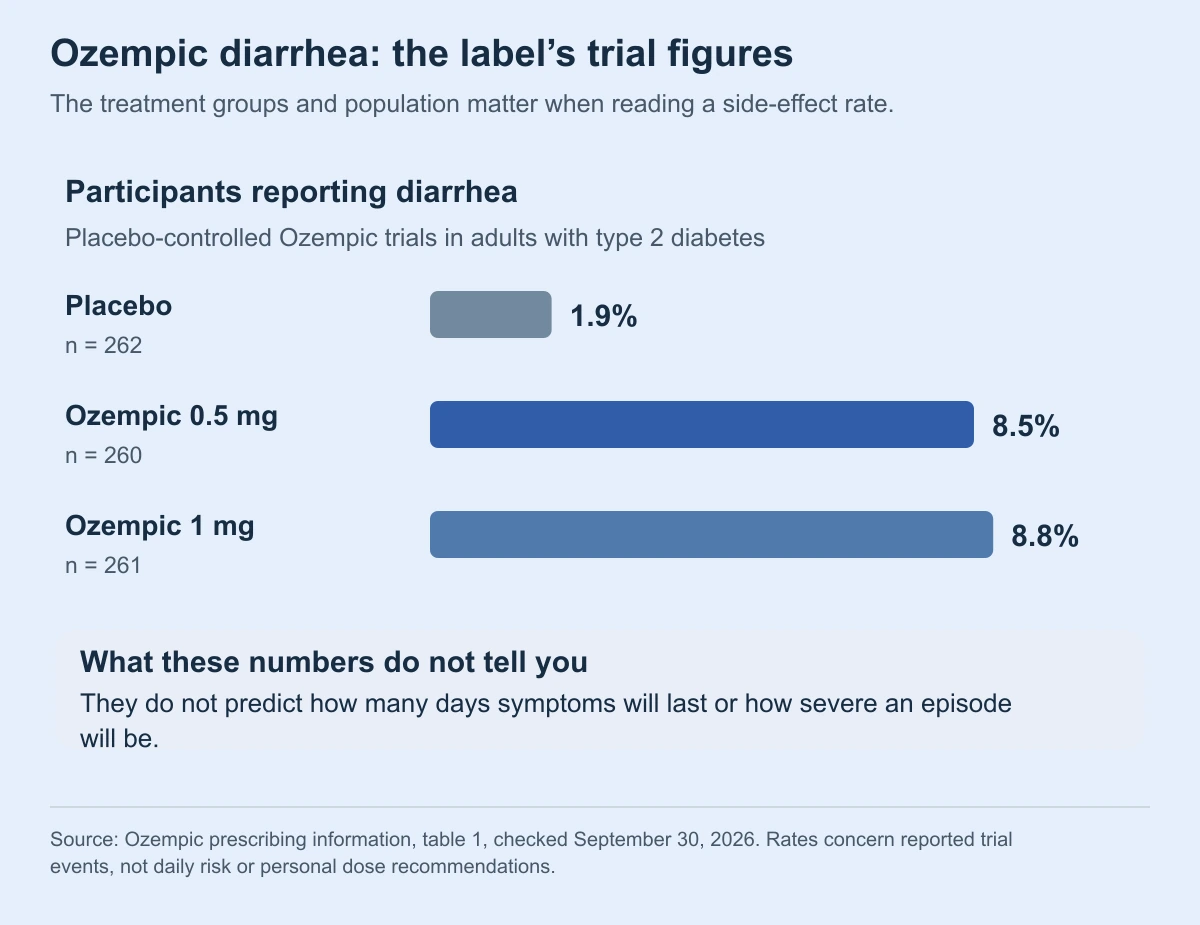
The current Ozempic label reports diarrhea in its pool of placebo-controlled trials involving adults with type 2 diabetes. The figures are specific to these groups and should not be replaced with Wegovy or tirzepatide percentages.
| Trial group | Participants | Reported diarrhea |
|---|---|---|
| Placebo | 262 | 1.9% |
| Ozempic 0.5 mg | 260 | 8.5% |
| Ozempic 1 mg | 261 | 8.8% |
Source: Ozempic prescribing information, table 1. The percentages describe participants reporting an event during the trials. They are not a daily probability, a prediction of symptom duration, or a personalized dose recommendation.
The label also says most reports of nausea, vomiting, and diarrhea occurred during dose escalation. That makes a recent change useful information for the clinician. It does not make every episode after an increase harmless or prove that an episode has no other cause.
Why can semaglutide cause diarrhea if it slows stomach emptying?
Semaglutide activates the GLP-1 receptor and affects glucose regulation, appetite, and food intake. It also delays gastric emptying. Movement from the stomach is one part of digestion; it does not describe every aspect of bowel function or establish that constipation is the only possible effect.
Both diarrhea and constipation are reported adverse reactions. The label identifies those events without providing a single explanation for every person’s episode. Avoid treating a social-media account of “food moving too slowly” as a complete diagnosis. Ozempic label.
Our semaglutide side-effect guide puts the different effects into context. A careful review considers symptoms, dose changes, food tolerance, other medicines, and possible unrelated causes together.
How long does Ozempic diarrhea last?
There is no universal duration established in the prescribing information. An individual episode lasting a short time and improving is different from diarrhea that returns after every injection or continues between weekly doses.
Keep two timelines clear: when this episode started and how the pattern has changed over the weeks of treatment. Trial observations during escalation do not tell you that a particular episode must end after two days, a weekend, or a fixed number of injections.
NIDDK advises adults to contact a doctor right away for diarrhea lasting more than two days, six or more loose stools per day, high fever, or other concerning features. Seek help sooner for dehydration or severe symptoms. The two-day point is a contact threshold, not an instruction to wait while symptoms worsen. NIDDK diarrhea symptoms.
Can diarrhea start after a year on Ozempic?
New diarrhea after a year of treatment should not automatically be attributed to Ozempic. Diarrhea is a recognized adverse reaction, and the label reports that most nausea, vomiting and diarrhea events in the studied groups occurred during dose escalation. That observation does not rule out later symptoms or establish a cause in an individual.
Tell the clinician when the change began, whether the dose or another medicine changed, and whether there has been an infection, travel, a new supplement or another exposure. NIDDK describes several medication-related, infectious and digestive causes. Persistent or concerning symptoms need assessment even after a long period of stable treatment; severe pain, dehydration, repeated vomiting, blood or black stools require prompt attention. Follow the care plan rather than independently holding, restarting or changing glucose treatment.
Sources: Ozempic prescribing information and NIDDK diarrhea symptoms and causes.
Which symptoms need urgent or prompt care?
Seek prompt assessment for dehydration signs, blood or black tarry stool, severe abdominal or rectal pain, high fever, or frequent or persistent diarrhea. Inability to keep fluids down, marked dizziness, fainting, very little urination, or substantial weakness can make the situation more urgent.
Ozempic labeling warns about kidney injury from fluid loss associated with nausea, vomiting, or diarrhea. It also identifies pancreatitis as a serious concern. Severe, persistent abdominal pain, which may radiate to the back and may occur with or without vomiting, needs urgent medical assessment. Ozempic prescribing information.
Our Ozempic abdominal-pain guide explains why substantial pain should not be assumed to be an ordinary digestive effect. A medicine adjustment or over-the-counter diarrhea product should not delay that assessment.
What can you do about fluid loss?
Fluid replacement matters, but the right type and amount can depend on severity and the person’s health. NIDDK discusses replacing fluids and electrolytes, including oral rehydration solutions in appropriate situations. People with certain conditions, such as kidney disease or diabetes, may need individualized guidance. NIDDK diarrhea treatment.
Avoid assuming that plain water, a sports drink, or a coconut-water bottle has an interchangeable composition. Our coconut-water guide explains its sugar and potassium questions and why a retail electrolyte claim does not establish a medical rehydration treatment.
Tell the clinician if drinking is difficult, vomiting occurs too, or you have a fluid restriction. Do not repeatedly force large amounts while ignoring ongoing symptoms or an existing kidney or heart-related plan.

What should you eat while symptoms settle?
Eat according to tolerance and ask for help if the symptoms prevent adequate intake. NIDDK generally advises returning to a normal diet as appetite returns, rather than assuming that an extended fast or a highly restricted menu is required for acute diarrhea.
Some foods or drinks can worsen symptoms for an individual, including high-sugar drinks, sugar alcohols, or foods that are difficult to tolerate during the episode. Record what seems relevant without concluding that every familiar food needs to be eliminated permanently. NIDDK diarrhea treatment.
Our GLP-1 food guide discusses appetite, tolerability, and nutrient intake. If a few crackers or small portions are all you can manage for a prolonged period, that limitation is information for the care team, rather than proof that the treatment diet is working well.
Can you take Imodium or another antidiarrheal medicine?
NIDDK describes medicines such as loperamide and bismuth subsalicylate for some adults with acute diarrhea. It also advises against using over-the-counter diarrhea medicines in situations such as bloody stool or fever without medical guidance. NIDDK treatment guidance.
Ask the pharmacist or clinician whether a particular product fits your symptoms, medical history, and other medicines. Follow its label if advised to use it. Do not use an antidiarrheal to avoid reporting a persistent problem or as an automatic preventive routine before each injection.
A medicine that reduces stool frequency does not establish the cause of the diarrhea or correct ongoing dehydration. If the symptoms are severe, recurrent, or accompanied by concerning signs, evaluation comes first.
Will probiotics or a “GLP-1 support” supplement fix it?
Do not assume that they will. NIDDK says evidence for probiotics to treat or prevent diarrhea is still being studied and is not considered sufficient for routine use by many clinicians and professional societies. That is different from a product-specific demonstration that a supplement treats Ozempic-related diarrhea.
Our GLP-1 support supplement evidence guide explains why strain identity, amounts, population, and the finished formulation matter when evaluating claims. If you are considering CoreAge Rx’s GLP-1 Support product, review its complete label and discuss its fit; do not treat it as a replacement for assessment of ongoing symptoms.
Starting several supplements at once can also make a symptom timeline harder to interpret. Include them in the medication review instead of assuming that every product marketed for the gut will improve diarrhea.
What else could be contributing?
Tell the care team about recent antibiotics, sick contacts, travel, unusual food exposures, laxatives, magnesium-containing products, and other medicines. An infection can occur during dose escalation, and more than one contributor can be present.
If you also take metformin or another diabetes medicine, review the entire regimen. Do not independently stop glucose treatment while attempting to identify the cause. The clinician can decide whether the history suggests testing, another assessment, or a treatment change.
NIDDK describes several causes of diarrhea beyond medicines, including infections and digestive conditions. Persistent symptoms deserve that broader consideration rather than an automatic assumption that the newest prescription explains everything. NIDDK symptoms and causes.
Should you delay the next injection or lower the dose?
That decision belongs with the prescriber. Contact the care team before a planned increase if symptoms are ongoing, significant, or limiting food and fluid intake. Provide the exact dose, last injection date, and symptom pattern.
Do not split a dose, add an extra injection later, or borrow a conversion chart to make an independent change. If a dose is missed while care is being arranged, the product’s missed-dose and restart questions also need to be addressed. Our semaglutide missed-dose guide explains those distinctions.
Changing from morning to evening has not been established here as a way to prevent diarrhea. Our semaglutide timing guide separates a convenient weekly routine from an unproven side-effect treatment.

Is diarrhea from compounded semaglutide the same issue?
It can be relevant to semaglutide exposure, but the exact preparation still matters. Compounded drugs are not FDA approved, and formulations and concentrations can differ. FDA has reported concerns about dosing errors and schedules involving excessive amounts or faster increases. FDA’s GLP-1 concerns.
Bring the actual pharmacy label, concentration, measuring equipment, and directions to the review. An article’s Ozempic trial percentages do not establish the event rate for every compounded preparation. Our semaglutide ingredient guide explains the formulation distinctions.
What information makes the next check-in useful?
Record when diarrhea started, approximate stool frequency, whether it is improving, fluid and food tolerance, associated symptoms, and any recent medication or dose changes. Ask when the clinician wants an update and what to do before the next scheduled dose.
For broader care questions, CoreAge Rx’s semaglutide page offers a starting point for discussing available treatment and clinical eligibility. Ongoing diarrhea needs an appropriate symptom and medication review, not a promise that more weight loss will make it worthwhile.
Educational information for adults; individual treatment decisions require a qualified clinician. Sources reviewed September 30, 2026. Original AI-generated article images depict fictional people and objects, not patient outcomes. Other editorial images are illustrative. Graphics summarize the cited sources.