
GLP-1 injection sites are usually the abdomen, thigh, or upper arm for the U.S. products discussed here. The useful question is how those permitted regions fit your particular medicine, device, training, and ability to reach the area. There is no established universal “best spot” that guarantees more weight loss or fewer digestive side effects.
This guide compares Ozempic, Wegovy, Mounjaro, and Zepbound using their current U.S. labels. It explains shared site-selection questions and points you to instructions for the actual presentation supplied. It is not a substitute for learning the procedure from your healthcare professional.
First identify what you are injecting
A medication name alone may no longer identify the injection procedure. These products can have different presentations: a preset single-dose pen, a pen used for several doses, a prefilled syringe, or a vial used with a separately supplied syringe. Some of the same brands also have oral products, which have their own administration requirements.
Read the carton, pharmacy label, and matching Instructions for Use together. Confirm the product, prescribed dose, presentation, and supplies. If a refill arrives in a different device, arrange new training before using it. Familiarity with another pen does not establish that the preparation, needle, or completion signal is the same.
Our GLP-1 introduction explains the medicine category. The semaglutide product comparison and Zepbound-versus-Mounjaro guide explain why sharing an ingredient does not make products interchangeable.
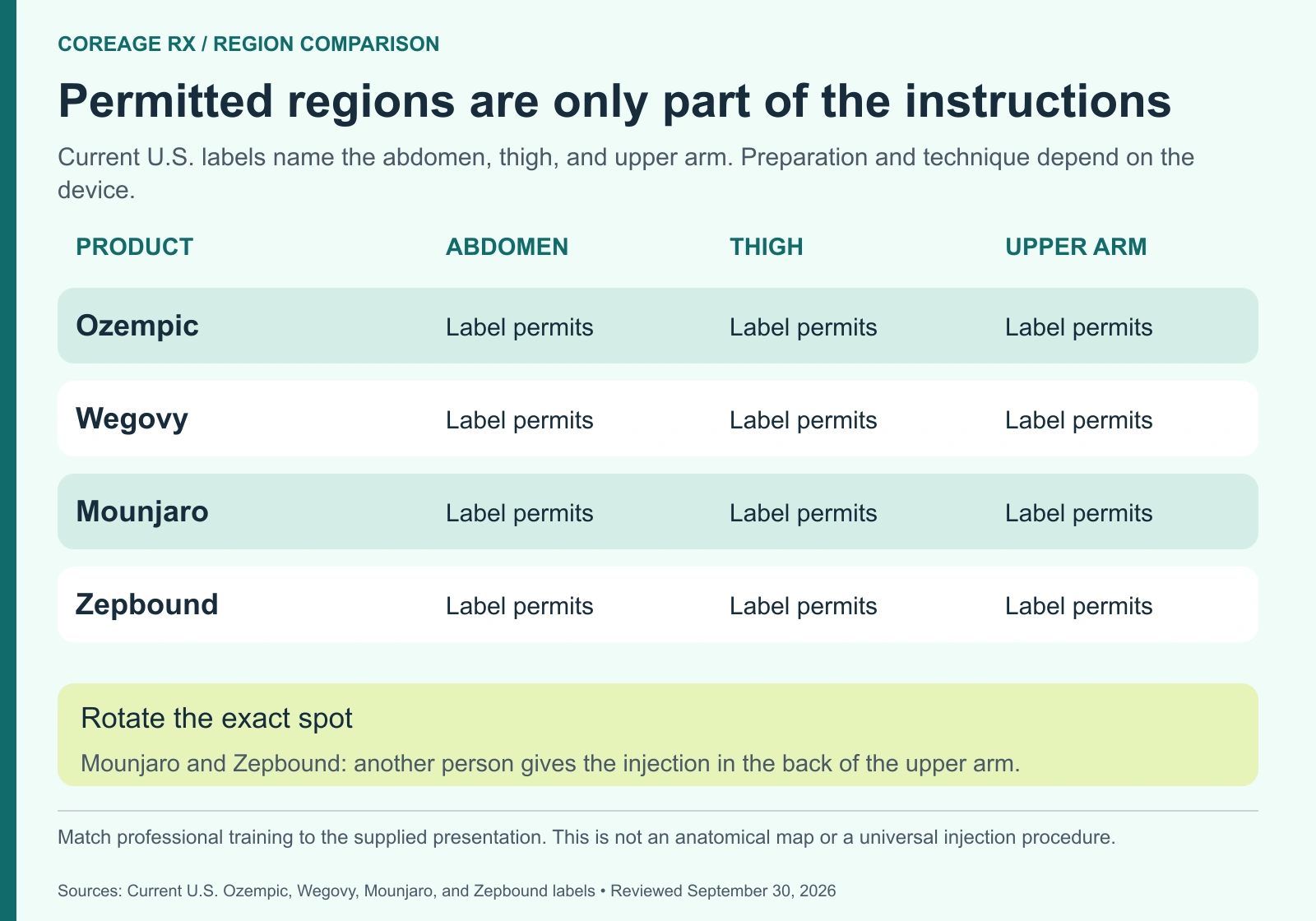
Which injection regions do the labels permit?
The following is a comparison of named products, not an instruction for every medication marketed as a GLP-1 treatment.
| Product | Labeled regions | Important qualification |
|---|---|---|
| Ozempic injection | Abdomen, thigh, upper arm | Change the exact injection spot when using the same region; follow the pen or prefilled-syringe instructions supplied. |
| Wegovy injection | Abdomen, thigh, upper arm | The single-dose pen, HD pen, FlexTouch pen, and prefilled syringe have separate instructions. |
| Mounjaro | Abdomen, thigh, back of upper arm | The label specifies another person for the upper-arm injection; train for the prescribed presentation. |
| Zepbound | Abdomen, thigh, back of upper arm | Upper-arm administration and device preparation must follow the matching instructions. |
See the current Ozempic, Wegovy, Mounjaro, and Zepbound prescribing information. These are injections under the skin, called subcutaneous injections. A permitted body region does not mean the medicine should be injected into a vein or muscle.
Specific instructions also identify where within a region to inject and what skin to avoid. For example, the Ozempic prefilled-syringe instructions describe the abdomen at least two inches from the belly button and the back of the upper arm with someone else’s help. Do not turn that example into a complete technique for a different device.
Abdomen, thigh, or upper arm: how should you choose?
Start with a region your healthcare professional has shown you how to use safely. Consider whether you can see the area, reach it comfortably, position the device correctly, and maintain the position required by its instructions. Ask about assistance if eyesight, hand strength, mobility, or coordination makes the procedure difficult.
The abdomen or thigh may be easier for some people to reach themselves. The upper arm may require another trained person. Convenience is relevant, but the correct choice still depends on the supplied product and training. You do not need to force an awkward position because an online post calls one region superior.
If a preferred area has an injury, rash, unusual tenderness, or another skin concern, show the clinician or pharmacist rather than injecting through it automatically. Review the device’s skin-selection restrictions and ask which permitted alternative fits the situation.
Does injecting closer to belly fat make the medicine work better?
No approved site instruction says that injecting near a particular fat deposit targets weight loss there. Subcutaneous administration is a route for delivering the medicine. It is not a method for choosing where your body will lose fat.
The labels permit multiple regions. They do not establish a preferred region for greater weight loss. The Mounjaro label, for example, describes similar tirzepatide exposure after administration in the abdomen, thigh, or upper arm. A personal weight trend cannot reliably isolate a site effect from dose, treatment duration, food intake, illness, or other changes.
Keep treatment decisions with your prescriber. The tirzepatide results comparison explains why trial averages and personal outcomes are different questions. Site selection should support correct administration and a manageable routine.
What does rotating injection sites mean?
Rotation means avoiding repeated injections into the exact same spot. You can use the same permitted body region while selecting a different location within it, as the product instructions allow. It does not necessarily mean moving from abdomen to thigh to arm on a fixed universal calendar.
A simple record can help: note the date, medicine, and region or spot used. Choose a description you can recognize at the next scheduled dose. The purpose is to follow the prescribed routine and avoid unnecessary repeated irritation, not to design a new dose schedule.
Bring the record to training if you are unsure how much variation is appropriate. The Ozempic injection-site guide, Mounjaro site guide, and Zepbound site guide address product-specific questions in more detail.

Can changing the site prevent nausea or sulfur burps?
There is no labeled site switch that guarantees freedom from nausea, vomiting, reflux, or belching. These symptoms can reflect the medicine’s effects beyond the local injection area. They may also have other causes that need review.
An anecdote about feeling better after switching regions does not prove the site caused the improvement. Symptoms can change during adjustment to treatment, after a dose change, or with differences in meals and other medicines. It is useful to record a pattern; it is less useful to turn it into a promise for everyone.
Discuss troublesome symptoms with the care team rather than making repeated technique changes alone. Our semaglutide side-effects guide and tirzepatide nausea and reflux guide cover symptom review. Severe or persistent abdominal pain, repeated vomiting, or dehydration needs prompt assessment rather than another injection-site experiment.
The device determines preparation and completion
Shared body regions do not create a shared injection sequence. An Ozempic multi-dose pen uses a new compatible needle and a flow check before the first injection from each new pen. Its dose is selected using the dose counter and pointer, and its completion instructions include a specific hold after the counter reaches zero.
A preset single-dose pen has different controls and completion signals. A prefilled syringe does not use a pen’s flow-check or click-counting routine. A vial requires instructions matched to its concentration and measuring device. Do not transfer steps simply because the medicines both contain semaglutide or tirzepatide.
Use our Ozempic device guide and Wegovy injection guide alongside the actual manufacturer instructions. The milligrams, milliliters, and units guide explains why a vial’s volume cannot be inferred from the drug’s milligram dose alone.
What if you think the dose did not go in?
If medicine leaked, the device was removed early, the dose counter did not behave as expected, or you are unsure what happened, contact the pharmacist or prescriber with the details. Keep the carton and identify the exact device. Follow any troubleshooting steps in its instructions, and obtain help when delivery remains uncertain.
Do not automatically repeat a full injection to compensate for an uncertain amount. You may not know how much was delivered, and an extra dose can create a different problem. A photograph of the device or a description of the completion signal may help the professional interpret the event.
Ask during initial training how to handle these situations and whom to contact outside routine office hours. A clear plan is more useful than trying to reconstruct a procedure from unrelated videos after a problem occurs.
What if you also inject insulin?
Ozempic and Mounjaro labeling instructs separate injections and says not to mix the medicine with insulin. Their instructions permit the same body region while keeping injections separate and not adjacent. Follow the specific plan provided for your medicines rather than combining them in one syringe or choosing the same spot.
Also discuss blood-glucose monitoring and the possibility of adjustments to insulin or other diabetes medicines. That is a medication-management question, not something solved by moving the injection location. Never change an insulin dose solely because you selected a different GLP-1 injection region.

How do compounded injections fit this guidance?
A compounded preparation is not the same device as an approved branded pen or prefilled syringe. Its pharmacy label, concentration, supplies, storage, and directions need their own review. A branded injection video cannot establish the correct volume or handling for a compounded vial.
FDA’s guidance describes dosing errors and other concerns with unapproved GLP-1 products. The agency recommends compounding when an individual’s medical needs cannot be met by an approved medicine. Ask the prescriber and dispensing pharmacy to explain the actual preparation and why it is appropriate.
For CoreAge Rx semaglutide or tirzepatide information, use the same product-specific questions. The ingredient name should begin the conversation, not replace a complete prescription and training plan.
Questions to settle before the first injection
Bring the package and supplies to the training discussion. Ask the professional to watch or confirm the key steps for the actual device:
- Which permitted region and exact area should I use?
- Can I administer it myself, or do I need trained help?
- What preparation applies to this presentation?
- How do I recognize a completed injection?
- What should I do if delivery is uncertain?
- How do I remove or dispose of the used device safely?
- What changes if a future refill uses another presentation?
Have the sharps container ready before starting. Our Ozempic disposal guide explains containment and local disposal questions. Correct site selection, matching instructions, and a clear follow-up plan work together to make the routine understandable.
Educational information for adults; individual treatment decisions require a qualified clinician. Sources reviewed September 30, 2026. Original AI-generated article images depict fictional people and objects, not patient outcomes. Other editorial images are illustrative. Graphics summarize the cited sources.