
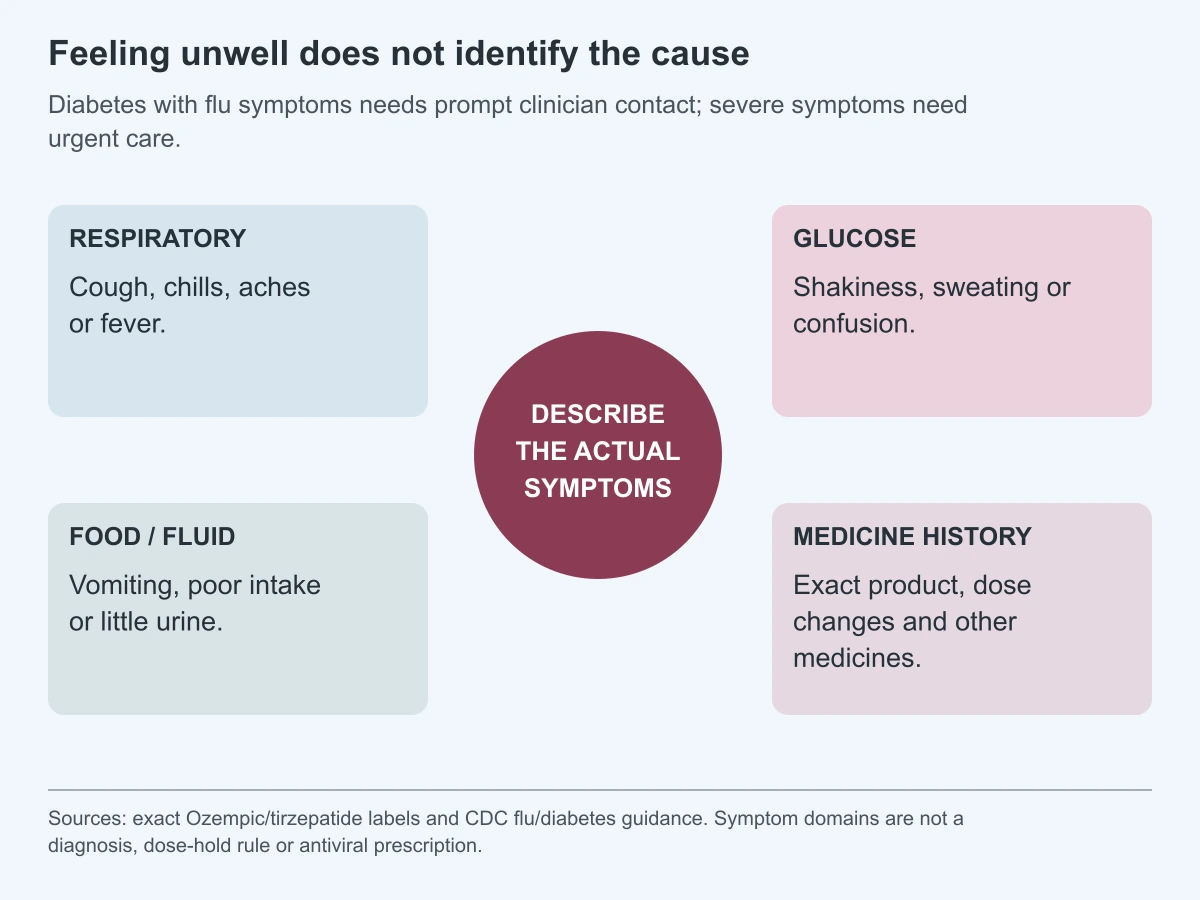
Feeling tired, nauseated, achy, or generally unwell while taking Ozempic or tirzepatide does not identify the cause. Some medicine-related symptoms can overlap with an illness, while influenza, dehydration, low blood glucose, and other conditions require their own assessment. New symptoms should not automatically be dismissed as a normal GLP-1 adjustment.
If you have diabetes and develop flu symptoms, CDC advises contacting your healthcare provider right away. Trouble breathing, persistent chest or abdominal pressure, confusion, severe weakness, or not urinating need urgent medical care. This guide explains the differences and the information that helps your care team make a useful sick-day plan.
What do people mean by “flu-like symptoms”?
The phrase is a description rather than a diagnosis. One person may mean fatigue and nausea; another may mean sudden fever, cough, chills, and body aches. Those patterns raise different questions even if both people use the same words.
The CDC’s flu symptom guidance describes influenza as a respiratory illness with symptoms that can include fever or chills, cough, sore throat, runny or stuffy nose, body aches, headache, and fatigue. Not everyone with flu has a fever.
Influenza and other respiratory illnesses can share symptoms. A symptom list alone does not distinguish every infection or determine whether a test is needed. Timing after an injection is useful history, but it does not prove that the medicine caused the illness.
Tell the clinician what actually happened: when symptoms began, whether they were sudden, the presence of cough or measured fever, vomiting or diarrhea, and whether you can eat, drink, and urinate normally. Specific observations are more helpful than saying only “I feel like I have the flu.”
Which symptoms appear in the medicine labels?
The current Ozempic injection label lists nausea, vomiting, diarrhea, abdominal pain, and constipation among common adverse reactions. It also discusses fatigue and dizziness in other adverse-reaction information. These findings do not establish that every episode of tiredness during treatment is medication-related.
The Zepbound label includes gastrointestinal reactions and fatigue, with product- and trial-specific details. Mounjaro’s label concerns its own indications and trial populations. Both brands contain tirzepatide, but percentages should not be transferred casually between their studies or combined with Ozempic results.
| Pattern to describe | Relevant questions | Why an assessment may matter |
|---|---|---|
| Nausea or bowel changes after starting or increasing treatment | Dose history, meals, duration, and severity | Medicine effects and other digestive causes can overlap |
| Sudden cough, chills, aches, or fever | Respiratory symptoms, sick contacts, and testing questions | A respiratory illness needs separate consideration |
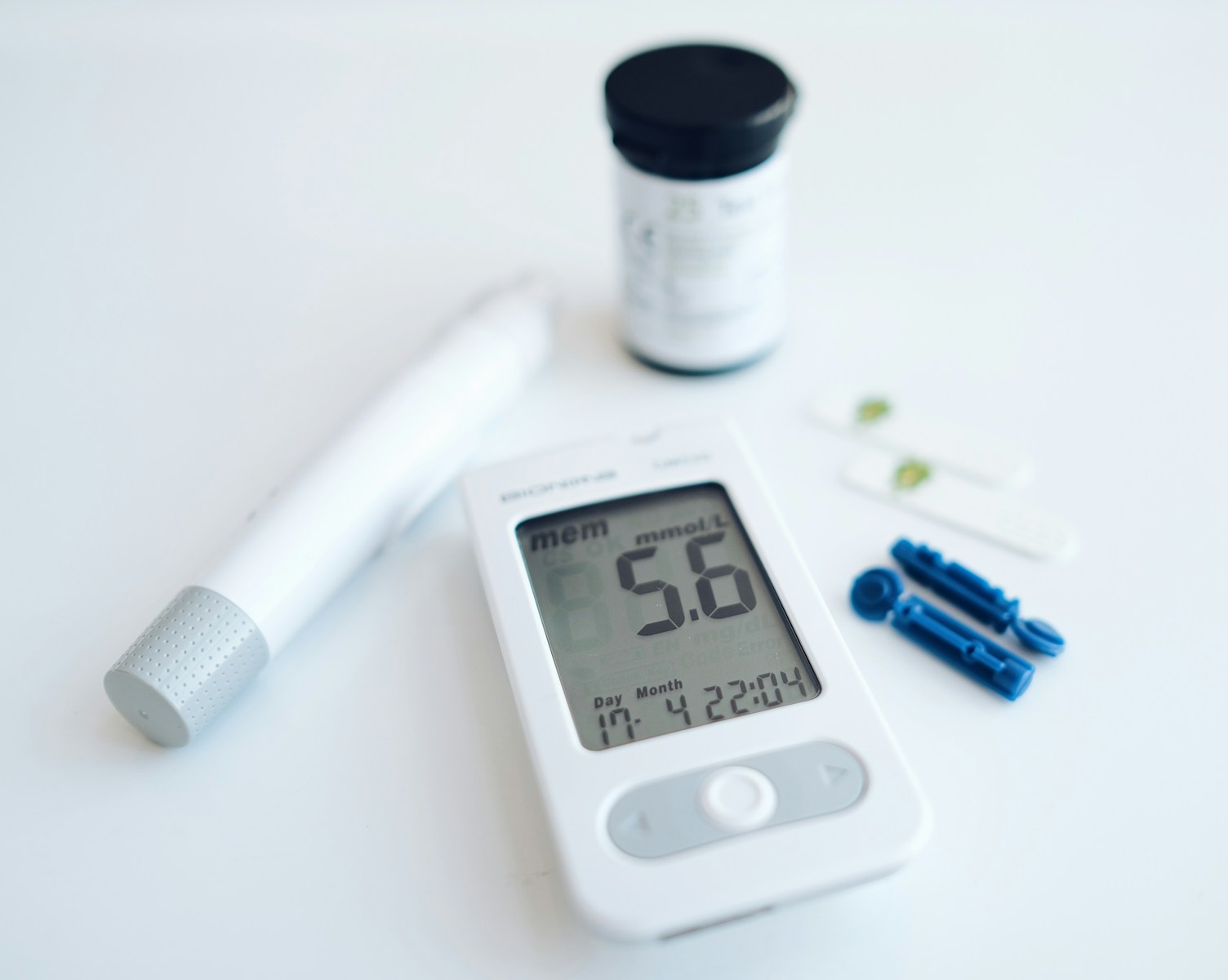
| Shakiness, sweating, weakness, or confusion | Glucose readings and other diabetes medicines | Low glucose can create serious symptoms |
| Vomiting, poor fluid intake, faintness, or little urine | Ability to drink, urine output, and overall illness | Volume depletion can affect kidney health |
Our semaglutide side-effects guide and tirzepatide nausea and reflux guide help organize medication-specific questions. They should support clinical review rather than turn an uncertain illness into a self-diagnosis.
Could reduced food or fluid intake contribute?
Poor appetite, nausea, vomiting, or diarrhea can make it harder to maintain ordinary intake. The Ozempic and tirzepatide labels warn about kidney injury associated with volume depletion, particularly when gastrointestinal symptoms cause fluid loss.
That warning is a reason to report persistent symptoms, not a reason to force a universal fluid target. People with kidney, heart, or other health conditions may have individualized instructions. Ask what you should do if you cannot keep fluids down.
Reduced eating can also complicate diabetes management, especially when insulin or a sulfonylurea is part of the regimen. The medicine labels describe increased low-glucose risk with some glucose-lowering combinations. An illness plan should account for the entire medication list.
The GLP-1 nutrition advisory supports attention to nutrition during treatment. Our balanced meals guide offers routine food-planning context, but repeated vomiting, marked weakness, or inability to eat needs a clinical assessment rather than another meal tip.
Why does diabetes change the flu conversation?
The CDC’s flu and diabetes guidance, updated September 2026, says people with diabetes have a higher risk of serious flu complications, even when diabetes is well managed. Acute illness can also make blood glucose harder to manage.
CDC advises people with diabetes who develop flu symptoms to contact their healthcare provider right away and recommends prompt antiviral treatment for flu or suspected flu. A clinician should determine the treatment and testing plan; do not wait for an online article to establish certainty before contacting the care team.
Tell the clinician when symptoms started and whether you have diabetes, another high-risk condition, or a recent change in medicines. A prescription used for weight management alone does not prove that you have diabetes, so describe the actual diagnosis rather than assuming the risk category from the drug name.
If you already have sick-day instructions, follow the agreed plan and contact the care team when its warning thresholds are reached. Ask for clarification if the instructions do not cover your current medication or the severity of your illness.
Should you skip the next Ozempic or tirzepatide dose?
There is no universal dose decision for everyone who feels unwell. Mild symptoms, severe vomiting, suspected pancreatitis, possible allergy, and a respiratory illness with diabetes are different situations. The exact prescription, food and fluid intake, glucose needs, and symptoms all matter.
Contact the prescriber or pharmacist for instructions about the next dose. Do not move, repeat, or increase it to compensate for an illness. If treatment is interrupted, ask how to resume safely rather than assuming the previous dose remains appropriate after a longer gap.
Our semaglutide missed-dose and restart guide explains product-specific differences. Our Wegovy half-life guide also illustrates why medicine remaining in the body is not a personal restart rule or a timetable for symptoms to disappear.
Severe or persistent abdominal pain, especially with vomiting, needs prompt assessment under the labels’ pancreatitis warnings. Breathing difficulty or face or throat swelling can indicate serious hypersensitivity and needs emergency care. Those symptoms should not be treated as ordinary flu-like discomfort.

Should you take Ozempic if you have COVID-19?
There is no universal continue-or-skip instruction based only on a positive COVID-19 test. Contact the care team about the illness severity, eating and drinking, glucose when relevant, kidney history and other medicines before the next dose if the plan is unclear. COVID-19 symptoms can overlap with flu and digestive effects; symptoms alone do not identify the cause. Persistent vomiting, poor fluid intake or reduced urine output raises a separate concern because Ozempic warns about kidney injury associated with volume depletion. Seek emergency help for trouble breathing, persistent chest pressure, new confusion or difficulty staying awake, and ask promptly about testing or treatment when at risk for severe illness. CDC COVID-19 symptoms and emergency warning signs. CDC diabetes sick-day planning. Ozempic injection U.S. prescribing information.
What belongs in a written sick-day plan?
A useful plan tells you what to monitor, which changes require contact, and who will decide medication adjustments. It should fit the conditions being treated rather than use one template for every GLP-1 user.
Ask your care team to address:
- What to do if you cannot eat or keep fluids down.
- Whether and how glucose should be monitored during illness.
- Instructions for the GLP-1 medicine and any insulin or other diabetes treatment.
- Which symptoms need same-day contact or emergency care.
- How to handle missed doses and the eventual restart.
- Who to contact after hours or when the usual office is closed.
Keep the exact medication names and doses available. A brand change, a new presentation, or a compounded preparation may need its own instructions. A syringe marking is not enough to identify the prescribed amount accurately.
If you live alone or become markedly weak, ask how to obtain help with monitoring or care. A practical plan should account for what you can realistically do while ill.
Can you take cold medicines or other treatments?
Ask a pharmacist to review the actual symptoms, conditions, and medication list before choosing a product. Combination cold remedies can contain several ingredients, and using multiple products may duplicate an ingredient without making that obvious.
The GLP-1 labels discuss effects on gastric emptying and considerations for oral medicines. That does not mean every cold treatment has the same interaction or requires a universal spacing rule. The specific medicine and clinical situation determine the review.
Tell the pharmacist about blood-pressure treatment, diabetes medicines, other prescriptions, and supplements. If a clinician recommends an antiviral or another medicine, ask how it fits with the existing regimen and what symptoms should be reported.
A supplement advertised for “immune support” is not a substitute for assessing serious symptoms or obtaining timely flu treatment when indicated. Likewise, taking a GLP-1 medicine is not evidence that it protects against influenza.
Vaccination and prevention questions
CDC recommends annual influenza vaccination for people with diabetes and discusses injectable flu vaccines as the recommended approach for that group. Ask your clinician which current vaccine and timing apply to your health history.
Vaccination, cleaner air, hygiene, and avoiding close contact with people who are ill are separate prevention questions from managing a suspected medication side effect. A dose change should not be used as a substitute for a prevention plan.
If symptoms develop after a vaccination, describe the timing and pattern to the clinician rather than assigning a cause automatically. The assessment still needs to account for respiratory infection, other medicines, food and fluid intake, and warning symptoms.
When should you seek urgent care?
CDC’s adult emergency warning signs include difficulty breathing, persistent chest or abdominal pressure, confusion, seizures, lack of urination, severe muscle pain, severe weakness or unsteadiness, and fever or cough that improves and then returns or worsens. Worsening of a chronic medical condition also requires attention.
These signs are not an exhaustive list. Seek care for any severe or concerning symptom rather than waiting for it to match a graphic precisely. The source of the symptom can be assessed after immediate needs are addressed.
Persistent vomiting, inability to drink, very little urine, fainting, or severe abdominal pain also deserve prompt assessment under the medication warnings. Our Ozempic cough guide discusses respiratory symptom history and other possible causes without assigning a drug-related diagnosis.
Bringing the question to a treatment review
CoreAge Rx’s semaglutide and tirzepatide treatment information describe separate clinical-assessment options. Tell the clinician about recent illness, prior reactions, and all glucose-lowering medicines before deciding on treatment.
Ask about the precise preparation and an after-hours illness plan. The FDA’s compounding guidance explains that compounded drugs are not FDA-approved. Findings from an approved brand’s label should not be represented as validation of every compounded mixture or device.
Frequently asked questions
Does Ozempic cause influenza?
Influenza is a viral respiratory illness. Feeling unwell during Ozempic treatment does not establish influenza or medication causation. Describe the actual symptoms and obtain appropriate assessment.
Can tiredness and nausea resemble illness?
Yes, those descriptions can overlap with several causes. Medicine reactions, inadequate intake, dehydration, glucose changes, and infection need different considerations. Timing alone cannot distinguish them.
Should I wait for a fever before calling?
Not everyone with flu has a fever. CDC advises people with diabetes who develop flu symptoms to contact their healthcare provider right away. Severe symptoms need urgent care regardless of temperature.
Is one missed weekly dose the same as a long interruption?
No. Products have their own missed-dose instructions, and longer gaps may need a different restart plan. Obtain directions for the actual medicine rather than improvising while ill.
Educational information for adults; individual treatment decisions require a qualified clinician. Sources reviewed October 1, 2026. Original AI-generated article images depict fictional people and objects, not patient outcomes. Other editorial images are illustrative. Graphics summarize the cited sources.