Cucumber and lemon water can be a refreshing way to drink water without adding much sweetness. Its most practical benefits are flavor, hydration, and the option to replace a drink that contains added sugar. It has not been established as a treatment that burns belly fat, removes unspecified toxins, or produces a particular amount of weight loss.
That distinction matters because an enjoyable drink can support a useful habit without needing a dramatic health claim. You can make it part of lunch, keep a small pitcher in the refrigerator, or skip it entirely if you prefer plain water. Neither ingredient is required for successful weight management.
What benefits can cucumber and lemon water offer?
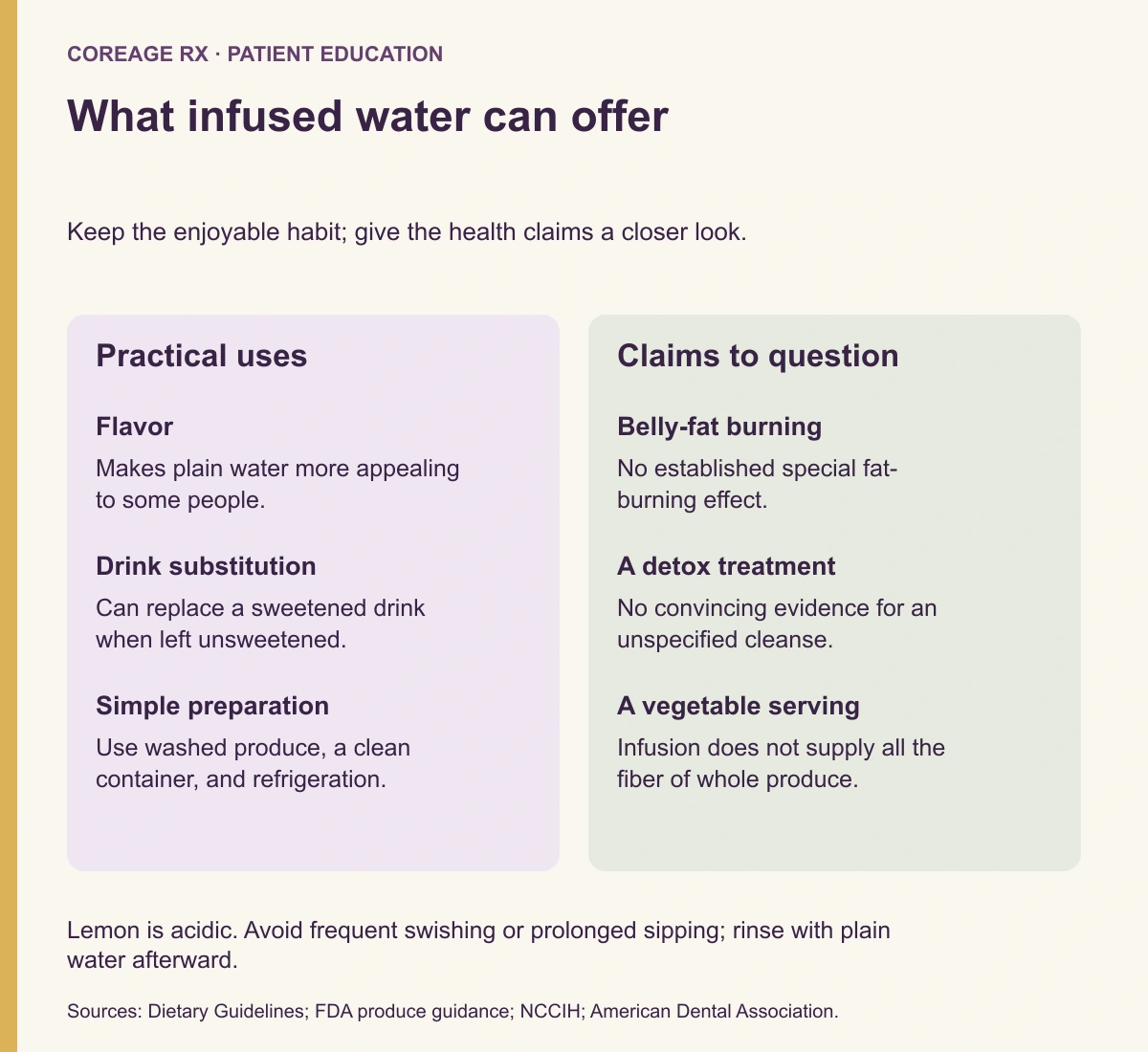
The clearest benefit is making water appealing. Someone who enjoys a lightly flavored drink may find it easier to choose water with meals. The current Dietary Guidelines for Americans recommend water and unsweetened beverages as hydration options. They also emphasize eating whole vegetables and fruit; a few slices steeped in a pitcher do not replace those foods. Dietary Guidelines for Americans
The ingredients add aroma and taste, but the finished drink varies considerably. A pitcher with two lemon slices is different from a glass containing the juice of several lemons, honey, and a flavored syrup. There is no single nutrition profile for everything called cucumber and lemon water.
If you leave the cucumber and lemon in the pitcher, you are not eating their fiber. Some substances can move into the water, but you should not assume the drink supplies all the nutrients in a whole cucumber or lemon. It is better to think of it as flavored water than as a liquid serving of vegetables.
| Common claim | A more useful interpretation |
|---|---|
| “It helps you drink more water.” | It may make water more enjoyable; preferences differ. |
| “It replaces a sugary drink.” | It can, if you actually make that substitution and do not add substantial sugar. |
| “It melts belly fat.” | No reliable evidence reviewed here establishes that effect. |
| “It gives you all the benefits of cucumber.” | Infused water is not nutritionally equivalent to eating the vegetable. |
| “You need it every morning.” | There is no established special time or required daily schedule. |
Our guide to water, drinks, and weight management puts flavored water alongside coffee, tea, and other everyday choices.
Does cucumber and lemon water help with weight loss?
It can fit a weight-management plan, especially when it replaces a higher-calorie drink. That is a substitution effect, rather than evidence that lemon or cucumber makes the body burn extra fat.
For example, imagine a lunch normally includes a drink labeled as containing 150 calories. Choosing unsweetened infused water instead changes the calories supplied by that drink. It does not tell you exactly what will happen to your weight: the rest of your meals, appetite, activity, health conditions, and treatment also matter. Adding the same water while keeping every other drink does not create the same substitution.
Avoid turning that simple example into a guaranteed pounds-per-week calculation. Bodies do not follow a fixed spreadsheet prediction, and one beverage cannot stand in for an overall eating pattern. The calorie-intake guide explains why a useful starting estimate still needs context.
It can help to choose one practical goal: “I will try this with lunch because I enjoy it.” That is easier to evaluate than “I will drink this until my stomach is flat.” Notice whether the change is enjoyable, affordable, and compatible with meals you can sustain.
Does it detox the body or reduce bloating?
“Detox” is often used without identifying a toxin, a measurable problem, or a test showing that the drink solves it. The National Center for Complementary and Integrative Health reports that research does not convincingly support detox diets for eliminating toxins or managing weight. Restrictive cleanses can also cause problems when they replace adequate food. NCCIH review of detoxes and cleanses
Drinking cucumber and lemon water alongside ordinary meals is different from consuming only water or tea for days. There is no need to turn an inexpensive beverage into a cleanse, buy a companion supplement, or skip meals to make it “work.”
Bloating is another separate question. It can have many causes, and changing a drink does not diagnose the reason. If lemon makes you uncomfortable, leave it out. New, persistent, painful, or worsening symptoms deserve attention rather than progressively stronger mixtures of citrus, herbs, or laxatives.
A quick change on the scale also does not establish fat loss. Meal size, bowel contents, and fluid shifts can change what the scale shows. See water weight versus fat loss for a clearer way to interpret short-term changes.

A simple cucumber and lemon water recipe
Start with flavor rather than a medicinal dose. For a small pitcher, combine about one liter of drinking water, several thin cucumber slices, and one or two thin lemon slices. These are culinary proportions, not a treatment schedule. Use more cucumber or less lemon according to taste.
- Wash your hands and use a clean knife, cutting board, and pitcher.
- Rinse the cucumber and lemon under running water before cutting. Do not wash produce with soap. A clean produce brush can help scrub a firm cucumber.
- Slice the produce and add it to the water. Refrigerate while it infuses.
- Pour a glass when you want it. Keep the remaining pitcher cold and make small batches you will use promptly.
The FDA advises refrigerating cut produce and keeping the refrigerator at 40°F or below. Keep preparation surfaces separate from raw meat and poultry. Adding lemon does not make contaminated water or unwashed produce safe. FDA produce-handling guidance
Do not repeatedly top up a warm bottle containing old slices throughout the day. Clean the container and start with fresh ingredients. If you take infused water out with you, keep it chilled as you would other drinks containing cut produce.
There is no need for a particular cucumber variety, expensive bottled water, or a special infusion bottle. A clean covered container works. If a large pitcher becomes a chore, put a few freshly washed slices in one glass instead.
Can lemon water affect your teeth?
Lemon is acidic. Frequent exposure to acidic drinks can contribute to dental erosion, even when a drink contains no added sugar. How often you drink it and how long it stays in contact with your teeth matter; “unsweetened” does not mean “acid-free.”
The American Dental Association advises limiting repeated acid exposure, avoiding swishing acidic drinks around the mouth, and rinsing with water afterward. A straw positioned behind the front teeth can reduce contact. Rinse rather than brushing immediately after an acidic drink, and discuss sensitivity or existing erosion with your dentist. ADA dental-erosion guidance
For someone who wants a bottle to sip from continuously, plain water or cucumber-only water may be a more comfortable choice. You do not need to tolerate tooth sensitivity to pursue a hydration habit.

What if you have reflux or take a GLP-1 medicine?
Use your symptoms as a reason to reconsider the recipe. If a citrus drink seems to worsen burning, sour taste, or nausea, try plain water or a version without lemon. Stronger lemon flavor does not add a proven weight benefit that makes discomfort worthwhile.
Cucumber and lemon water has no established special role in making semaglutide or tirzepatide work better. It also does not replace evaluation of persistent vomiting, difficulty keeping fluids down, or severe abdominal pain. Those problems need a clinical plan, not a different infusion recipe. Our semaglutide nausea guide and tirzepatide reflux guide explain the questions to raise with a prescriber.
People with a prescribed fluid restriction should follow their own care plan. A universal instruction to drink several extra liters is not appropriate for everyone. An ordinary beverage recipe should not override instructions for heart, kidney, or other medical conditions.
Frequently asked questions
Is it better to drink it hot or cold?
Choose the temperature you enjoy and can drink comfortably. The evidence reviewed here does not establish that hot cucumber and lemon water produces greater fat loss. Keep prepared drinks containing cut produce appropriately refrigerated until use; choosing a warm serving is not a reason to leave a pitcher out all day.
Should I drink it on an empty stomach?
There is no established requirement to do so. Having it with a meal is reasonable if you enjoy it then. If citrus bothers your stomach, change the ingredients rather than assuming discomfort means a cleanse is working.
Can I add honey, fruit juice, or salt?
You can change a recipe, but the result changes too. Honey and juice add sugar and calories; check amounts if drink substitution is your goal. Salt is not required to make ordinary cucumber water effective, and the drink is not a standardized oral rehydration solution for significant fluid losses.
Is cucumber water better than tea?
There is no single best drink for everyone. Flavor, caffeine, tolerance, and added ingredients matter. Our peppermint tea versus green tea guide can help you compare another unsweetened option without expecting either drink to act like a weight-loss medicine.
How long until I see results?
There is no validated cucumber-water weight-loss timeline. Judge the drink by whether it helps you make an enjoyable choice. For broader goals, start with weight-loss basics and build a plan around food, movement, sleep, and appropriate medical support.
Educational information for adults; individual treatment decisions require a qualified clinician. Sources checked September 27, 2026. Original AI-generated article illustrations depict fictional people and objects, not patient outcomes. Other editorial images are illustrative. Graphics summarize the cited sources.