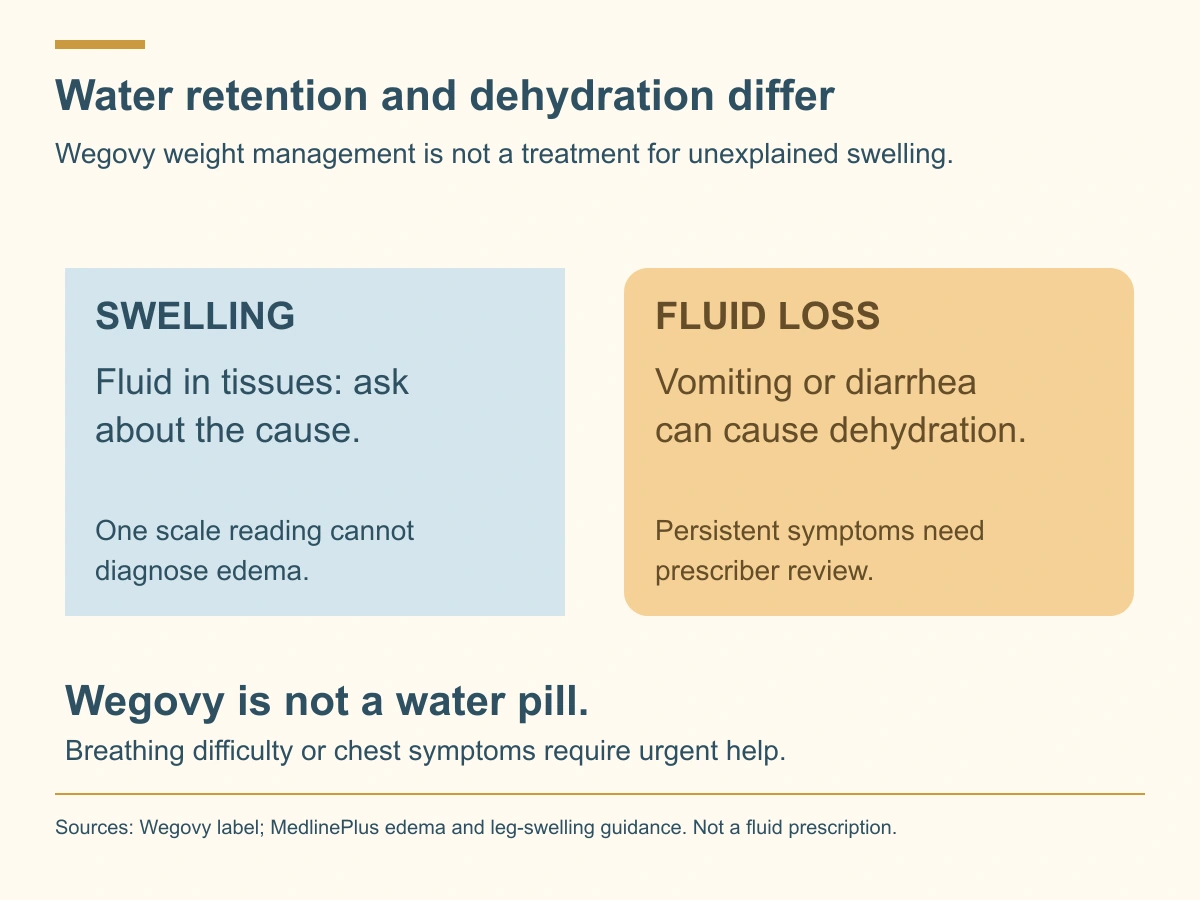
Wegovy is not a diuretic or a treatment for unexplained swelling. If your ankles, feet, hands, or abdomen become swollen during treatment, the cause needs assessment rather than an assumption that it is normal weight loss. Fluid-related swelling, digestive bloating, dehydration, and changes in body weight are different issues. Wegovy prescribing information, MedlinePlus edema overview
A scale increase does not diagnose water retention, and a scale decrease does not prove that swelling is resolving safely. The useful next step is to describe where the swelling is, when it started, and whether there are symptoms that need urgent attention.
Is Wegovy a water pill?
No. Wegovy contains semaglutide. Its labeling describes indications involving weight management and other specific conditions; it does not label Wegovy as an edema treatment. Diuretics are a separate medicine category used in selected circumstances to help manage fluid buildup. Wegovy indications, MedlinePlus edema information
The distinction matters if you have heard that losing weight will “flush out” fluid. A medicine’s role in weight management does not make it the appropriate treatment for leg swelling, heart failure, kidney disease, or another cause of edema.
Do not add a water pill, stop one, or change Wegovy to manage swelling without clinical advice. The right response depends on the cause, kidney function, other medicines, and your current symptoms. A product marketed for general wellness cannot substitute for finding that cause.
What does water retention mean?
Edema means swelling caused by fluid in body tissues. It commonly affects the feet, ankles, and legs, although other areas may be involved. MedlinePlus lists causes including heart, kidney, or liver problems; pregnancy; some medicines; salt intake; and certain circumstances involving standing or warm weather. MedlinePlus edema overview
Leg swelling can also relate to vein problems, a clot, injury, or infection. A history of travel, prolonged standing, or a new medicine may help the clinician understand the situation, but it does not rule out a serious cause. MedlinePlus foot, leg, and ankle swelling
Bloating is a description of an abdominal sensation or appearance, not a confirmed diagnosis of tissue-fluid buildup. Constipation, meal changes, and gastrointestinal symptoms can complicate what you notice. If swelling is persistent or the abdomen is expanding, describe that directly instead of assuming it is ordinary bloating.
For a related semaglutide question, read Ozempic and water retention. Product-specific instructions still matter even when medicines contain the same active ingredient.
Why the scale cannot identify the cause
Body weight includes more than body fat. A measurement reflects the total mass at that moment, and the number alone cannot identify what changed. Meals, bowel contents, fluid balance, and measurement conditions can all complicate interpretation.
For example, a hypothetical person weighs more after a travel day and notices tighter shoes. That observation is useful to report, but it cannot establish whether the cause was prolonged sitting, a medicine, a vein problem, or something else. A second person weighs less while vomiting and feeling weak. That is not evidence of successful fat loss.
Use the same scale under reasonably consistent conditions when your care team recommends tracking. Record symptoms alongside the number. The weight-loss percentage guide explains how to calculate change; it also explains why the calculation cannot distinguish fat loss from fluid loss.
If a clinician has given you a specific daily-weight threshold for heart or kidney care, follow that individual plan. A general blog cannot replace the threshold chosen for your condition.
Can dehydration happen while taking Wegovy?
Yes. Wegovy’s labeling warns that nausea, vomiting, and diarrhea may lead to fluid loss and kidney problems. It directs people to report gastrointestinal symptoms that do not go away and emphasizes fluid intake to reduce dehydration risk. Wegovy Medication Guide
Dehydration and edema describe different problems. You cannot decide that a swollen person needs extra fluids, or that a person with vomiting should restrict fluids, solely from the word “water.” The clinical situation may involve several processes at once and needs individualized instructions.
Tell the prescriber if you are struggling to drink, vomiting repeatedly, having persistent diarrhea, or feeling markedly dizzy or weak. Mention kidney or heart disease and any existing fluid restriction. Do not turn a general hydration suggestion into a fixed amount for someone whose care plan limits fluids.
The Wegovy 0.5 mg treatment-stage guide discusses why tolerability and follow-up matter alongside weight trends. A change during dose escalation should be reported with the dose and date, without assuming escalation is the only cause.

Which swelling symptoms need urgent attention?
Swelling with trouble breathing or chest pressure or tightness needs emergency care. MedlinePlus directs people with leg swelling and shortness of breath or chest pain to call the local emergency number. MedlinePlus leg-swelling care guidance
New or worsening swelling in one leg, a red or warm swollen foot or leg, fever, or worsening swelling in someone with heart, kidney, or liver disease warrants prompt contact with a clinician. Do not wait for the next routine weight-management visit if these changes occur.
Wegovy’s Medication Guide separately warns about serious allergic reactions. Face, lip, tongue, or throat swelling; breathing or swallowing difficulty; severe rash or itching; rapid heartbeat; or fainting can be signs of such a reaction. Stop using the medicine and get medical help immediately for a suspected serious allergic reaction. Wegovy allergy warning
| What you notice | Appropriate next step | What it does not establish |
|---|---|---|
| Swelling with breathing difficulty or chest pressure | Emergency medical help | A routine weight-loss fluctuation |
| New one-sided leg swelling, redness, warmth, or fever | Prompt clinical assessment | A harmless medication effect |
| Face or throat swelling with allergic symptoms | Immediate medical help | Ordinary ankle edema |
| Persistent swelling without emergency symptoms | Arrange assessment and document the pattern | A diagnosis from the scale alone |
| Vomiting or diarrhea that persists | Contact the prescriber about hydration and care | Healthy weight-loss progress |
These categories support communication. They are not a home diagnostic test or a reason to delay care when symptoms are concerning.
What other medicines might matter?
Bring the entire medication list to the review. MedlinePlus lists several medicines that may cause leg swelling, including some blood-pressure medicines, NSAIDs, steroids, and hormones such as estrogen and testosterone. It also advises against stopping a suspected medicine without first talking to the provider. MedlinePlus medication-related swelling information
An HRT or TRT prescription therefore belongs in the conversation, just as a recent pain medicine or blood-pressure change does. This does not establish which medicine caused your symptoms. It gives the clinician the information needed for a proper review.
Also mention supplements, recent prescriptions, and medicines used only occasionally. If you are taking a diuretic already, record its name and any missed or changed doses. Avoid using someone else’s prescription or an over-the-counter “water-loss” product to experiment with the swelling.
Build a short swelling record
Before the visit, write down:
- Where swelling occurs and whether it affects one or both sides.
- When it began, whether it changes through the day, and whether it is worsening.
- Pain, warmth, redness, fever, breathing symptoms, or chest symptoms.
- Current Wegovy presentation, dose, and recent changes.
- Vomiting, diarrhea, ability to eat and drink, and any fluid restriction.
- Other medicines, health conditions, recent travel, injury, or surgery.
If photographs help show a change, ask the office how to send them. They supplement the history; they cannot diagnose the cause. Follow any clinician instructions about checking weight or other measurements.
Ask what examination or testing is appropriate and which symptoms should change the urgency. If the plan includes adjusting a medicine, request clear written instructions about the dose, timing, and follow-up contact.

What can you do while awaiting a nonurgent appointment?
Follow the plan already prescribed for your condition and contact the office if symptoms worsen. Some people receive advice about leg elevation, movement, support stockings, or sodium intake, but those measures must fit the reason for swelling. MedlinePlus explains that treatment focuses on the cause and that diuretics can have side effects. MedlinePlus care information
Do not assume support stockings, aggressive salt restriction, extra water, or a new diuretic is appropriate for every swollen leg. Ask especially if swelling is new, one-sided, painful, or accompanied by illness.
For longer-term weight questions, see the weight-loss timeline guide and Wegovy dosage guide. Neither a treatment timeline nor a higher dose is a treatment plan for unexplained edema.
Frequently asked questions
Does Wegovy help get rid of water retention?
Wegovy is not labeled as an edema treatment. If you have persistent swelling, seek an assessment of the cause instead of expecting the medication to remove fluid. Wegovy indications
Does a temporary weight increase mean treatment failed?
One measurement cannot establish treatment failure or the composition of the change. Discuss the trend, symptoms, and measurement conditions. New swelling still needs attention even if the overall weight trend is downward.
Should I take a diuretic for swollen ankles?
Only if a clinician recommends it for your situation. Swelling has several possible causes, and adding a water pill without review can complicate care.
Where can I learn about semaglutide care?
The CoreAge Rx semaglutide information page is a starting point for treatment questions. It does not diagnose swelling, prescribe a fluid plan, or establish equivalence to Wegovy.
Educational information for adults; individual treatment decisions require a qualified clinician. Sources reviewed October 4, 2026. Original AI-generated article images depict fictional people and objects, not patient outcomes. Other editorial images are illustrative. Graphics summarize the cited sources.