
If you feel unusually thirsty or have a dry mouth while taking Wegovy, the symptom deserves context. The current prescribing information does not list thirst or dry mouth as a named common adverse reaction. It does warn about kidney injury related to volume depletion, particularly when gastrointestinal symptoms lead to fluid loss.
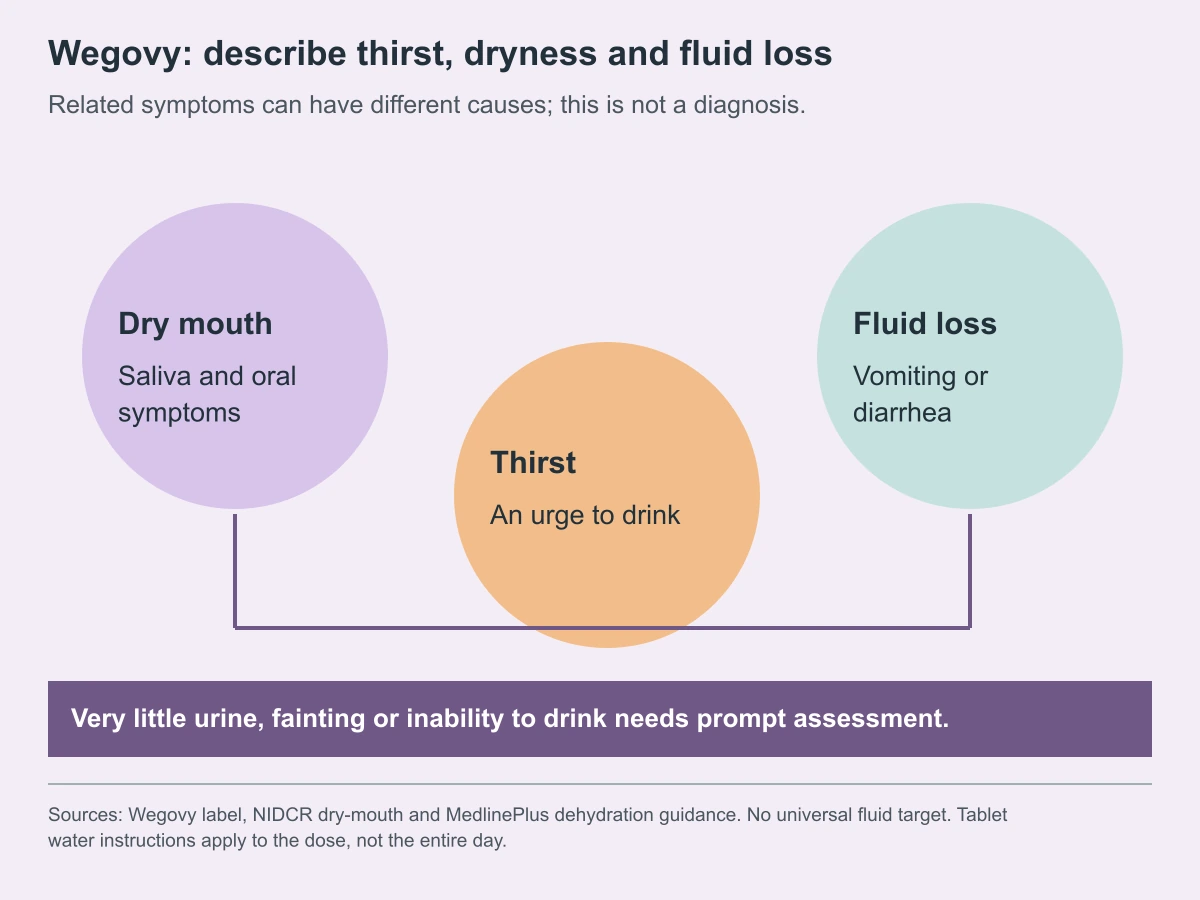
A dry mouth, a stronger urge to drink, and dehydration are related experiences but are not the same thing. Other medicines, reduced saliva, illness, and high blood glucose can also be relevant. The useful next step is to identify the pattern and its severity, rather than assuming every new symptom is an expected Wegovy effect.
Does Wegovy directly cause thirst?
The current label does not provide a specific thirst rate or identify thirst as a common named reaction. That absence does not prove that no patient can experience thirst during treatment. It means there is not a label-based percentage to quote as if thirst were an established common side effect. Current Wegovy prescribing information
Wegovy can cause nausea, vomiting, diarrhea, constipation, and other gastrointestinal symptoms. Vomiting or diarrhea can reduce the body’s fluid volume. Feeling unwell may also make it harder to maintain usual food and drink intake. In that situation, thirst could occur alongside a clinically important fluid problem.
This is an explanation of a possible pathway, not a diagnosis of your symptoms. A person with a sticky mouth and no fluid losses may need a different assessment from someone who has been vomiting and is barely urinating.
For the broader treatment context, read Wegovy side effects and our semaglutide questions guide. Persistent or worsening symptoms should be discussed with the prescribing team.
How is dry mouth different from dehydration?
Dry mouth refers to a lack of sufficient saliva or the sensation that the mouth is dry. It may cause a sticky feeling, trouble swallowing dry food, changes in taste, or oral discomfort. Medicines and health conditions can affect saliva production independently of how much water you drink. National Institute of Dental and Craniofacial Research dry-mouth guidance
Dehydration means the body has lost more fluid than it has taken in. It can occur with vomiting, diarrhea, sweating, fever, or inadequate intake. Signs can include thirst, dry mouth, darker urine, less urination, tiredness, and dizziness. More serious dehydration can affect circulation and consciousness. MedlinePlus dehydration information
The overlap can be confusing. Drinking more may temporarily relieve a dry sensation without resolving the cause of reduced saliva. Conversely, a person can have clinically important volume depletion even if the main complaint is weakness rather than thirst.
Persistent dry mouth also matters for oral health. Saliva helps protect the mouth, so ongoing dryness deserves dental or medical review rather than unlimited water as the only response. If you have skin dryness too, our skin dryness versus dehydration guide explains another common distinction.
Which symptom pattern should you report?
Try to describe what is happening rather than using “dehydrated” as a catch-all diagnosis.
| What you notice | Context to mention | Why it changes the assessment |
|---|---|---|
| Sticky mouth or difficulty with dry foods | New medicines, oral symptoms, duration | Reduced saliva may need evaluation |
| Thirst after repeated vomiting or diarrhea | Frequency, ability to drink, urine changes | Fluid loss and kidney risk may be relevant |
| Thirst plus unusually frequent or large-volume urination | Diabetes history, glucose readings if part of your care plan | High blood glucose is one possible concern |
| Very little urine, faintness, confusion, or inability to keep fluids down | Onset and severity | Prompt or emergency assessment may be needed |
These are ways to organize a report, not a checklist that can rule out illness. More than one pattern may occur at once. A clinician may need examination, medicine review, or testing to understand the cause.
Our Ozempic and increased-urination article covers a related semaglutide question. Urination is not a measurement of fat loss, and semaglutide should not be described as a water pill.
Can high blood sugar cause thirst even when you take a GLP-1 medicine?
Yes, thirst and increased urination are recognized diabetes symptoms. Taking a medicine that can improve glucose control does not eliminate every possible glucose problem or explain every new symptom. Other symptoms can include fatigue, blurred vision, and unexplained changes in weight. NIDDK diabetes symptoms and causes
Symptoms alone do not establish diabetes or a specific glucose level. If you already monitor glucose, follow the plan your clinical team gave you and report concerning readings. If you do not have a monitoring plan, ask whether assessment is needed rather than borrowing another person’s treatment protocol.
Severe symptoms such as confusion, fainting, unusual breathing difficulty, or abdominal pain with vomiting and marked illness require urgent evaluation. Do not try to manage a potential metabolic emergency with a supplement or electrolyte drink.
Also tell the clinician about insulin or other diabetes medicines. Wegovy’s label contains a separate warning about hypoglycemia with insulin or insulin secretagogues. Different glucose problems require different responses; thirst is not enough to decide which one is occurring. Wegovy glucose-related warnings

Why do vomiting and diarrhea matter for kidney health?
The Wegovy label warns about acute kidney injury due to volume depletion. Reported cases have often involved gastrointestinal reactions leading to dehydration. The label calls for kidney-function monitoring in patients whose adverse reactions could cause volume depletion, particularly during initiation and escalation. Kidney warning in the Wegovy label
That warning is a reason to communicate early about substantial fluid losses. It is not evidence that every thirsty person has kidney injury or that drinking a fixed amount prevents all risk. Existing kidney or heart conditions can also change how fluid intake should be managed.
If you cannot keep liquids down, have very little urine, or feel faint, seek timely medical care. Do not wait for a scheduled follow-up just because gastrointestinal symptoms are mentioned in the label. “Common” does not mean a severe episode should be tolerated without assessment.
When contacting the team, give the actual product and route, when symptoms began, the last dose or dose change, and the amount of vomiting or diarrhea. Our semaglutide nausea and vomiting guide can help with ordinary symptom questions, but significant fluid loss needs clinical direction.
How much water should you drink?
There is no single Wegovy-specific daily water target that fits every adult. Fluid needs depend on body size, food and drink intake, weather, activity, illness, and medical conditions. MedlinePlus recommends discussing individual needs with a health professional rather than using one universal amount. Individual fluid needs
If mild nausea makes drinking difficult, small sips may be more manageable than forcing a large amount at once. That is a practical measure, not a substitute for care when fluids will not stay down. People with a prescribed fluid restriction should follow their clinician’s plan and ask how illness changes it.
Pay attention to whether you can drink comfortably and whether urine output has changed. Urine color can be one clue, but it is not a stand-alone kidney test and may be affected by other factors.
Avoid using hydration as a way to suppress all hunger or replace meals. Our balanced-meal guide discusses maintaining adequate food when appetite changes. A weight-management plan should support function and recovery, not make persistent weakness a sign of success.
Do you need electrolyte packets every day?
Not automatically. A daily electrolyte routine is not a universal requirement in the Wegovy label. The reason for using a product should be clear: ordinary hydration, substantial sweat loss, gastrointestinal illness, or a clinician-directed rehydration plan are different situations.
Check the actual product for sodium, potassium, sugar, and other ingredients. Those amounts may matter for people with kidney disease, heart conditions, blood-pressure concerns, or other medicines. More electrolytes are not necessarily better, and an attractive hydration claim does not establish a personal need.
A clinician may recommend a particular oral rehydration approach in an appropriate situation. Ask which product, what purpose it serves, and when to seek care. Do not improvise a concentrated homemade mixture or rely on a sports drink for severe dehydration.
The same principle applies to other supplements. Our supplements while taking GLP-1 medicines guide explains how to review a product’s purpose, ingredients, and interactions before adding it.
Do Wegovy tablet water instructions limit drinking for the whole day?
No. The current oral Wegovy directions concern administration of the tablet: take it in the morning on an empty stomach with no more than four ounces of plain water, then wait at least 30 minutes before food, beverages, or other oral medicines. That is a dosing instruction, not a daily fluid limit. Wegovy tablet administration
Injectable Wegovy has different administration instructions. Do not copy an oral-tablet water rule onto a weekly injection or assume all semaglutide products are interchangeable.
If an oral routine conflicts with other morning medicines or a medical fluid plan, ask the pharmacist and prescriber to clarify the schedule. Our oral peptides versus injections article explains why formulation and route affect instructions. Do not switch products or convert doses independently.
CoreAge Rx’s semaglutide service page describes a separate service offering. Its name alone does not establish that it dispenses Wegovy tablets, branded pens, or the same formulation. Identify the actual prescribed product before applying label directions.

What can help persistent dry mouth?
Discuss possible causes with a dentist or clinician, including medicines that may reduce saliva. NIDCR describes measures such as sipping water, using sugar-free gum or appropriate saliva products, and maintaining oral hygiene. Suitability depends on the person’s swallowing ability, dental health, and clinical situation. Dry-mouth treatment and self-care
Do not stop another prescribed medicine merely because dry mouth appears on an online side-effect list. Ask whether an alternative or a targeted dry-mouth approach is appropriate. Avoid assuming an acidic or sugary drink is harmless when sipped repeatedly throughout the day.
Common thirst questions
Is thirst a sign Wegovy is burning fat?
No. Thirst does not measure fat loss. Consider fluid balance, saliva, glucose, and other causes.
Can dry mouth happen without dehydration?
Yes. Reduced saliva and other oral conditions can cause dryness without establishing whole-body fluid depletion.
Should I change my next dose because I am thirsty?
Ask the prescribing team for instructions based on the symptoms and product. Severe illness needs prompt care; an article cannot supply an individualized hold or restart rule.
When is this more than a routine side-effect question?
Inability to keep fluids down, very little urine, fainting, confusion, severe abdominal pain, or marked worsening calls for prompt assessment. Describe the full pattern so the team can address the cause rather than only the sensation of thirst.
Educational information for adults; individual treatment decisions require a qualified clinician. Sources reviewed October 1, 2026. Original AI-generated article images depict fictional people and objects, not patient outcomes. Other editorial images are illustrative. Graphics summarize the cited sources.