
Spot On is CoreAge Rx’s provider-guided formula containing hydroquinone, kojic acid, and niacinamide. Its public page presents it for unwanted pigmentation concerns such as dark spots and uneven tone. The appropriate use depends on a diagnosis, the exact dispensed formulation, and the treatment area and duration chosen by the prescribing clinician.
The public ingredient summary does not disclose the individual concentrations. Those details should be confirmed with the provider and pharmacy rather than inferred from a common hydroquinone strength or a study of another combination. This guide separates the disclosed ingredients, their evidence, and the practical questions needed for an understandable plan.
Confirm the concern before reviewing the formula
Melasma, post-acne hyperpigmentation, and discrete sun-related spots can look similar but have different histories and management needs. A flat dark mark also differs from a red post-acne mark or a scar that changes skin texture.
Ask the clinician to identify the condition and explain which areas should be treated. A new, changing, bleeding, or uncertain lesion needs assessment before cosmetic lightening. Do not assume every brown spot on the face belongs in the treatment area.
The hyperpigmentation overview and pigment-condition comparison provide useful preparation. A precise diagnosis gives each ingredient a clearer purpose.
The listed ingredients at a glance
| Ingredient | Relevant role to discuss | Important limit |
|---|---|---|
| Hydroquinone | Clinician-directed treatment of selected pigment concerns | Requires a defined area, course, and monitoring plan. |
| Kojic acid | Pigment-related ingredient studied alone and in combinations | Evidence for a studied preparation does not establish every formula’s result. |
| Niacinamide | Supporting pigment and skin-care evidence | Presence does not guarantee tolerance or eliminate other ingredients’ restrictions. |
The three names should not be treated as three independent promises that can be added into a guaranteed outcome. The preparation is used as a whole, and its effects need to be assessed within the individual plan.

Hydroquinone deserves a defined treatment window
The AAD’s melasma guidance includes hydroquinone among prescribed treatment options. The diagnosis, strength, area, and duration determine the context. It should not become an indefinite all-over brightening moisturizer without review.
The FDA’s skin-product safety information warns about reported harms, including rash, facial swelling, and permanent discoloration, and states that hydroquinone skin-lightening products are not approved for over-the-counter sale in the United States.
Ask when the initial course should be reviewed and what should happen afterward. The hydroquinone duration guide explains why a universal cycling schedule is not a substitute for your prescription.
Kojic acid adds a separate evidence discussion
A clinical study of kojic-acid combinations found differences among particular preparations used for melasma. Such research supports a rationale for selected combinations, but it does not establish that Spot On was the finished product tested.
Ask what role kojic acid is intended to serve in the prescribed formula and how tolerance will be monitored. The public page’s ingredient names do not provide all the information needed to match a study’s concentration, vehicle, and use pattern.
The kojic-acid guide discusses these limits. Do not add another kojic-acid soap or serum automatically; the extra step may duplicate a role and complicate irritation.
Niacinamide is a supporting ingredient, not a safety exemption
Niacinamide has clinical and laboratory research relevant to pigmentation. A published study reported pigment-related changes with specific preparations. That does not guarantee an identical result from a different combination or undisclosed concentration.
Its presence also does not make the whole cream suitable for every sensitive face. The other actives and the base still matter. If you have a known allergy or a history of reactions, provide the full details to the provider.
The niacinamide pigmentation guide explains how to evaluate its role. Review whether it already appears in other products before adding a separate serum.
Spot On is not every other triple combination
Three listed ingredients do not make two products equivalent. Some other prescribed pigment combinations contain tretinoin or a corticosteroid. Those are different ingredients with their own roles and instructions; they are not among Spot On’s three publicly listed actives.
Do not describe Spot On as a different branded preparation or add an ingredient yourself to imitate one. A compounded cream should be used as supplied. If another medication is appropriate, the prescriber should make that decision and explain the combined plan.
The same principle applies to replacing a product. Matching the word hydroquinone on two labels does not establish identical strength, vehicle, or use instructions.
Clarify the application area and schedule
Ask the provider to identify exactly where the product belongs. Confirm the amount, frequency, and areas to avoid, including eyes, lips, and irritated or broken skin. General thin-layer guidance should be supported by a specific treatment map.
Do not spread the cream to every freckle, mole, or new spot. Do not expand use to other body areas or share the prescription. A missed application does not justify applying extra cream without checking the instructions.
If the label and public page appear to differ, contact the pharmacy or prescriber before guessing. Your dispensed directions and individualized plan are the reference for use.
Build the supporting routine deliberately
Review cleanser, moisturizer, sunscreen, retinoids, acne medications, acid toners, masks, and peels together. Include occasional products. Several reasonable ingredients can create an unreasonable amount of irritation when combined without a plan.
Ask which steps Spot On replaces and which it accompanies. Keep optional products stable during an introduction when practical, and record the start date. That makes any reaction easier to describe.
If acne continues to create marks, coordinate acne treatment with pigment care. The dark spots after acne guide explains why preventing new inflammation belongs alongside treating older discoloration.
Sun protection continues throughout the plan
The AAD’s melasma self-care guidance recommends appropriate sunscreen and, when relevant, tinted formulas containing iron oxide for visible-light protection. Choose broad-spectrum SPF 30 or higher and follow the label, with shade and protective clothing.
Spot On is not a sunscreen. Do not mix it into one or assume the brightening ingredients replace protection. If the layers pill or sting, discuss a simpler routine or different textures.
The tinted sunscreen guide explains the product features. A sunscreen that fits your skin tone and daily activities can be easier to use consistently than one selected only by an ingredient trend.
Know what should prompt contact
Persistent burning, a spreading rash, swelling, blistering, or increasing pain needs advice. Stop a newly introduced product that causes a marked reaction. Severe facial swelling or breathing difficulty requires urgent medical care.
Unexpected blue-gray darkening or another unusual pigment change during hydroquinone use should be assessed rather than treated with more cream. The irritation guide helps organize the symptom timeline.
Discuss pregnancy, breastfeeding, allergies, other prescriptions, active skin disease, and recent procedures before use. Report relevant changes during the course rather than waiting for the next routine refill.
Understand the pharmacy and compounding information
Compounded drugs are not FDA-approved. The FDA’s compounding explanation describes the distinction from approved products. A prescription process does not establish that the finished compounded combination has undergone FDA premarket review for safety and effectiveness.
Know which pharmacy prepares the cream and how to contact it. Keep the original container, follow storage instructions, and check the beyond-use date. Do not refrigerate, dilute, or transfer the product based on assumptions about another formulation.
Report unexpected changes in appearance, texture, smell, or dispensing. The pharmacy can advise whether the product should still be used; appearance alone cannot confirm stability.
Evaluate the result against the original diagnosis
Use comparable photographs and record the application pattern, tolerance, and any new acne or irritation. Track the original pigment separately from new marks. A more moisturized surface can look different without establishing meaningful fading of the target area.
At the planned review, ask whether the benefit is adequate, whether the course should end or change, and what maintenance should look like. Do not extend hydroquinone use simply because some product remains.
Spot On is easiest to evaluate when its formula and purpose are clear. Confirm the strengths, define the treatment area and duration, and keep sun protection and tolerance within the same plan. Those details make the prescription more useful than a general promise of brighter skin.
Explore Spot On™
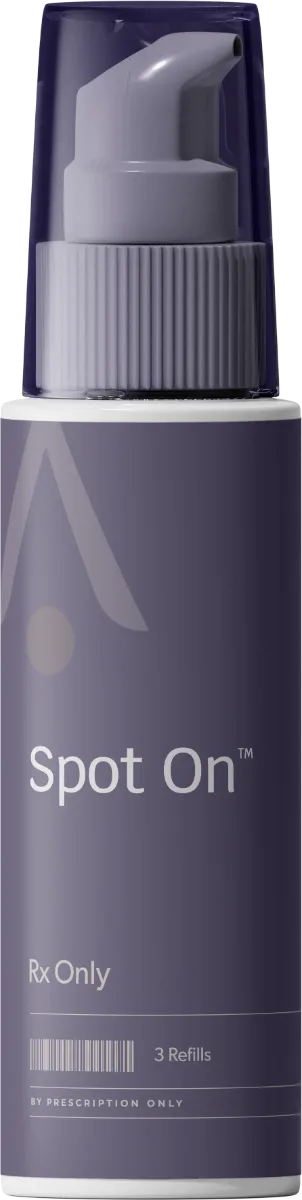
Spot On lists hydroquinone, kojic acid, and niacinamide. Confirm the dispensed strengths, treatment area, and planned treatment duration with your provider. A new or changing dark spot should be assessed before cosmetic treatment. Review the current Spot On™ page and bring your existing skin-care products to the provider discussion.
Related reading
- Hyperpigmentation Treatment: Dark Spots, Diagnosis, and Daily Care
- Prescription Hydroquinone for Dark Spots: What to Discuss
- Kojic Acid for Dark Spots: Evidence and Tolerance
- Niacinamide for Hyperpigmentation: A Supporting Ingredient
- A gentle routine for acne-prone skin
Educational information; your prescription and clinician’s instructions guide individual care. Product details and linked sources checked September 15, 2026. Ingredient research does not establish identical results for a finished compounded formula. Photographs are illustrative and do not show treatment outcomes.