Niacinamide is a form of vitamin B3 used in topical products, including some formulas for uneven pigmentation. Research suggests it can contribute to pigment-related outcomes in specific preparations. It is best understood as one potential component of a plan that also addresses the cause of the marks, sun exposure, and skin tolerance.
If niacinamide appears in several products you already use, adding another serum may not provide a clear new benefit. Begin by identifying the pigment concern and reviewing the complete routine. A familiar ingredient should have a defined job rather than appear in every step by default.
What kind of pigmentation are you treating?
Hyperpigmentation describes darker skin, but does not identify one condition. Melasma, post-acne marks, and discrete sun-related spots can require different approaches. A new or changing lesion needs assessment before cosmetic treatment.
Also distinguish color from texture. A flat brown mark after acne is different from an indented scar, a raised scar, or a primarily red post-inflammatory mark. A pigment-focused ingredient should not be presented as a universal solution for all of them.
The hyperpigmentation guide helps organize these possibilities. The more clearly the concern is identified, the easier it is to decide what role niacinamide might reasonably have.
What the research suggests
A 2002 study investigated niacinamide in laboratory models and facial clinical studies. It reported effects related to pigment transfer and improvement in pigmentation measures with particular niacinamide preparations. The clinical groups and formulas were specific, including a small paired comparison and a separate sunscreen-related study.
That supports a rationale for topical niacinamide in pigment care. It does not establish the same magnitude of benefit for every product, concentration, or diagnosis. A finished formula containing several actives also cannot attribute every improvement to niacinamide alone.
When reading a claim, ask whether it comes from a laboratory mechanism, a clinical trial, or a product advertisement. Those forms of evidence answer different questions and should not be treated as interchangeable proof.

Why the mechanism does not promise a result
A biological explanation can show why an ingredient is worth studying, but the finished product still has to deliver it appropriately and remain tolerable. Concentration, vehicle, stability, other ingredients, and repeated use all influence the clinical context.
The same caution applies to numerical claims. A percentage describing a laboratory process is not a percentage by which your dark spots will fade. Nor does a study’s assessment date guarantee that every person will see the same result at that point.
Focus on the outcome that matters to you: a defined patch becoming less noticeable, fewer new post-acne marks, or a more comfortable routine. Those observations can be discussed without making unsupported claims about what is happening at a cellular level.
Niacinamide is different from hydroquinone and kojic acid
These ingredients may appear together, but their roles and evidence are not identical. A combination can be chosen for a clinical rationale while still needing clear instructions for the whole preparation.
Hydroquinone introduces a particular discussion about treatment area, duration, and monitoring. Kojic acid has its own evidence and tolerance considerations. Niacinamide’s presence does not erase those requirements or make the combination suitable for indefinite unsupervised use.
Read the prescription hydroquinone guide and kojic-acid guide for the distinctions. A product with three named ingredients should not be confused with a different three-drug formula.
Where Spot On fits
Spot On lists hydroquinone, kojic acid, and niacinamide. The individual strengths are not disclosed in its public ingredient summary. Ask the pharmacy for the exact formulation and follow the prescriber’s application area and treatment window.
Do not describe Spot On as equivalent to a niacinamide moisturizer from a clinical study. Its ingredient combination and medical context are different. The Spot On ingredient guide explains what is publicly stated and what needs clarification.
Ask whether a separate niacinamide serum remains useful. If it duplicates a supporting ingredient without addressing a distinct need, it may simply add cost and another variable to the routine.

Review all the places niacinamide already appears
Look at moisturizer, sunscreen, cleanser, serum, and prescription labels together. You may find the ingredient in more than one. The number of products containing niacinamide is not a useful measure of how effective the regimen will be.
| Question | What it helps clarify |
|---|---|
| What is the pigment diagnosis? | Whether the ingredient fits the concern |
| Where is niacinamide already included? | Whether a new step duplicates the routine |
| Is the concentration disclosed? | Whether comparisons with research are possible |
| What else is in the product? | Other benefits, restrictions, and irritation risks |
| What result will be assessed? | Whether the step has a meaningful purpose |
Do not assume a higher percentage is automatically better. A well-tolerated formula with a clear role is more useful than escalating concentration without a defined reason.
Control new inflammation when marks follow acne
If marks occur after breakouts, acne control is part of preventing new ones. Picking, scrubbing, or an irritating treatment can add inflammation and complicate pigment care. A brightening serum alone cannot solve that entire pattern.
The AAD’s guidance for acne in darker skin tones addresses this overlap. Review the acne regimen and the pigment regimen together so that the steps do not work at cross-purposes through unnecessary irritation.
The dark spots after acne guide explains how to track active lesions and flat marks separately. If acne is painful or scarring, that concern may need a different level of treatment than a cosmetic serum provides.
Sun protection remains central
The AAD’s dark-spot advice emphasizes appropriate sunscreen, including tinted products with iron oxide for relevant pigment concerns. Choose broad-spectrum SPF 30 or higher and follow the product’s directions.
Niacinamide does not turn a treatment cream into a sunscreen. A sunscreen that also contains niacinamide still needs to be judged by its labeled protection and practical usability, not just the additional ingredient.
If the routine pills or leaves a finish you dislike, simplify optional layers and discuss suitable textures. Do not mix sunscreen into another product to make application more convenient.
Tolerance is a separate outcome
Niacinamide-containing products can still cause irritation or a reaction. The full ingredient list, repeated layering, and the current skin condition matter. A reputation for gentleness does not guarantee that a particular formula is suitable for you.
Record new products and the timing of symptoms. Stop a newly introduced product that causes persistent burning, spreading rash, swelling, or blistering and seek advice. Severe facial swelling or breathing difficulty requires urgent care.
If a hydroquinone combination is involved and unexpected darkening develops, report it rather than adding more brightening ingredients. The dark-spot irritation guide explains how to organize the history for review.
Measure the result fairly
Take photographs under consistent conditions and identify the area being followed. Keep makeup, moisturizer timing, light, and camera settings similar. A more reflective surface is not the same as a clear reduction in a particular patch of pigment.
Record new breakouts, irritation, and other changes that may create additional marks. At follow-up, ask whether the original pigment is improving and whether new pigment is appearing. Those answers can point to different adjustments.
Do not increase the amount or add another niacinamide product because progress seems slow in one image. Review the diagnosis, formulation, and overall plan instead.
Make the ingredient earn a clear place
Consider the cost and effort of a separate step as well as its proposed benefit. If your moisturizer and prescription already contain niacinamide, ask what an additional serum would change in the plan. The answer may be that no additional product is needed, which can make the existing routine easier to maintain and assess.
Niacinamide can be a useful supporting ingredient in a pigment routine, with evidence that remains specific to studied preparations and outcomes. It should not be asked to replace diagnosis, sun protection, acne control, or the instructions for a prescription combination.
For Spot On, confirm the formula and the treatment window with the provider. For any separate niacinamide product, decide what it adds and how you will judge the result. A focused routine is easier to evaluate than several overlapping brightening steps with no distinct purpose.
Explore Spot On™
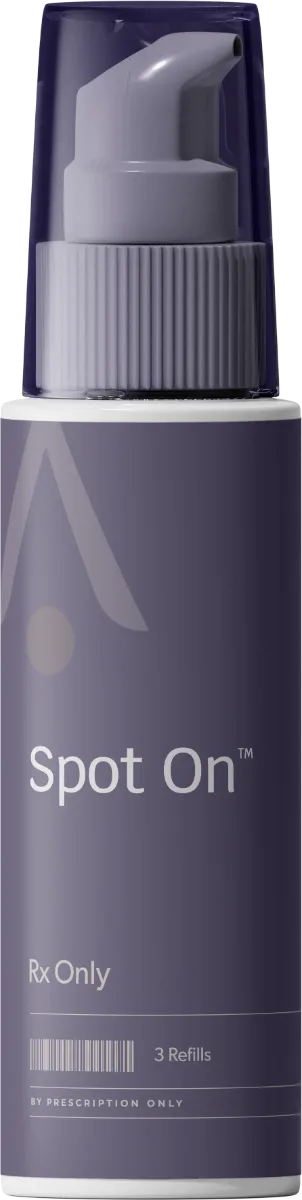
Spot On lists hydroquinone, kojic acid, and niacinamide. Confirm the dispensed strengths, treatment area, and planned treatment duration with your provider. A new or changing dark spot should be assessed before cosmetic treatment. Review the current Spot On™ page and bring your existing skin-care products to the provider discussion.
Related reading
- Hyperpigmentation Treatment: Dark Spots, Diagnosis, and Daily Care
- Kojic Acid for Dark Spots: Evidence and Tolerance
- Dark Spots After Acne: Treating Marks While Preventing New Breakouts
- Spot On Ingredients: Hydroquinone, Kojic Acid, and Niacinamide
- A gentle routine for acne-prone skin
Educational information; your prescription and clinician’s instructions guide individual care. Product details and linked sources checked September 15, 2026. Ingredient research does not establish identical results for a finished compounded formula. Photographs are illustrative and do not show treatment outcomes.