
Persistent burning, itching, a spreading rash, or painful peeling during dark-spot treatment should prompt a review of the routine. Irritation is not a reliable sign that pigment is being removed. It can also complicate the very discoloration you are trying to treat, particularly when inflammation tends to leave marks on your skin.
The useful response is to identify what changed, stop a newly introduced product that causes a marked reaction, and contact the clinician for guidance. Adding more brightening or soothing actives can make the cause harder to determine. A clear timeline is often more useful than a new bottle.
Distinguish symptoms from assumptions
Write down what you actually notice: burning, itching, tenderness, scaling, swelling, or a change in color. Record where it occurs and how long it lasts. “My cheeks burn after the evening cream” is more informative than “the pigment is purging.”
An uncomfortable reaction can have different causes, including irritant effects, allergy, or an underlying skin condition. A clinician may need the history and an examination to distinguish them. Do not assume that every rash during treatment has the same explanation.
Also note whether the skin was already irritated before the prescription began. A new product can be part of the problem without being its only cause, and a longstanding condition can become more obvious during a complicated routine.
Why irritation matters for pigmentation
The AAD’s dark-spot guidance describes how inflammation and irritating skin-care products can contribute to dark marks. This makes tolerance a practical part of pigment treatment, not merely a comfort preference.
A routine that creates repeated inflammation may leave you treating new marks while older ones fade. Looking only at the original patch can miss that broader pattern. Track new areas of discoloration separately from the concern that prompted treatment.
The dark spots after acne guide explains a similar cycle when breakouts continue. In both situations, controlling the source of inflammation belongs alongside the pigment-focused treatment.

Look for cumulative exposure
List all products used over a typical week: prescription cream, retinoid, acid toner, exfoliating cleanser, scrub, peel, masks, and spot treatments. Include products used only occasionally and the areas where they are applied.
A common difficulty is that each step seems reasonable in isolation. The combined exposure may be harder to tolerate than expected. The last product applied can then receive all the blame, even when a broader change in the routine is needed.
Do not forget friction and cleansing habits. Repeated washing, hot water, brushes, and rubbing flakes off with a towel can add irritation. The full pattern is more useful to the clinician than a list of headline active ingredients alone.
Hydroquinone combinations need specific attention
The FDA’s hydroquinone safety information includes reports of rashes, facial swelling, and permanent discoloration called ochronosis. A prescription should therefore include clear directions and a response to unexpected changes.
If you notice unusual blue-gray darkening, worsening discoloration that does not fit the expected pattern, or a significant rash, contact the clinician. Do not apply extra product in an attempt to reverse the change. A pigment-treatment product can require reassessment when the skin changes unexpectedly.
A defined treatment window is also important. The hydroquinone duration guide explains why an arbitrary cycle is not a substitute for individual follow-up.
A practical symptom record
| Information | Example of a useful note |
|---|---|
| Product | Exact name and a photograph of the label |
| Timing | Date started and when symptoms first appeared |
| Pattern | Cheeks only, around the mouth, or a spreading area |
| Sensation | Burning, itching, pain, or tightness |
| Duration | Brief after application or persistent between uses |
| Other changes | New cleanser, procedure, medication, or increased frequency |
You do not need to prove the cause before contacting the clinician. The record helps them decide what questions to ask and whether an examination is needed. If symptoms are significant, do not delay care while trying to make the notes complete.

Stop the new product when the reaction is marked
Persistent burning, a spreading rash, marked swelling, blistering, or increasing pain should not be pushed through. Stop the newly introduced product and obtain advice before trying it again. Severe facial swelling or breathing difficulty requires urgent medical care.
Ask how to handle the rest of the prescription routine. Do not independently stop every necessary medication for an extended period or add another prescription to counteract the reaction. The clinician needs to distinguish essential treatment from optional cosmetic steps.
Avoid intentionally reapplying a product that caused a significant reaction just to confirm the connection. A home challenge is not a prerequisite for medical advice and can make the situation worse.
Keep interim care simple and appropriate
For ordinary dryness, the AAD’s guidance emphasizes gentle, fragrance-free care and avoiding harsh washing. A clinician may recommend a simple moisturizer while assessing the reaction. Persistent or severe symptoms may need more specific treatment.
Do not scrub away peeling skin or use an acid to smooth the surface. Do not add several barrier serums, essential oils, masks, or numbing products in an attempt to make the treatment tolerable. Each addition creates another exposure to review.
If there are open areas, eye symptoms, recent procedures, or signs of infection, obtain advice about care for that situation. General skin-care suggestions should not replace the appropriate assessment.
Sunscreen discomfort can be part of the history
If a previously comfortable sunscreen begins to sting, tell the clinician. The issue may relate to the skin’s current condition, the formula, or another routine change. It does not mean every sunscreen is unsuitable or that pigment protection is no longer relevant.
The AAD’s melasma self-care guidance includes appropriate sunscreen, shade, and protective clothing. Ask for a workable protection plan while the skin is irritated rather than repeatedly testing unfamiliar products without guidance.
Do not mix sunscreen into the treatment or moisturizer to reduce stinging. Each product’s intended use should remain clear. The tinted sunscreen guide explains the label discussion once a tolerable routine is established.
Review Spot On as the complete formula
Spot On lists hydroquinone, kojic acid, and niacinamide. The public summary does not disclose individual concentrations or every base ingredient. If a reaction occurs, the pharmacy can provide the formulation information needed for review.
Do not assume niacinamide prevents irritation from the complete product or from other actives layered with it. Supporting ingredients are not a guarantee of universal tolerance. A known allergy to another component still matters.
The Spot On ingredients guide can help organize the discussion. Include any other prescriptions, such as tretinoin or acne creams, rather than reviewing Spot On in isolation.
Restarting treatment should be a new, clear decision
Once symptoms improve, ask whether the original product should be resumed, whether a different preparation is needed, and how other actives should be handled. Do not assume that the old schedule automatically remains appropriate.
If the clinician recommends restarting, clarify the area, amount, frequency, and warning signs. A simpler reintroduction can make the response easier to understand, but the details should come from the individual plan.
Ask what to do if the same symptom returns. A useful follow-up includes a response to recurrence rather than an instruction to repeat the same cycle of irritation and recovery indefinitely.
Know when the diagnosis itself needs review
A persistent rash, a new distribution of pigment, or a lesion that changes shape, bleeds, or crusts deserves reassessment. Not every change during a pigment regimen is a medication side effect, and not every brown area is the original condition.
Increasing warmth, pain, pus, or rapidly spreading redness may require prompt care. Mention pregnancy, breastfeeding, health changes, and new medications, since they can affect treatment decisions too.
The hyperpigmentation overview explains why diagnosis comes before lightening treatment. A changing picture should lead to a fresh assessment rather than automatic escalation.
Judge success by pigment and comfort together
A useful pigment plan improves the intended concern while remaining tolerable enough to follow. If one improves while the other worsens, the result needs discussion. A slightly lighter patch does not justify ignoring a significant rash.
Bring the symptom timeline, product list, and comparable photographs to follow-up. The aim is a clearer plan with fewer unnecessary exposures, a defined treatment window, and an understandable response to problems. Irritation is information to act on, not a milestone you must endure.
Explore Spot On™
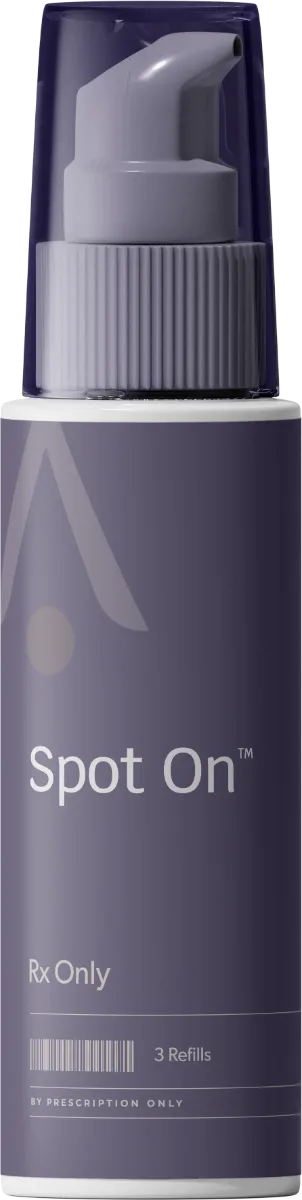
Spot On lists hydroquinone, kojic acid, and niacinamide. Confirm the dispensed strengths, treatment area, and planned treatment duration with your provider. A new or changing dark spot should be assessed before cosmetic treatment. Review the current Spot On™ page and bring your existing skin-care products to the provider discussion.
Related reading
- Hyperpigmentation Treatment: Dark Spots, Diagnosis, and Daily Care
- Prescription Hydroquinone for Dark Spots: What to Discuss
- How Long Should Hydroquinone Be Used? Follow a Defined Plan
- Sunscreen for Dark Spots: Broad-Spectrum Protection and Tinted Options
- A gentle routine for acne-prone skin
Educational information; your prescription and clinician’s instructions guide individual care. Product details and linked sources checked September 15, 2026. Ingredient research does not establish identical results for a finished compounded formula. Photographs are illustrative and do not show treatment outcomes.