
Weight gain is not identified as a listed adverse reaction in the spironolactone tablet label reviewed here. That does not establish that every weight change during treatment is unrelated to the medicine, or that a new change should be dismissed. The reason for the prescription, fluid balance, other medicines, and accompanying symptoms all matter.
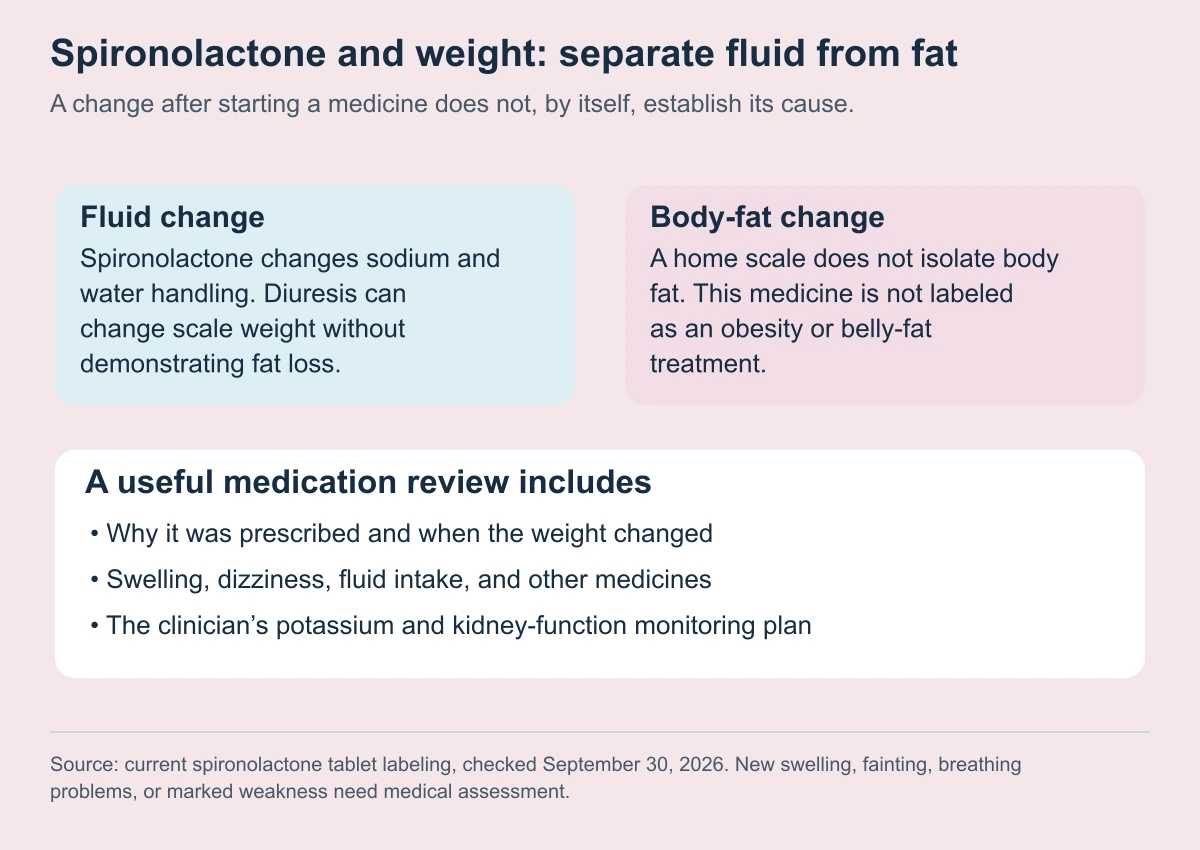
Spironolactone is a potassium-sparing diuretic and aldosterone antagonist. It can change sodium and water handling. A change in fluid-related scale weight is different from a change in body fat, and the medicine is not labeled as a weight-loss or belly-fat treatment. Spironolactone prescribing information.
What is spironolactone prescribed to treat?
The reviewed U.S. tablet label includes heart failure, add-on treatment for hypertension, certain edema-related conditions, and primary hyperaldosteronism. Aldosterone is a hormone involved in sodium and potassium balance. The medicine’s role in those conditions provides context for interpreting weight and fluid changes.
Spironolactone is also used off label for acne in selected patients. Evidence for acne treatment does not create an approved weight-management indication. A person taking it for acne may therefore have a different clinical situation from someone taking it as part of heart-failure care.
Start by confirming why it was prescribed to you. That reason influences what a weight change might mean, which symptoms need attention, and how the clinician monitors the treatment. Product labeling, SAFA acne trial.
Can losing fluid look like weight loss?
Yes. Spironolactone can increase sodium and water excretion while retaining potassium. When treatment reduces excess fluid, scale weight can change without demonstrating a loss of body fat. The interpretation depends on why the fluid was present and the broader treatment plan.
That distinction is especially important if swelling is part of the condition being treated. A lower weight together with improvement in edema can mean something different from a change during a calorie-restricted eating plan. It should be interpreted by the care team rather than treated as a cosmetic success or failure.
The opposite problem also matters: dehydration and excessive diuresis can be harmful. The label warns about symptomatic dehydration, low blood pressure, and worsening kidney function. Trying to force a lower number by taking more medicine is not a weight-loss strategy. Spironolactone label.
Does weight gain mean spironolactone caused fat gain?
Not by itself. A home scale measures total weight, not the separate amounts of water, body fat, muscle, and other tissue. The timing of a change can be useful information, but an event occurring after a medicine was started does not prove causation.
Think about the accompanying pattern. Has swelling changed? Have eating, activity, another medicine, or a health condition changed? Is the change rapid or a slower trend? Are there symptoms such as breathlessness, dizziness, or reduced urination?
Those questions help organize a clinical review. They do not let an article diagnose the cause at home. If you are being treated for a fluid-related condition, follow the clinician’s existing weight and symptom plan, including any individualized contact thresholds.
What does the adverse-reaction list tell us?
The reviewed label includes important risks involving potassium, blood pressure, kidney function, other electrolyte changes, and gynecomastia. It also lists reported digestive, reproductive, neurological, skin, and other reactions. Weight gain is not identified as its own listed adverse reaction in that label.
The label explains that some reported reactions come from uncertain-size populations, making their frequency and causal relationship difficult to determine. A list is therefore useful evidence about recognized concerns, rather than a way to prove that every possible experience must or cannot happen.
Use it to inform a review of your actual symptoms. Do not stop a medicine needed for heart failure or blood-pressure control solely because a weight-change story online seems similar. Conversely, do not ignore new swelling or other symptoms because weight gain is absent from a list. Spironolactone prescribing information.
What about spironolactone for acne and weight gain?
The SAFA randomized trial studied spironolactone for acne in adult women. It randomized 410 participants and assessed acne-related outcomes, with differences more apparent at 24 weeks than at 12 weeks. Its purpose was not to establish spironolactone as a fat-loss treatment or explain every weight change during use. Original SAFA trial.
That is a useful example of matching a study to the question it tested. Evidence that a medicine can help a particular acne population does not show that it reduces abdominal fat, improves every hormonal symptom, or should be prescribed to manipulate weight.
If your acne treatment coincides with a weight change, review the timeline and the rest of your care. Another prescription, a health change, or a change in daily routine may also matter. The clinician can assess tolerability and the acne plan together without assuming that either the drug or the acne explains everything.

Can spironolactone reduce belly fat?
The reviewed product labeling does not identify obesity or abdominal-fat reduction as an indication. Its diuretic effect should not be used as evidence of targeted fat loss. A lower scale number after losing fluid does not establish where body fat has changed.
A body-composition goal needs an appropriate assessment of eating, activity, sleep, health conditions, and treatment options when indicated. Our calorie-intake guide discusses why a plan needs adequate nourishment and a realistic approach, rather than a medicine that temporarily changes water balance.
The balanced-meals guide offers a starting point for discussing the overall eating pattern. If your clinician has prescribed sodium, potassium, or fluid limits, those individual instructions take priority over general meal examples.
Avoid products or routines that combine diuretics, dehydration, or extreme food restriction to produce a rapid scale change. Spironolactone’s prescription purpose and monitoring requirements should remain clear even if the weight question feels more immediately noticeable.
Which symptoms need prompt attention?
New or worsening swelling, significant dizziness, fainting, markedly reduced urination, a concerning heartbeat change, severe weakness, or breathing difficulty needs medical assessment. Seek urgent care for severe symptoms such as substantial breathing difficulty, chest pain, or fainting.
These signs do not identify one cause on their own. The label’s potassium, volume, and kidney-related warnings explain why symptom assessment matters. A person with heart failure may also have an individualized plan for changes in weight and swelling that should be followed promptly. Spironolactone labeling.
Do not try to distinguish high potassium from dehydration or another problem by symptoms alone. The clinician may need examination and laboratory results. If symptoms are severe, obtaining a routine future appointment should not delay urgent care.
What does potassium and kidney monitoring involve?
The reviewed label directs monitoring serum potassium within one week of starting or changing the dose and regularly thereafter. It identifies situations that may require more frequent checks, including impaired kidney function and other medicines that can increase potassium. This is label context; your clinician needs to specify the plan for your prescription.
Kidney function and volume status also matter. Ask which tests are planned, who will review the results, and when to contact the care team if a test is missed or a new symptom appears. A normal earlier result does not replace the requested follow-up after a treatment change.
If you are uncertain why laboratory testing was ordered for an acne prescription, ask. The indication does not remove the medicine’s effects on potassium and fluid balance. Spironolactone prescribing information.
Do supplements, drinks, or other medicines matter?
Yes. The label identifies potassium supplements, potassium-containing salt substitutes, and medicines that can raise potassium as important review points. Examples of relevant medicines include ACE inhibitors, angiotensin receptor blockers, some other drugs, and NSAIDs. The full list should be reviewed by the clinician or pharmacist.
A drink promoted for electrolytes is not automatically helpful in this situation. Our coconut-water guide explains why its potassium and serving size can matter, particularly when a person has a kidney-related restriction or a medicine affecting potassium. Do not adopt a universal beverage ban or an electrolyte-loading routine without the appropriate advice.
Our supplement guide for GLP-1 treatment also emphasizes matching supplements to a specific need. Bring powders, vitamins, salt substitutes, and nonprescription medicines to the review, rather than listing only your prescription tablets.
What if you also take minoxidil or another hair medicine?
Tell the prescriber about it. Oral minoxidil is another medicine with blood-pressure and fluid-related considerations, and a topical combination can include more than the ingredient named on the front of the bottle.
Our minoxidil side-effect guide separates oral pills, topical use, and combination questions. It does not provide a do-it-yourself schedule for adding spironolactone or minoxidil to manage a reaction. A complete medication review is more useful than treating each bottle as an unrelated product.
Likewise, an acne or hair-loss regimen should not be repurposed as hormone replacement or weight-management treatment. The intended diagnosis and evidence remain specific to the treatment being considered.

What about pregnancy or pregnancy planning?
Spironolactone labeling identifies concern about potential effects on a male fetus based on its anti-androgenic action and animal findings. Discuss pregnancy, pregnancy planning, and contraception when relevant before starting or continuing treatment. That discussion should not be replaced by advice aimed only at acne or body weight.
If circumstances change during treatment, contact the prescribing clinician promptly for the plan that applies to you. Breastfeeding also deserves a review of the actual labeling and clinical situation. Spironolactone prescribing information.
What should you record before the next appointment?
Record why the medicine was prescribed, its current directions, when it started or changed, and the weight pattern you are concerned about. Include swelling or other symptoms, relevant eating or activity changes, and all other medicines and supplements.
Ask whether the change could reflect fluid balance, another condition, or a longer-term body-composition trend, and what information the clinician needs to evaluate it. The aim is a clear explanation and appropriate care, rather than assuming that every new scale number represents fat gain or that a diuretic can solve it.
Educational information for adults; individual treatment decisions require a qualified clinician. Sources reviewed September 30, 2026. Original AI-generated article images depict fictional people and objects, not patient outcomes. Other editorial images are illustrative. Graphics summarize the cited sources.