Gastritis and Ozempic can raise overlapping digestive questions, but nausea or upper-abdominal discomfort does not establish that the medicine has inflamed your stomach lining. Gastritis has several possible causes, and Ozempic has its own gastrointestinal effects and warnings. The useful next step is to identify the symptoms, their timing, and whether gastritis has actually been diagnosed.
A history of gastritis is not listed as a blanket contraindication in the current U.S. Ozempic injection label. That does not mean treatment is appropriate for every person with active stomach symptoms. The cause, severity, ability to eat and drink, other medicines, and the reason for using Ozempic all belong in the clinical decision. Ozempic injection prescribing information
What is gastritis?
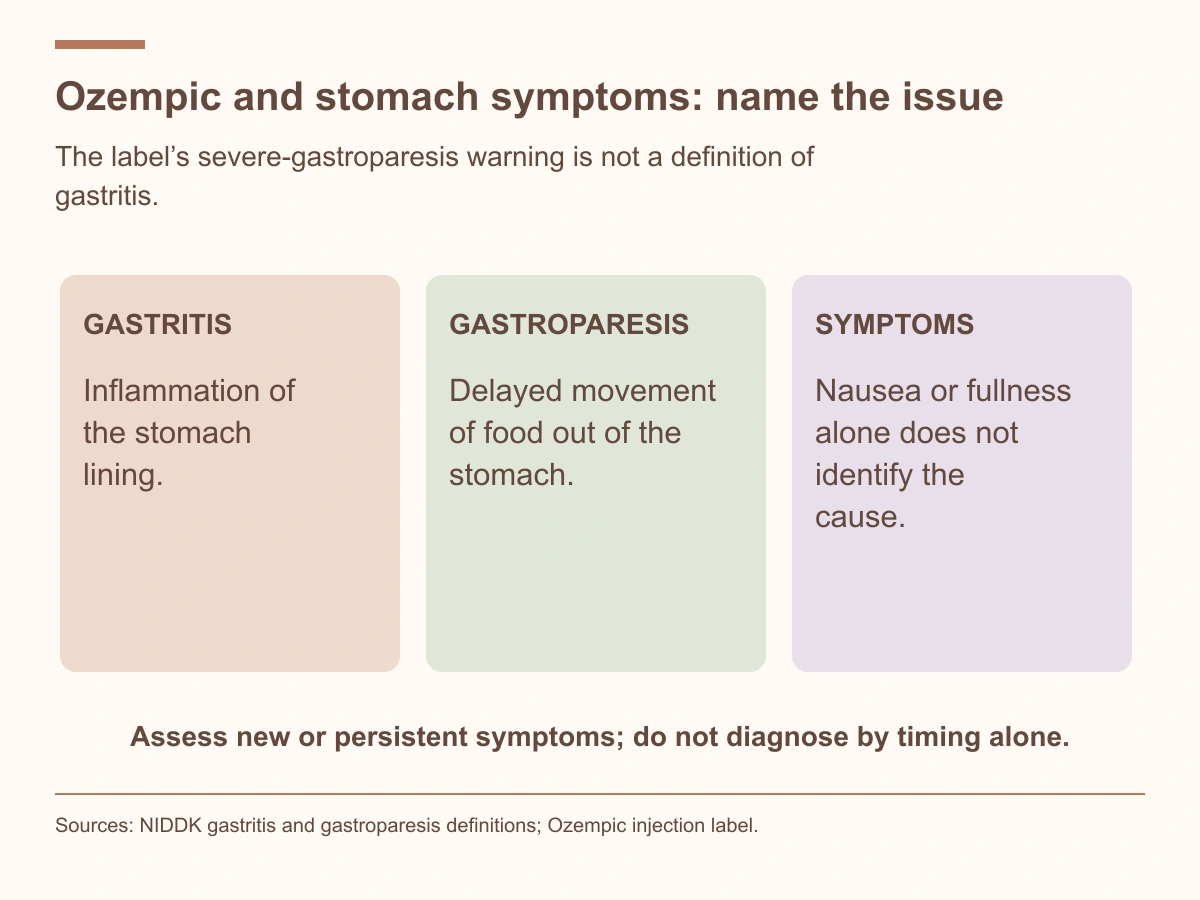
Gastritis means inflammation of the stomach lining. Gastropathy is a related term for damage to that lining with little or no inflammation. These are not simply names for every episode of indigestion, nausea, reflux, or delayed stomach emptying. NIDDK definitions
Some people with gastritis have no symptoms. Others can have upper-abdominal pain or discomfort, nausea, vomiting, early fullness, prolonged fullness after a meal, appetite loss, or weight loss. Those symptoms overlap with several other conditions and with medicine effects, so the symptom alone does not identify the cause. NIDDK symptoms and causes
The distinction matters because treating an infection, reviewing an irritating medicine, and managing a medication-related digestive reaction are different tasks. Calling all three “gastritis” can delay the assessment that would make the treatment more specific.
Can Ozempic cause gastritis?
Gastritis appears among the less frequent gastrointestinal adverse reactions reported in the Ozempic label. In the cited pool of placebo-controlled trials, the reported frequencies were 0.8% with placebo, 0.8% with Ozempic 0.5 mg, and 0.4% with Ozempic 1 mg. These are trial-group observations, not an individual prediction. Ozempic adverse-reaction section
Those numbers do not show a higher gastritis rate in those Ozempic groups than in placebo. They also do not prove that the medicine can never contribute to a particular patient’s symptoms. The label warns that gastrointestinal adverse reactions can sometimes be severe, and nausea, vomiting, diarrhea, constipation, and abdominal pain are important treatment concerns.
A careful answer therefore avoids both extremes: the label does not justify saying every new stomach symptom is Ozempic-induced gastritis, and it does not justify dismissing a new symptom because the trial percentages were low. Your history and evaluation still matter.
Gastritis, reflux, and gastroparesis are different problems
| Term | What it describes | Why symptoms alone can be misleading |
|---|---|---|
| Gastritis | Inflammation of the stomach lining | It may be silent or cause symptoms that overlap with other conditions. |
| Gastropathy | Stomach-lining damage with little or no inflammation | The underlying cause still needs identification. |
| Reflux or GERD | Stomach contents moving back toward the esophagus | Burning or regurgitation does not prove stomach-lining inflammation. |
| Gastroparesis | Delayed movement of food out of the stomach | Fullness and vomiting can overlap with other digestive complaints. |
| Medication-related digestive symptoms | Symptoms occurring in a treatment context | Timing can suggest a question without establishing a diagnosis. |
NIDDK describes gastroparesis as a disorder that slows or stops movement of food from the stomach to the small intestine. Ozempic delays gastric emptying, and its label says it is not recommended in severe gastroparesis. That warning should not be casually relabeled as a universal prohibition for every history of gastritis. NIDDK gastroparesis definition, Ozempic label
Our Ozempic reflux guide addresses burning and regurgitation questions, while the Ozempic side-effects guide covers the wider symptom picture.
Common causes should not disappear from the discussion
NIDDK identifies H. pylori infection as a common cause of gastritis. Autoimmune gastritis is another category. NSAIDs, alcohol, and bile can contribute to reactive gastropathy, and serious illness can cause a different form of stomach-lining injury. NIDDK causes
Tell the clinician about over-the-counter pain medicines as well as prescriptions. Someone may remember a newly started injection but overlook regular ibuprofen, naproxen, aspirin, or another product. The purpose is to review the complete picture, not to assume that one listed medicine is responsible.
Do not independently stop a medicine prescribed for an important reason, such as an antiplatelet drug, simply because it belongs in a stomach-symptom discussion. Ask the treating team to coordinate the plan. An accurate list gives them the information needed to weigh risks and alternatives.
What details help a clinician assess the problem?
Record when symptoms began, where the discomfort is, how severe it becomes, whether it relates to meals, and whether vomiting or bowel changes occur. Note any Ozempic start or dose change, but also include changes in other medicines, alcohol intake, illness, and previous stomach diagnoses.
Bring any endoscopy, biopsy, H. pylori, or other relevant results you already have. If “gastritis” was a casual description rather than a confirmed diagnosis, say that clearly. The clinician may need to distinguish a previously evaluated condition from a new symptom pattern.
NIDDK describes diagnosis using history, examination, and selected tests, which can include upper endoscopy with biopsies, blood or stool tests, and a urea breath test for H. pylori. Not everyone needs every test; the choice depends on the clinical question. NIDDK diagnosis guidance

Can you start or continue Ozempic with a history of gastritis?
That decision is individual. A remote, treated diagnosis and active vomiting with poor intake are different situations. The prescriber needs to know the cause of the gastritis, whether treatment was completed, whether symptoms persist, and whether another diagnosis or complication is suspected.
The current injection label’s contraindications include personal or family medullary thyroid carcinoma or MEN2 and serious hypersensitivity to semaglutide or its ingredients. Its gastrointestinal warnings, including the severe-gastroparesis recommendation, remain relevant even when a condition is not listed as a contraindication. Ozempic prescribing information
Do not start, restart, or increase a dose from an internet schedule while significant symptoms are unresolved. A clinician may need to reassess the underlying problem or the treatment plan. Our semaglutide missed-dose and restart guide explains why a longer interruption is a separate question from an occasional late injection.
Does treatment for gastritis interfere with Ozempic?
Review the exact medicines with the pharmacist and prescriber. A treatment plan may involve acid suppression, antibiotics, or another approach depending on the cause. There is no universal “gastritis medicine” with one interaction answer.
Ozempic injection delays gastric emptying and has the potential to affect absorption of oral medicines. The label also reports that the oral medicines studied in clinical pharmacology trials were not affected to a clinically relevant degree, while still advising caution. That qualified statement does not support a blanket claim that every oral medicine fails or requires a fixed spacing interval. Ozempic oral-medication section
Vomiting can create a separate problem with keeping oral treatment down. If that happens, contact the treating team for instructions rather than automatically repeating tablets. Bring the names, strengths, timing, and symptoms so the advice can match the actual treatment.
Treating the cause matters
For H. pylori gastritis, treatment uses a prescribed combination of medicines and may require follow-up testing to confirm that the infection has cleared. For reactive gastropathy related to a medicine, a clinician may consider changing the responsible treatment or adding appropriate stomach protection. Autoimmune gastritis can involve separate nutrient-deficiency assessment and management. NIDDK treatment guidance
These are examples of why the diagnosis matters. They are not instructions to choose antibiotics, stop an important prescription, or start supplements yourself. The appropriate treatment depends on the cause, prior medicines, medical history, and current professional guidance.
Feeling better after an acid-reducing medicine also does not by itself prove which condition was present. Follow the evaluation and follow-up plan rather than using temporary symptom improvement as a substitute for any recommended testing.
What should you eat when your stomach is uncomfortable?
Discuss foods and meal sizes you can tolerate while maintaining adequate nutrition and fluids. Avoid making your diet progressively narrower without help, especially if symptoms persist. The goal is to meet your needs while the cause is assessed, not to find a single food that supposedly heals every stomach problem.
NIDDK states that diet is not an important cause of most gastritis or gastropathy cases, while acknowledging exceptions such as substantial alcohol exposure, food allergies, and some supplements. A food that worsens your symptoms can still be worth discussing, but that does not make every spicy or acidic food the cause of gastritis. NIDDK gastritis nutrition guidance
Our balanced-meals guide can help with broader meal planning. If reflux is part of the picture, its meal-timing and trigger questions should be addressed separately. NIDDK reflux nutrition guidance
Symptoms that need prompt or emergency care
Seek medical help right away for vomiting blood or material resembling coffee grounds, black or tarry stools, or significant blood in stool. Faintness, shortness of breath, marked weakness, or other severe symptoms can accompany bleeding. Do not assume those findings are ordinary Ozempic nausea. NIDDK bleeding symptoms
Severe or persistent abdominal pain, particularly with vomiting or pain extending to the back, requires prompt assessment for problems including pancreatitis. Repeated vomiting, very little urine, significant dizziness, or inability to keep fluids down can signal dehydration. A suspected serious allergic reaction with swelling or difficulty breathing requires emergency care. Ozempic warnings
The medicine’s label directs discontinuation and prompt management when pancreatitis or a serious hypersensitivity reaction is suspected. Obtain clinical care rather than waiting for the next routine appointment. Do not use an online gastritis diagnosis to delay assessment of a potentially urgent problem.

What about endoscopy, surgery, or sedation?
Tell the procedural team that you use semaglutide, which product and route you use, when you last took it, and whether you have digestive symptoms. The Ozempic label describes rare reports of pulmonary aspiration during anesthesia or deep sedation in people taking GLP-1 medicines despite reported fasting.
The procedural and prescribing teams should coordinate the plan. Do not apply a universal stop or restart interval from an unrelated online post. The semaglutide and anesthesia guide explains the information that makes that conversation useful. Ozempic procedural warning
Keep the treatment and product names clear
This article discusses current Ozempic injection labeling. Other semaglutide products, including tablets, Wegovy, and compounded preparations, have separate instructions and considerations. A shared ingredient does not make all labels or evidence interchangeable.
For service information, CoreAge Rx semaglutide care describes its preparation and assessment process. Confirm the exact product with the care team and disclose the stomach history before a prescribing decision. The semaglutide nausea and vomiting guide provides related questions, but persistent symptoms still need an individual evaluation.
A useful plan explains what the likely problem is, whether further testing is needed, how each medicine should be managed, and which symptoms require another call or urgent care. That clarity is more helpful than a blanket yes-or-no answer about Ozempic and gastritis.
Educational information for adults; individual treatment decisions require a qualified clinician. Sources reviewed October 7, 2026. Original AI-generated article images depict fictional people and objects, not patient outcomes. Other editorial images are illustrative. Graphics summarize the cited sources.