
Fiber can influence how satisfying a meal feels, but the effect depends on the fiber, amount, food context, and person. A fullness claim is not the same as proof of sustained weight loss. It should not be used to justify replacing adequate meals with a supplement.
Why some fibers are discussed for satiety
Certain fibers form viscous material and can affect the physical properties of food during digestion. Fermentation and other processes may also matter. The fiber evidence review explains why these characteristics differ among ingredients.
A plausible mechanism is only a starting point. To know whether a product meaningfully changes appetite or weight, look for human results using the specific formulation and serving. A laboratory description of gel formation does not establish a predictable outcome for a commercial capsule.
Fullness and weight loss are separate outcomes
Feeling somewhat fuller at one meal does not prove that a person will lose weight over months. People may change later meals, activity, or other behaviors. A study’s duration and comparison group therefore matter.
The NIH weight-loss supplement review finds inconsistent weight-loss evidence for glucomannan. That should temper claims that any product containing the ingredient will reliably reduce appetite or produce a particular number of pounds lost.

Apply that distinction to Full House
Full House is positioned as a daily fiber and fullness supplement. Its pictured label lists konjac root extract, psyllium husk powder, glucomannan, and apple cider vinegar powder in a 1,525 mg proprietary blend per two capsules.
The individual amounts are not disclosed. You cannot determine from the blend weight that it matches a study of isolated glucomannan or psyllium. It is reasonable to review the product’s intended role; it is not reasonable to promise that the blend duplicates an ingredient trial.
Build meals that serve your needs
Look at the overall meal: protein-containing foods, fiber-containing foods, energy, portion size, and foods you enjoy. A meal that is too small may leave you hungry regardless of a supplement. A meal that is hard to tolerate may need a different approach rather than more fullness.
If appetite is already very low, especially during medical treatment, discuss nutritional adequacy with your care team. The goal should not be to eliminate hunger at any cost.
Evaluate a routine fairly
If you use a supplement, follow the current label and note whether it fits comfortably into meals. Do not increase the serving because a fullness sensation is absent. Hunger varies, and a subjective change on one day cannot establish a treatment effect.
Read food fiber versus supplements and psyllium versus glucomannan for a more precise comparison. Fullness is one possible experience to consider, while safe use and adequate nourishment remain part of the same decision.
Define the kind of fullness you want to understand
Comfortable satisfaction after a meal is different from nausea, painful distension, or feeling unable to eat enough. A product marketed for fullness should not blur those experiences into one desirable outcome. Start by describing what you mean.
If the goal is feeling satisfied between balanced meals, the meal pattern itself deserves review. If the goal is managing frequent hunger during weight treatment, discuss it in the context of the treatment and nutrition plan. If the problem is already early fullness or poor intake, adding a fullness-oriented product may raise a different concern.
The definition matters because a study measuring an appetite rating does not automatically answer whether someone will maintain adequate nutrition, lose weight, or tolerate a product comfortably over time.

Understand why a fiber’s properties matter
Some fibers interact with water in ways that affect viscosity and the contents of a meal or drink. Researchers may study how those properties relate to appetite or other outcomes. But the word fiber covers ingredients with different behaviors and evidence.
The fiber evidence review explains why physical properties help distinguish products. A known amount of one fiber in a particular preparation is not automatically equivalent to another fiber or to a blend with undisclosed amounts.
This is why an ingredient list should not be read as a collection of guaranteed fullness effects. The relevant amount, preparation, timing, and study population still need to match the claim being made.
Separate appetite ratings from weight outcomes
A person may report greater fullness after one meal without experiencing a predictable long-term weight change. Weight outcomes involve many meals, activity, health circumstances, and treatment when used. The two outcomes are related but should not be collapsed into one promise.
The NIH weight-loss supplement review describes inconsistent findings for ingredients such as glucomannan. That uncertainty matters when a blend is marketed with a fullness theme. A product name does not strengthen the evidence or eliminate the need to identify the actual dose.
When reading a study, ask how fullness was measured, how long participants were followed, and whether body weight or another outcome was assessed separately. A short-term appetite score is not a personal forecast of pounds lost.
Work through the Full House evidence question
Full House’s reviewed label lists a 1,525 mg proprietary blend of konjac root extract, psyllium husk powder, glucomannan, and apple cider vinegar powder per two capsules. It does not disclose the individual amounts needed to compare the formula with a known isolated-fiber dose.
The blend weight converts to 1.525 g, but that is still a total formulation amount. It is not a stated dietary-fiber amount or a glucomannan amount. Do not use the conversion to claim that the serving matches a particular satiety study.
The product can be evaluated for its disclosed ingredients, directions, and practical fit. Stronger claims about reliable appetite control or predictable weight loss require evidence that the reviewed label alone does not provide.
Build meals that address hunger in a broader way
Review whether meals contain suitable protein foods, fiber-containing foods, and enough overall nourishment for your needs. The details vary by person, but a pattern of skipped or very small meals can create hunger that should not automatically be treated as a need for another supplement.
Practical examples include adding a tolerated legume to a familiar dish, choosing a whole-grain option you enjoy, or including a fruit or vegetable alongside a meal. The value comes from the actual food pattern and portions, not from labeling the meal as a fullness hack.
If appetite is unusually high, unusually low, or changing with treatment, discuss the pattern with a clinician or dietitian. A supplement should not be used to suppress the signal that the broader plan needs attention.
Evaluate a routine without turning discomfort into success
If the product is appropriate for your circumstances, follow its current directions and observe the outcome tied to the original goal. Note whether meals remain adequate, whether the routine is comfortable, and whether symptoms appear.
Painful bloating, nausea, or inability to eat enough should not be counted as successful appetite control. Seek advice when those problems persist or are significant. The fiber-bloating guide explains why the specific symptom matters.
Also avoid increasing the serving when the desired sensation does not appear. More capsules change all ingredients and do not establish a stronger or more appropriate effect. Reassess the product and evidence rather than chasing a feeling through escalating intake.
A practical set of questions for a follow-up
| Question | Why it helps |
|---|---|
| What did I mean by fullness? | Separates satisfaction from uncomfortable symptoms |
| Were meals adequate? | Keeps nutrition in view |
| Was the product used as directed? | Clarifies the actual exposure |
| What else changed? | Prevents assigning every effect to the supplement |
| Is the intended benefit clear? | Supports a decision about continuing |
| Do symptoms require assessment? | Prevents a marketing claim from overriding care |
This review can lead to continuing, changing, or stopping an optional product. The important outcome is a plan that fits the person’s needs and the available evidence.
Frequently asked questions
Does feeling fuller guarantee weight loss?
No. Short-term fullness and long-term weight outcomes are different measures. The broader food pattern, activity, health, and treatment context matter. Do not convert an appetite sensation into a guaranteed weight-loss result.
Is uncomfortable bloating a sign the product is doing its job?
No. Discomfort should be described and assessed as a symptom. A product marketed for fullness should not redefine pain, nausea, or poor food intake as a required benefit.
Can I take extra Full House before a large meal?
Do not exceed the reviewed directions or invent an event-based dose. Extra servings change the whole blend, and the label does not establish that strategy. Follow the current bottle and individualized advice.
What if I already struggle to eat enough?
Discuss that before using a fullness-oriented product. The priority may be maintaining adequate nutrition and evaluating the cause of low intake. A supplement should not make an existing eating difficulty harder to manage.
Explore Full House™
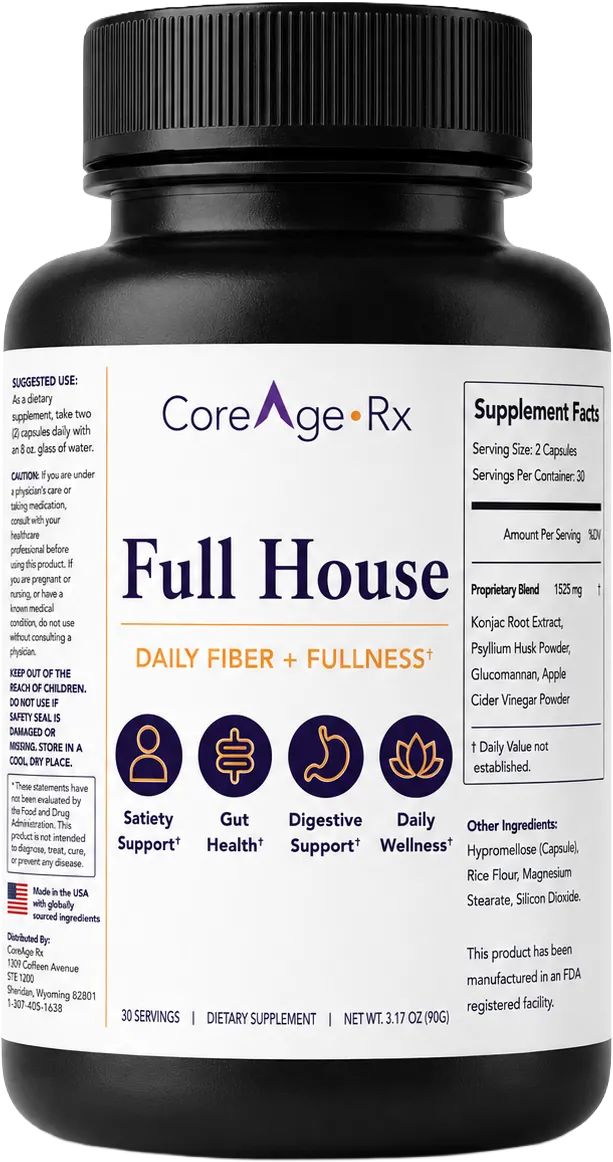
Full House combines konjac root extract, psyllium husk powder, glucomannan, and apple cider vinegar powder in a 1,525 mg proprietary blend per two capsules. See the current Full House™ page and check the bottle you receive before use.
Related reading
- Fiber Supplements: Types, Labels, and How to Choose
- Psyllium vs. Glucomannan: What Is the Difference?
- Glucomannan and Konjac: Understanding This Fiber Ingredient
- Constipation while taking a GLP-1 medication
Educational information, not individualized medical advice. Product information and linked research checked September 15, 2026. Ingredient research does not establish identical effects for a finished supplement.