
Plain Fairlife ultra-filtered milk can fit into a weight-management eating pattern. Whether it is useful depends on the amount, the rest of your food, your preferences, and any medical or allergy needs. Its protein and sugar numbers do not make it a fat-burning product or guarantee weight loss.
Compare the actual milk label rather than treating every Fairlife product as the same. Plain milk, flavored milk, Core Power, and other ready-to-drink shakes are different products. This article focuses on the manufacturer’s plain skim, reduced-fat 2%, and whole ultra-filtered milk labels.
What the current plain milk labels show
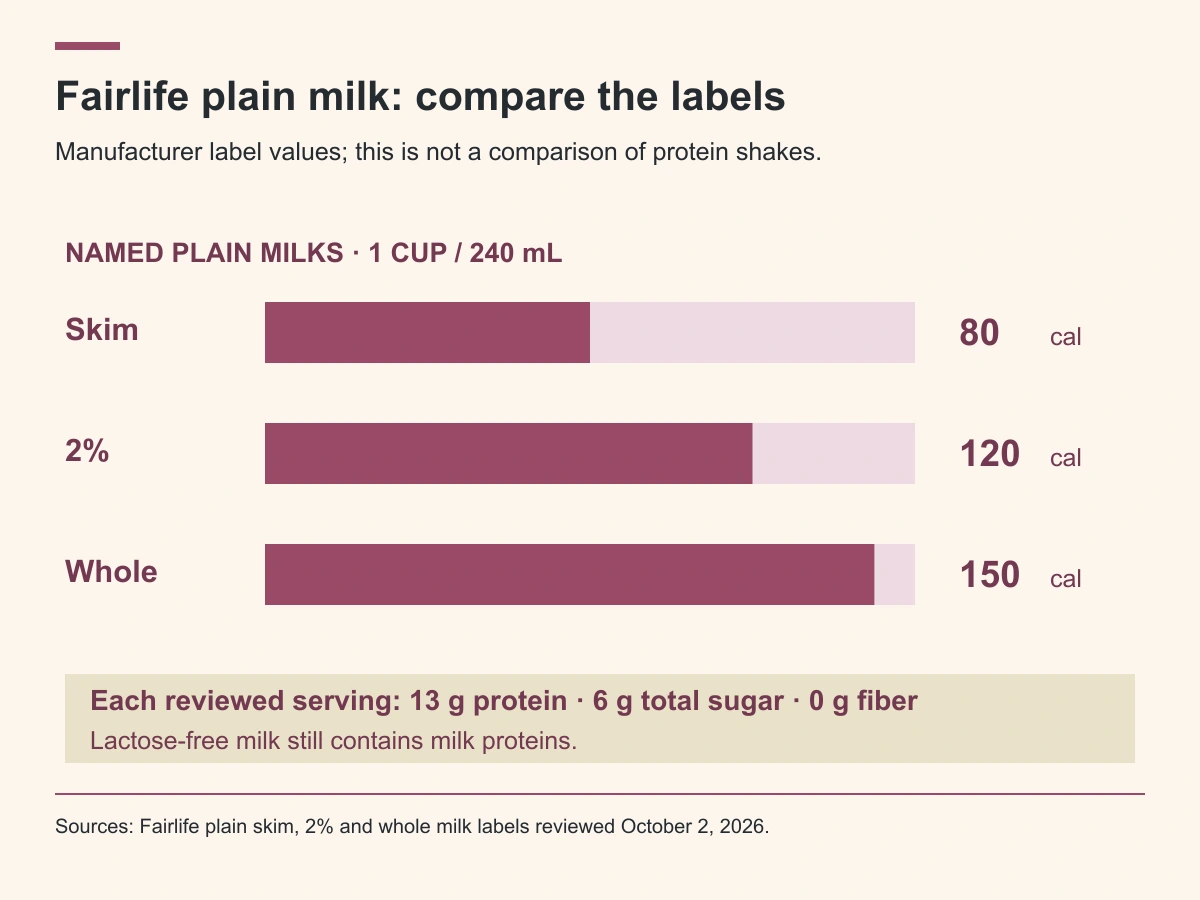
For one cup, or 240 milliliters, the reviewed Fairlife labels list 13 grams of protein and 6 grams of total sugar for all three plain varieties. Calories and fat differ. Skim lists 80 calories, 2% lists 120, and whole lists 150. Fairlife skim label, Fairlife 2% label, Fairlife whole label.
| Per 1 cup / 240 mL | Plain skim | Plain 2% | Plain whole |
|---|---|---|---|
| Calories | 80 | 120 | 150 |
| Protein | 13 g | 13 g | 13 g |
| Total carbohydrate | 6 g | 6 g | 6 g |
| Total sugar | 6 g | 6 g | 6 g |
| Total fat | 0 g | 4.5 g | 8 g |
| Saturated fat | 0 g | 3 g | 5 g |
| Fiber | 0 g | 0 g | 0 g |
These are manufacturer label values for the named plain products and serving size. They are not numbers for chocolate milk or a protein shake. Check the container you buy because formulations and package information can change.
The table is useful for choosing among these products, but it does not prescribe a daily serving or an ideal fat level for every person. If your clinician has given you specific nutrition guidance, use that context when comparing the labels.
Does more protein mean more weight loss?
Protein is one part of an adequate eating pattern. A food’s protein contribution can make it useful in meals, but a higher number on a label does not establish a superior weight-loss outcome. Ask what the milk is adding to the whole day and what it is replacing, if anything.
For example, pouring milk over cereal contributes differently from adding a large glass after an already complete meal. Neither choice is automatically wrong. They simply answer different nutrition and appetite needs.
If you are trying to increase protein because you struggle to eat enough, consider whether the product is convenient, enjoyable, and tolerated. If you already get enough, adding more does not automatically improve results. Individual needs also vary with health conditions and activity.
Our semaglutide protein and muscle guide and tirzepatide protein guide explain the broader context. They are useful starting points for a care-team conversation, rather than a reason to assign everyone the same daily milk intake.
Total sugar is not the whole calorie story
The plain varieties have the same listed total sugar in the reviewed labels, while their calories differ because the fat content differs. That is a practical example of why a sugar number alone cannot determine which food best suits your needs.
Do not confuse total sugar with an independently verified added-sugar value. The captured manufacturer panels used for this comparison show total sugar; this article does not invent a separate added-sugar row. Read the actual package panel when that distinction matters to your decision.
Also check the serving size. A splash in coffee is not a cup, and a large glass may contain more than a cup. If you are estimating intake, match the amount you use with the labeled serving. You do not need to measure every sip indefinitely, but a realistic example can correct an inaccurate assumption.
Our sweet tea versus soda article uses named beverage labels to show the same principle: compare amounts and actual products, rather than relying on a drink’s reputation.
Skim, 2%, or whole: which should you choose?
There is no universal answer from the brand name. Skim provides the lowest calories and fat in this comparison, while whole has a different taste and texture. The protein contribution is the same in the reviewed one-cup servings.
Consider how you will use it. A milk you enjoy in coffee might not be your preferred option for cooking or drinking. If you discard a product because you dislike it, its theoretical nutrition advantage does not help your routine.
Price, availability, household preferences, and clinician-directed limits also matter. If you have a specific saturated-fat, energy, or other nutrition goal, compare the table and discuss what fits. Choosing a product does not require labeling every other variety unhealthy.
When planning a meal, include the milk with the other ingredients. For oatmeal, that means oats, fruit, nuts, sweeteners, and milk. For a smoothie, it means every ingredient in the blender. A milk label does not provide the nutrition total for the finished recipe.

Lactose-free does not mean dairy-free
The reviewed plain Fairlife labels list milk, lactase, and added vitamins and identify milk as an allergen. Lactose-free milk still contains milk proteins. Someone with a milk allergy should not treat it as a safe replacement simply because lactose has been broken down. Fairlife ingredient information, FDA food allergy guidance.
Lactose intolerance and milk allergy are different issues. If you have been told to avoid milk because of an allergy, follow that plan and ask your clinician about suitable alternatives. New symptoms after a drink deserve assessment rather than an assumption that the product cannot be responsible.
For a severe allergic reaction, use your prescribed emergency plan and seek immediate help. Breathing difficulty, throat swelling, or collapse is not a routine digestive intolerance symptom to wait out.
Read the full label for every product. A household that uses both dairy and nondairy drinks should also consider cross-contact and how containers or utensils are shared when an allergy is present.
How does it compare with plant-based drinks?
Plant-based drinks vary in protein, calories, sugars, ingredients, and fortification. FDA advises comparing labels because products are not nutritionally interchangeable simply because they can be poured over cereal or used in coffee. FDA information on milk alternatives.
Use the exact product you are considering. A sweetened almond drink and an unsweetened soy drink are different comparisons. A broad claim about “almond milk” may not match either label. Compare equal serving volumes and decide which nutrients or ingredients matter for your situation.
If you need to avoid dairy, a protein difference does not override that need. Consider your whole eating pattern with a clinician or dietitian, including how you will obtain nutrients from other foods. The goal is an appropriate plan, rather than a brand contest.
Plain milk is different from a protein shake
Some shoppers search for Fairlife milk and mean a bottled shake. Check the product name and Nutrition Facts panel before using a number from an article. Serving size, ingredients, protein, calories, and intended use can differ.
Our Fairlife protein shakes guide addresses that separate category. The protein shake meal ideas article discusses how drinks can fit alongside food. A shake or glass of milk does not automatically become a nutritionally complete meal because it contains protein.
If you use a drink because preparing food is difficult, consider what is missing from the rest of the meal and whether the pattern is sustainable. A convenient food can help, but repeatedly replacing meals without an adequate plan may leave other needs unmet.
Practical ways to use milk in everyday meals
Choose an application that solves a real problem. Milk can be an ingredient in oatmeal, a component of a smoothie, a drink with a meal, or an addition to coffee. Count it as part of the actual recipe rather than an extra with no contribution.
Examples include:
- Oatmeal prepared with milk and fruit, with other toppings chosen to suit your needs.
- A smoothie containing milk and familiar foods, with the full ingredient list considered.
- A glass alongside a meal when that helps you meet your intake needs.
- Milk used in a sauce or soup, with the finished recipe divided realistically.
These examples do not share one calorie total or prescribed portion. The balanced meals guide and lunch calories guide explain why the full pattern matters. Current federal dietary guidance also emphasizes a variety of nutrient-dense foods, rather than requiring one brand of milk. Dietary Guidelines for Americans overview.

What if a GLP-1 medicine reduces your appetite?
If you are using a prescription medicine and having difficulty eating, a tolerated drink may be one practical option to discuss. It should not become an excuse to ignore persistent symptoms, inadequate intake, or repeated meal skipping. Share the whole pattern with your care team.
CoreAge Rx’s semaglutide service and tirzepatide service information describe separate treatment pathways. Milk does not replace those medicines or determine eligibility. If the concern is hunger rather than product selection, the food noise guide may help you describe it.
Frequently asked questions
Is Fairlife milk good for weight loss?
It can fit a suitable eating pattern, but it does not guarantee weight loss. Consider the amount, complete meals, personal health needs, and what you enjoy. The brand alone does not answer the question.
Is skim always the best choice?
It has fewer calories and less fat than the named 2% and whole products in this comparison. Whether that is useful depends on your goal and preferences. The reviewed protein amount is the same across these plain varieties.
Can I drink it if I have a milk allergy?
The plain products contain milk proteins and list milk as an allergen. Lactose-free is not dairy-free. Follow your allergy plan and discuss suitable alternatives with your clinician.
Can a glass replace lunch?
Milk provides some nutrients, but a protein-containing drink is not automatically a complete lunch. Assess what the rest of the meal and day provide. Seek individualized help if low appetite makes adequate eating difficult.
Are the calories the same as Core Power?
No comparison should assume that. This article uses plain ultra-filtered milk labels. Read the actual shake label and use the separate protein-shake guide for that product category.
Do I need it to get enough protein?
No single brand is required. Other dairy foods, nondairy options, and varied protein foods can contribute. Choose an approach that suits your health, preferences, access, and budget.
Educational information for adults; individual treatment decisions require a qualified clinician. Sources reviewed October 2, 2026. Original AI-generated article images depict fictional people and objects, not patient outcomes. Other editorial images are illustrative. Graphics summarize the cited sources.