
Bagels are not automatically bad for you, and you do not have to eliminate them to work toward weight loss. What matters is the size of the bagel, its ingredients, what you eat with it, and how the meal fits your nutritional needs. A small packaged bagel and a large bakery bagel are not interchangeable portions.
The useful question is, “How can this breakfast work for me?” That answer can include a bagel. It should also account for hunger later in the morning, the foods you enjoy, medical conditions, and whether you are getting enough nutrition while taking an appetite-reducing medicine.
Start with the actual bagel, not a generic calorie estimate
A bagel is a type of bread, not a standard weight. Two products called “plain bagels” can differ in size, flour, added sugar, sodium, protein and fiber. Bakery products may also differ from the packaged version you found in a tracking app.
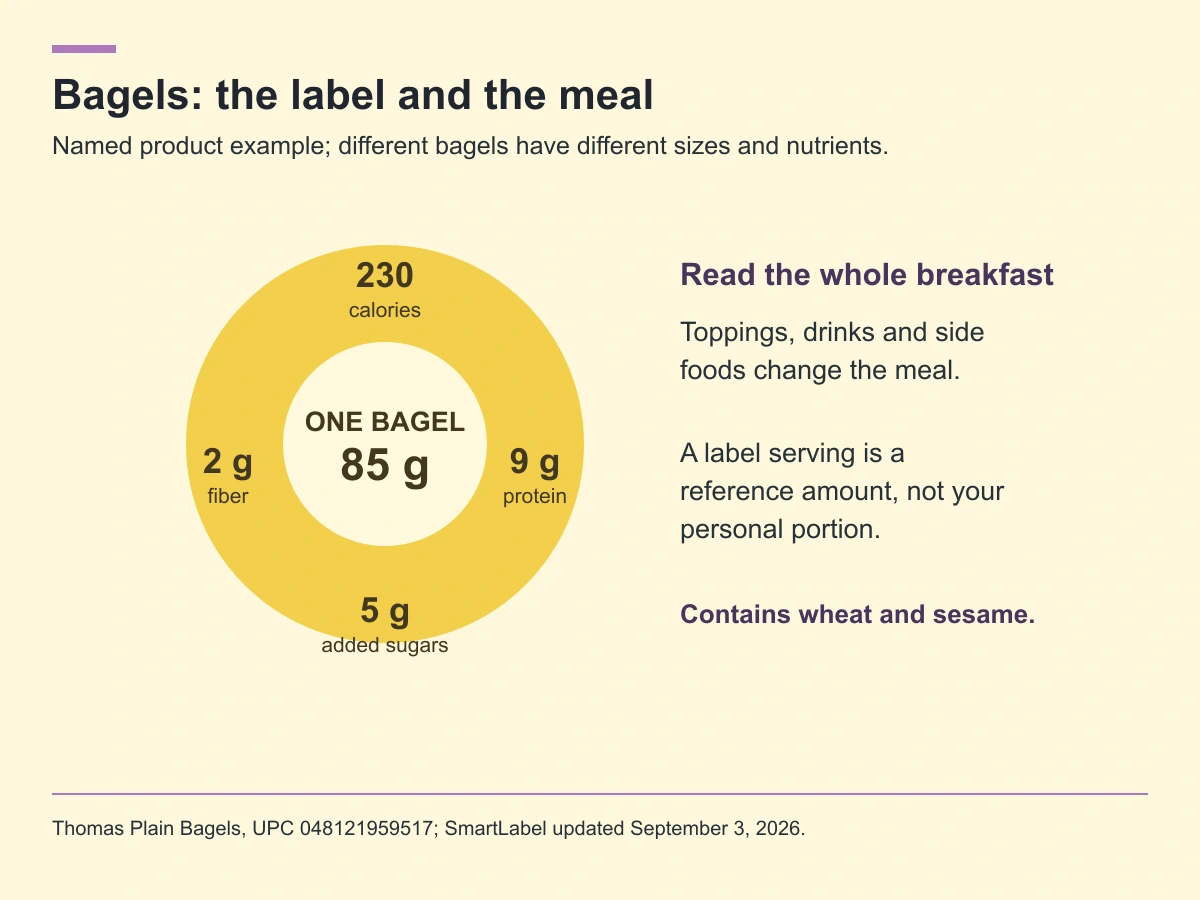
For one concrete example, the identified Thomas Plain Bagels SmartLabel, UPC 048121959517, lists the following for one 85-gram bagel. The label was updated September 3, 2026 and reviewed for this article on October 2, 2026.
| Label item | One identified 85-gram bagel |
|---|---|
| Calories | 230 |
| Total carbohydrate | 45 grams |
| Dietary fiber | 2 grams |
| Protein | 9 grams |
| Total sugars | 5 grams |
| Added sugars | 5 grams |
| Sodium | 390 milligrams |
These figures describe that product. They do not establish the nutrition of every bagel, and the photograph above is not a measured serving of the labeled product. Check the package you actually buy, especially if its size or ingredient list differs.
The FDA’s Nutrition Facts guidance explains that serving sizes are label reference amounts, not recommendations for how much you personally should eat. Eating part of a bagel changes the amount consumed; eating a larger bagel changes it too. Neither choice needs to become a rule for everyone.
Are bagels fattening because they contain carbohydrates?
Carbohydrate content alone does not tell you whether a food will cause weight gain. A bagel contributes energy to your eating pattern, as do its toppings and the rest of the day’s food. Long-term weight management depends on that broader pattern and your health, rather than on whether one food has been placed on a forbidden list.
It is more useful to notice how the breakfast functions. Does it keep you comfortable until your next meal? Are you eating because you are hungry, rushing through breakfast, or arriving at lunch having eaten too little? Does restricting bread lead you to skip breakfast and then eat much more later?
Those observations can help you adjust the meal without declaring all bread unhealthy. Our calorie-intake guide explains why a daily number needs individual context. A bagel cannot determine whether that number is appropriate, and a single morning’s scale change cannot establish a change in body fat.
If you are interested in the difference, read water weight versus fat loss. Treating a short-lived weight fluctuation as evidence against a food can lead to unnecessary restriction.
Plain, whole-wheat, multigrain and high-protein bagels
The front of a package is a starting point. The ingredient list and Nutrition Facts panel help you compare the actual products.
“Multigrain” describes the presence of multiple grains; it does not by itself tell you how much whole grain or fiber the bagel contains. A darker color is also not a reliable nutrition measurement. Look at which flours are listed and compare fiber for the amount you expect to eat.
The Thomas example above lists enriched wheat flour first. That is a specific ingredient statement, rather than a claim that the product is whole grain. A different product may list whole-wheat flour and have a different fiber value. Compare the labels instead of transferring one product’s figures to another.
High-protein bagels deserve the same review. Ask how much protein the product provides, what its serving weighs, and whether its added ingredients suit you. A higher protein number does not erase calories or establish that a product is the best choice for every person.
For more context on food sources, see food fiber versus supplements. Adding a fiber supplement does not make two different breakfasts nutritionally identical.
Toppings can change the meal as much as the bread
Cream cheese, nut butter, eggs, cheese, smoked fish, jam and vegetables create different meals. Compare the combination you actually eat, rather than the bagel by itself.
For example, a plain bagel with a thin spread and coffee differs from a bagel sandwich with eggs, cheese and a sweetened drink. One may provide more protein; another may contain more added sugar or sodium. The appropriate choice depends on your needs and the rest of your eating pattern, not on a universal ranking of toppings.
A practical approach is to identify what the breakfast is missing. If it is mostly bread and a drink, you might want a food that supplies protein or some fruit. If it is already a substantial sandwich, adding more food simply because a photograph shows a larger breakfast may not help.
You could build a breakfast around a bagel with an egg and tomato, yogurt and fruit on the side, or a filling you enjoy and tolerate. These are meal ideas, not prescribed portions or promises of longer-lasting fullness. Our protein breakfast ideas offer more combinations to discuss with a dietitian if you need individualized help.

Should you eat half a bagel to lose weight?
Half a bagel is an option, not a requirement. It can suit someone who prefers a smaller bread portion with other foods. It can also leave another person hungry or short of the nutrition they need.
Consider the whole breakfast before making the change. If you cut the bagel in half but add a much larger spread, the meal may change less than you expect. If you cut the bread and remove the protein food as well, the breakfast may become inadequate.
Buying a smaller bagel, saving part for later, eating a whole bagel, or choosing a different breakfast are all possible arrangements. The useful outcome is a routine you can sustain and adjust, rather than the smallest portion you can tolerate.
The NIDDK’s guide to successful weight-loss programs emphasizes a sustainable eating plan, activity and ongoing support. It does not establish a universal half-bagel rule. Bring your preferences and schedule into the discussion instead of relying on a rigid online menu.
What if you are taking semaglutide or tirzepatide?
Reduced appetite can make a previously familiar breakfast feel too large. That does not mean a bagel is prohibited. It means the size, texture, toppings and timing of the meal may need to fit your current symptoms and nutritional intake.
If a heavy bagel sandwich is uncomfortable, consider what specifically changed: the amount eaten, rich toppings, how quickly you ate, or a recent medicine dose change. Keep a short symptom record and discuss recurring problems with your prescribing team.
Do not treat nausea or prolonged fullness as a target to intensify by eating as little as possible. The joint advisory on nutrition during GLP-1 treatment discusses assessment of nutritional intake and the risk of inadequate intake. A lower appetite does not eliminate the need for protein, fluids and other nutrients.
Our semaglutide nausea guide and tirzepatide nausea and reflux guide explain questions to raise when meals become difficult. Persistent vomiting or inability to keep fluids down needs prompt clinical advice.
If you are exploring treatment rather than already taking it, the semaglutide product information can be a starting point for discussing clinical suitability, the exact formulation and follow-up. A product page does not establish that a medicine is appropriate simply because a breakfast or weight goal is challenging.
Diabetes, allergies and other individual considerations
If you have diabetes, use the actual carbohydrate amount and your individual eating and glucose-management plan. A generic statement that “bagels are bad for diabetes” is less useful than knowing the portion, the rest of the meal and your own response. Medication adjustments belong with your clinician.
Allergens matter independently of weight goals. The identified Thomas label lists wheat and sesame, with additional shared-facility information. Someone with an allergy should review the exact package and avoid assuming that a plain appearance means the product has no relevant allergen.
If you need to limit sodium, compare both the bread and its fillings. If you have a medically required diet, pregnancy-related needs or a history of an eating disorder, a standard weight-loss substitution may be unsuitable. A dietitian can help preserve adequate intake while addressing the reason for the restriction.

A five-minute breakfast review
You do not need to redesign your entire diet to learn something useful. For a few ordinary breakfasts, write down the product, approximate amount, toppings and drink. Also note when you become hungry again and whether you experience symptoms.
Then ask three questions: Is the portion the one I thought it was? Does the meal provide foods beyond bread and a spread? Is this arrangement comfortable and practical for my morning?
Choose one change to evaluate, such as a different filling, a smaller bakery product, or keeping a protein food alongside the bagel. Avoid changing the bread, toppings, medicine and meal timing all at once if you want to understand what affects your comfort.
For broader meal planning, our balanced meals guide offers a framework that can include bread, rice and other familiar foods. You can also compare sourdough bread and weight management without assuming that sourdough is automatically lower in calories.
Frequently asked questions
Can I eat a bagel every day and still lose weight?
It can fit some eating patterns, but daily frequency alone does not predict your result. Review the portion, toppings, overall intake and whether the routine supports adequate nutrition. No specific food frequency guarantees weight loss.
Are whole-wheat bagels always better?
They may provide different ingredients and more fiber, but verify the actual label. Compare a similar amount of each product. A whole-wheat description does not establish a smaller portion, lower calories or a guaranteed fullness effect.
Is a bagel healthier than toast?
The answer depends on the bagel, the bread, the amount and the toppings. Comparing one large bagel with one small slice of toast is also a comparison of quantity. Use the actual products and meal context.
Do I need to avoid cream cheese?
There is no universal prohibition. Its amount and the rest of the breakfast matter. If a rich topping worsens your symptoms or does not fit your nutritional needs, discuss a change rather than treating the food as a cause of every weight fluctuation.
What should I do if a bagel feels too heavy on a GLP-1 medicine?
Review the meal amount, toppings and symptoms with your care team. A smaller meal may be one option, but recurrent prolonged fullness, vomiting or poor intake needs assessment. Do not independently increase your medicine or skip necessary nutrition to compensate.
Educational information for adults; individual treatment decisions require a qualified clinician. Sources reviewed October 2, 2026. Original AI-generated article images depict fictional people and objects, not patient outcomes. Other editorial images are illustrative. Graphics summarize the cited sources.