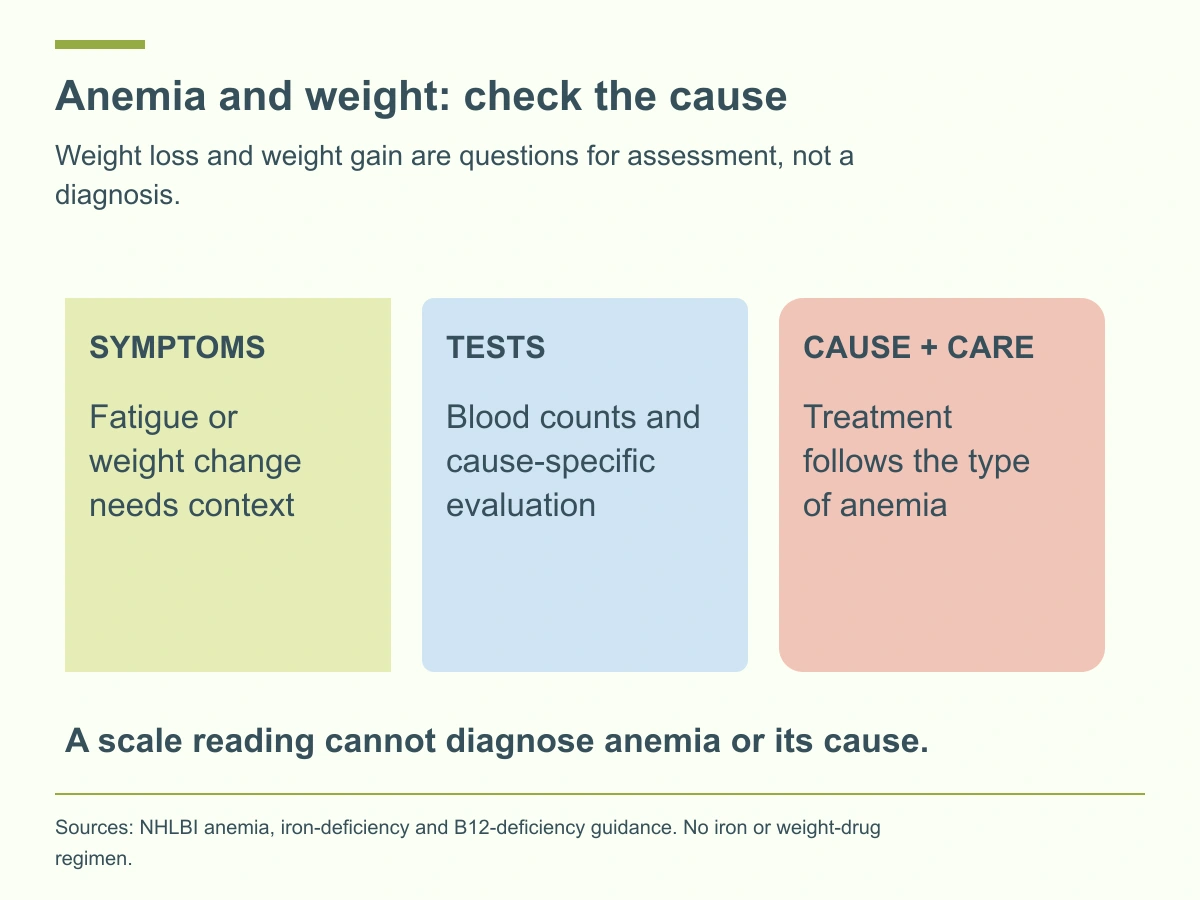
Anemia is not a reliable explanation for every episode of weight loss or weight gain. It describes a problem with healthy red blood cells or their ability to carry oxygen, and different causes can produce different symptoms. Weight loss can occur in some anemia-related conditions, including vitamin B12 deficiency, while unexplained weight gain needs its own assessment. A scale reading cannot tell you whether you have anemia or what caused it.
If fatigue and a weight change appear together, the useful next step is to review the symptoms, eating pattern, medical history, and appropriate blood tests. Do not assume that losing weight is a beneficial treatment result or that gaining weight proves iron deficiency.
What is anemia?
NHLBI describes anemia as a condition involving a lower-than-normal amount of healthy red blood cells. It can reduce the oxygen-rich blood available to the body and cause symptoms such as tiredness, weakness, shortness of breath, or dizziness. There are several types and causes. NHLBI anemia overview.
Iron deficiency is common, but anemia is not synonymous with iron deficiency. Other nutritional problems, blood loss, chronic illness, and inherited conditions can be relevant. The appropriate treatment follows the diagnosis and cause.
This matters because a symptom such as fatigue does not select a supplement. A person may need an evaluation for anemia, another condition, or several overlapping issues rather than an automatic iron or B12 purchase.
Can anemia cause weight loss?
Weight loss can appear in some conditions involving anemia. NHLBI lists weight loss among possible symptoms of vitamin B12–deficiency anemia, along with other gastrointestinal or neurological symptoms. That does not mean every unexplained weight change is B12 deficiency. NHLBI B12-deficiency anemia guidance.
An underlying illness can also affect both nutrition and blood counts. For example, iron-deficiency evaluation may include blood loss or an absorption problem. The important question is whether a shared cause needs attention, rather than assuming anemia itself explains the entire weight trend. NHLBI iron-deficiency causes.
Tell the clinician whether the weight loss was intentional, how quickly it occurred, and whether appetite, intake, bowel habits, or other symptoms changed. Do not attribute persistent unplanned loss to “a faster metabolism” without assessment.
Can anemia cause weight gain?
The reviewed sources do not establish a universal anemia-to-weight-gain effect. Weight gain alone does not diagnose anemia, and treating a deficiency does not guarantee weight loss.
Fatigue may coincide with changes in activity or meals, but that is an individual history question rather than proof of a direct mechanism. Other medicines, health conditions, fluid changes, and daily routines may need separate review.
Describe the trend rather than trying to identify its cause from a single reading. When did it begin? Was it gradual or rapid? Did clothing fit, swelling, appetite, or activity change? Those details help the clinician distinguish different questions.
Our Wegovy water-retention guide explains why changes in fluid and total body weight are not interchangeable, while keeping medication-specific issues separate. A scale does not identify fat, muscle, or fluid on its own.
Why the type of anemia changes the answer
| Clinical question | What may need review | Why the scale is not enough |
|---|---|---|
| Iron-deficiency anemia | Blood loss, intake, absorption, and relevant health conditions | Weight does not identify iron stores or the cause of deficiency |
| B12-deficiency anemia | Absorption, diet, medicines, and neurological or digestive symptoms | Weight loss is possible but not diagnostic |
| Anemia with chronic illness | The underlying condition and appropriate testing | Several factors may affect symptoms and weight |
| Weight change without a diagnosis | Intentionality, intake, medicines, symptoms, and examination | Anemia cannot be assumed from fatigue or a weight trend |
A useful appointment addresses both the blood problem and the weight question. Even after anemia is confirmed, the reason for weight change may require separate assessment.
Ask the clinician to explain what is known, what is still uncertain, and which finding will guide the next step. A label such as “low iron” should be connected to the actual test and clinical situation rather than interpreted through an internet symptom list.
Blood loss and absorption deserve attention
NHLBI identifies blood loss as a cause of iron deficiency, including heavy menstrual bleeding and gastrointestinal bleeding. Digestive conditions and some surgeries can also affect absorption. Iron-deficiency anemia causes.
Report a change in periods, black or bloody stool, abdominal symptoms, previous stomach or intestinal surgery, and medicines that may be relevant. These details can be more important than whether your weight moved up or down.
If you are in perimenopause, a bleeding change should be discussed on its own merits. Our perimenopause HRT guide can help organize cycle and symptom questions; it does not diagnose the cause of bleeding or establish an anemia treatment.
A hormone-treatment discussion and an anemia evaluation may overlap in your history, but neither should replace the other. Bring the symptom timeline and current treatment information to the clinician who is assessing the bleeding or fatigue.
What tests might the clinician consider?
NHLBI describes blood tests such as a complete blood count, hemoglobin, and iron-related measurements, including ferritin, in iron-deficiency assessment. B12-related testing may be appropriate when that deficiency is suspected. The choice depends on the clinical picture. Iron-deficiency diagnosis, B12-deficiency diagnosis.
This article does not provide a self-diagnosis cutoff. A result needs interpretation with the laboratory reference range, medical history, and other findings. An isolated number or a normal-looking value should not be used to dismiss ongoing symptoms without context.
Ask which test addresses which question. For example: “Are we checking whether anemia is present, identifying a deficiency, or looking for the cause?” Understanding that distinction makes follow-up more useful.
Keep a copy of prior results if available. The trend and the reason a test was ordered may help the care team compare the current situation with earlier findings.

Should you take iron or B12 without testing?
Treatment should fit the identified condition. Iron is not the answer to every form of anemia, and the cause of a B12 problem can affect the treatment plan. Discuss suspected deficiency with a clinician rather than selecting a supplement from fatigue and weight symptoms alone. NHLBI anemia treatment overview.
If treatment is already prescribed, ask what response is expected, how it will be monitored, and when to follow up. Do not stop because the scale did not move in the direction you hoped. Weight is not a substitute for the intended blood or symptom outcome.
Oral iron can also cause digestive side effects, including constipation. Report those symptoms so that the care team can address tolerance while treating the deficiency. Iron-deficiency treatment guidance. Our glutathione and constipation guide illustrates why the full supplement and medicine list belongs in a bowel-symptom review.
What can food changes reasonably accomplish?
Food variety supports nutrition, but it does not replace identifying blood loss, an absorption disorder, or another medical cause. A carefully chosen meal is not proof that a deficiency is corrected.
NHLBI lists dietary sources of iron and B12 and describes cause-specific treatment. The exact eating plan should account for preferences, restrictions, and the diagnosed condition. Iron-deficiency prevention guidance, B12 nutrition guidance.
Our balanced-meal guide provides a practical structure for meals. The pinto-bean guide and hard-boiled egg guide discuss familiar foods in context, rather than promising that one food treats anemia or produces weight loss.
If reduced appetite or symptoms make it hard to eat adequately, tell the clinician. A dietitian may help translate the treatment and nutrition goals into a workable routine. Avoid an extreme restrictive plan while unexplained fatigue or weight loss is being assessed.
What if you take a weight-management medicine?
Identify the exact product, dose, recent changes, appetite effects, and other symptoms. A medicine can be relevant to intake and weight trends, but that does not establish it as the cause of anemia.
If you use semaglutide or tirzepatide, tell the prescribing team about new fatigue, unexpected weight loss, difficulty eating, or an anemia diagnosis. Ask how the evaluation and weight-management plan should be coordinated.
Our semaglutide protein and muscle guide explains why scale changes are only one part of treatment follow-up. The CoreAge Rx semaglutide information page can help begin a separate prescribing discussion; semaglutide is not an anemia treatment or a substitute for evaluating unintentional weight loss.
Do not increase a weight-management medicine to address weight gain that you believe is “from anemia.” First clarify the cause and appropriate treatment with the clinician.
Prepare a clear symptom and weight timeline
Bring a brief record that includes:
- When fatigue, breathlessness, dizziness, or other symptoms began.
- Whether weight change was intended and how it progressed.
- Appetite, usual food intake, and digestive symptoms.
- Bleeding changes, menstrual history when relevant, and prior surgery.
- Medicines, supplements, and recent changes.
- Previous blood tests, diagnoses, and prescribed treatment.
A statement such as “I have been more tired for six weeks and lost weight without trying, while my appetite changed” gives the clinician more useful information than “I think low iron is speeding up my metabolism.”
Include changes that seem unrelated. The goal is to give the care team enough context to assess a shared cause and identify which questions need separate follow-up.
When should you seek prompt or urgent care?
Severe shortness of breath, chest pain, fainting, significant bleeding, or another serious symptom needs urgent assessment. Do not wait for a supplement course to work when you feel acutely unwell.
Persistent unexplained weight loss or worsening fatigue also deserves medical review. The anemia sources describe conditions in which a diagnosis can point to a more serious underlying problem. NHLBI anemia overview.
If you are already receiving treatment but symptoms are worsening, contact the care team and explain the change. Ask what should trigger earlier assessment rather than relying only on the next scheduled blood test.

Questions people commonly ask
Does low iron always cause weight loss?
No universal pattern is established here. Weight change should be assessed alongside the cause of iron deficiency, symptoms, intake, and other conditions.
Will iron tablets make me gain weight?
A guaranteed weight-gain effect is not established by the reviewed sources. If weight changes during treatment, report the timing and other changes rather than assuming the supplement is responsible.
Does weight gain rule out anemia?
No. A weight trend cannot establish or exclude anemia. Appropriate testing and clinical interpretation answer that question.
Is fatigue during menopause always anemia or low hormones?
Neither diagnosis should be assumed from fatigue alone. Discuss bleeding, sleep, medicines, other symptoms, and appropriate evaluation. Our menopause hormone-therapy guide addresses a separate treatment discussion.
Can B12 deficiency happen despite a varied diet?
Yes. NHLBI describes absorption and other risk factors as well as dietary issues. Food intake alone cannot rule it out or determine the right treatment.
Evaluate the cause before choosing a weight explanation
Anemia and weight changes can occur together, but the relationship is not one-size-fits-all. Clarify the anemia type, investigate its cause, and review the weight trend in context. That creates a more useful treatment plan than asking a scale reading to explain fatigue or select a supplement.
Educational information for adults; individual treatment decisions require a qualified clinician. Sources reviewed October 5, 2026. Original AI-generated article images depict fictional people and objects, not patient outcomes. Other editorial images are illustrative. Graphics summarize the cited sources.
Research behind this topic
- Testosterone and Anemia: What the TRAVERSE and TTrials Studies Found. TRAVERSE and TTrials found a hemoglobin benefit in selected men with low testosterone. The review explains why an anemia workup and blood-count monitoring remain necessary.