
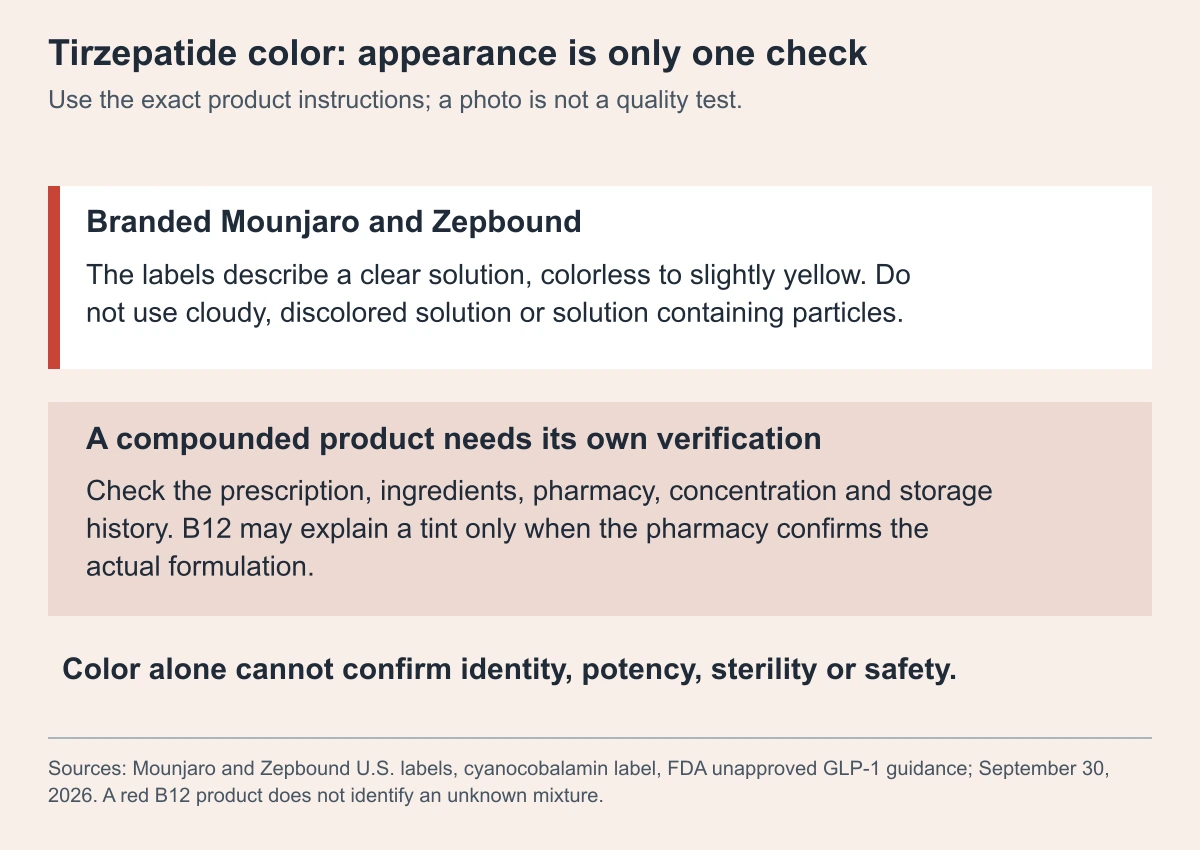
Branded Mounjaro and Zepbound are described in their U.S. labels as clear solutions that can be colorless to slightly yellow. A compounded tirzepatide prescription needs a separate check of its actual ingredients and pharmacy instructions. Pink, red, yellow or clear appearance alone cannot tell you whether a medicine contains the right drug, has the intended strength, is sterile or is safe to inject.
If a shipment looks unexpectedly different, pause before using it and contact the dispensing pharmacy and prescriber. Keep the vial or device, carton, prescription label and shipping information available. The useful question is whether this exact product matches its documented formulation and handling history—not whether it resembles a photograph online. Mounjaro prescribing information, Zepbound prescribing information.
Start by identifying which product you received
“Tirzepatide” names an active ingredient. It does not identify every ingredient, container, concentration or storage instruction in the package. Mounjaro and Zepbound are branded medicines with their own approved labeling. Compounded preparations are different products, and a supplier selling a research chemical is different again.
Read the prescription label and carton together. Confirm the product name, dispensing pharmacy, intended patient, ingredient list and prescribed strength. With a vial, distinguish the concentration from the total amount in the container. A number expressed as milligrams per milliliter does not by itself state the dose your clinician prescribed. Appearance cannot resolve a confusing conversion between milligrams, milliliters and syringe markings.
The tirzepatide questions guide explains common treatment questions. For a compounded prescription, the pharmacy-selection guide covers the information worth checking before starting care. If the source, prescription or label is unclear, resolve that uncertainty before discussing the shade of the liquid.
What color should branded tirzepatide be?
The current Mounjaro and Zepbound labels describe a clear, colorless-to-slightly-yellow solution. Their instructions tell users to inspect the medicine and avoid using solution that is cloudy, discolored or contains particles. Follow the inspection directions for the exact presentation supplied to you. Mounjaro label, Zepbound label.
“Clear” describes transparency; it does not necessarily mean completely colorless. The labels permit a slight yellow appearance. That is different from deciding that any yellow, orange or brown vial is acceptable. A webpage cannot establish how much color is normal in your particular container or whether a newly observed change is discoloration.
| Question | What can be established? | What still needs checking? |
|---|---|---|
| Is the branded product clear and colorless or slightly yellow? | That description is consistent with the labeled appearance. | Correct product, intact packaging, expiration, storage and the prescribed instructions. |
| Is there unexpected cloudiness, discoloration or visible material? | The appearance raises a concern that the label addresses. | Contact the pharmacy or manufacturer; do not use appearance to justify proceeding. |
| Is a compounded vial pink or red? | Color does not identify its formulation. | The pharmacy must confirm the actual ingredients and expected appearance. |
| Is an unknown vial completely clear? | Transparency is visible. | Identity, strength, sterility and authenticity remain unverified. |
This is an interpretation guide, not a set of color swatches for approving medicine at home. An unexpected appearance is a reason to obtain product-specific help.
Can B12 make compounded tirzepatide look pink or red?
An added ingredient can affect a preparation’s appearance. One specific cyanocobalamin injection label describes its 1,000 mcg/mL product as a clear, dark-red solution. Cyanocobalamin is a form of vitamin B12. That provides a factual explanation for why someone might ask about a red or pink tint in a prescription said to contain B12. Cyanocobalamin injection labeling.
It does not establish that every pink vial contains B12, that every B12-containing mixture should have the same shade, or that a particular compounded tirzepatide combination is stable or appropriate. The B12 label describes its own product, not your tirzepatide prescription. Do not use its concentration, route instructions or storage rules as instructions for another preparation.
Ask the pharmacy whether cyanocobalamin—or another ingredient—is actually present, where that ingredient is documented and what appearance is expected for this formulation. Ask whether the appearance you see represents a change from its normal condition. A seller’s general claim that “pink means B12” is not enough to authenticate the package in your hand.
B12’s color also does not demonstrate better weight loss, less nausea or a higher tirzepatide dose. Those are separate clinical and product-quality questions. A colorful liquid should not become a shortcut for judging effectiveness.
Does a clear vial mean the medicine is genuine?
No. A vial may look ordinary while containing an incorrect amount, a different substance or a product with an uncertain handling history. FDA describes concerns with fraudulent compounded GLP-1 products, including labels that identify pharmacies that did not make the medicine. It also warns about products sold directly to consumers under research-only or non-human-use descriptions. FDA guidance on unapproved GLP-1 drugs.
These concerns cannot be settled with a photo comparison, an online review or a claim that the liquid has no particles. Use a licensed prescriber and state-licensed pharmacy, and check the information on the prescription with the dispensing source. If you suspect that a pharmacy name has been used without authorization, contact that pharmacy through independently verified contact information.
The compounded GLP-1 guide explains why compounded medicines do not undergo the same FDA premarket review for safety, effectiveness and quality as approved medicines. That distinction remains relevant even when an ingredient name and appearance seem familiar.

What if the new vial looks different from the previous one?
A change may reflect a different prescribed formulation or supplier, but it should be explained by the pharmacy rather than guessed. Compare the labels, not just the liquids. Check whether the product name, concentration, added ingredients, container type or pharmacy changed. Keep the previous prescription information if it helps the pharmacist identify the difference.
Describe what you actually observed: a new tint, cloudiness, visible particles, damaged packaging or a change after storage. Report when you noticed it and whether the container had already been opened. A photo may help document a concern, but it cannot measure potency or prove sterility.
Do not carry over an old syringe measurement because the new vial looks similar. Likewise, do not assume that a darker liquid is stronger or that a clearer one is weaker. Formulation and dosing questions need written confirmation. The separate semaglutide color article explains a related appearance question; semaglutide and tirzepatide are different active ingredients, so one product’s description cannot approve the other.
How do storage and shipping affect the question?
Appearance is only one part of the handling history. A normal-looking solution does not establish that its required storage conditions were maintained. Branded Zepbound instructions differ between single-dose products and multi-dose vials or KwikPen, so a remembered limit from another device may be wrong for your package. Zepbound storage labeling.
Compounded preparations need their own directions, and FDA specifically advises against using injectable GLP-1 medicine that arrives warm or with insufficient refrigeration. Contact the pharmacy about the shipment rather than placing it in a refrigerator and assuming that the problem is corrected. Record the delivery time, packaging condition and any information available about temperature exposure. FDA shipping and quality concerns.
Do not improvise by freezing the medicine, heating it, shaking it aggressively, filtering it or mixing it with another substance to change its appearance. A pharmacy quality question is not an invitation to repair an injectable preparation at home. For a suspected quality problem, ask what to retain, how to obtain a replacement and whether the prescriber needs to adjust the care plan while you wait.
Useful questions for the dispensing pharmacy
Make the conversation specific enough that the pharmacist can identify the prescription and its source:
- Which exact product and formulation did you dispense? Ask for the active ingredient, any added ingredients and the concentration as written on the label.
- What appearance is expected for that formulation? Describe the difference you see rather than supplying your own diagnosis.
- Does the storage or delivery history raise a concern? Include whether it arrived warm, froze, was left out or has already been opened.
- Should this container be used, replaced or retained for investigation? Obtain a clear answer about the actual package.
- Can you confirm the prescription and administration instructions? Resolve unfamiliar concentration or device information before the next dose.
Keep a record of the answer and any replacement instructions. If the pharmacy cannot identify the product or explain the label, involve the prescriber. A general customer-service reassurance is less useful than confirmation from the team responsible for the prescription.

Common questions about tirzepatide color
Is slightly yellow tirzepatide always spoiled?
No. A slight yellow appearance is included in the branded Mounjaro and Zepbound descriptions. That does not make all yellow solutions acceptable. Unexpected discoloration, cloudiness, particles or handling problems still need product-specific review. Manufacturer labels.
Is pink tirzepatide stronger?
Color does not establish strength. Only verified prescription and formulation information can identify the concentration and intended dose. A confirmed colored ingredient may affect appearance without telling you how much tirzepatide the preparation contains.
Can I tell from an online photo whether my vial is safe?
A photo can document an observation; it cannot verify identity, potency, sterility or storage history. Lighting and the container can also change how a shade looks. Use the pharmacy’s assessment of the exact package rather than a gallery of other people’s prescriptions.
Should I change the dose because the liquid looks different?
Do not make a dose change based on color. Contact the pharmacy and prescriber about the appearance and verify the current instructions. An unexplained formulation change should be resolved before using the product.
For a branded product’s presentation-specific handling rules, read the Zepbound refrigeration and storage guide. Those instructions do not establish stability for a compounded mixture.
Where treatment options fit
For someone still considering care, the guide to choosing a GLP-1 medication can help organize questions about indication, tolerability, cost and follow-up. CoreAge Rx’s tirzepatide service page describes its offered care; its compounded product should not be assumed to have the same FDA approval or product-specific evidence as branded Mounjaro or Zepbound.
The practical starting point is a verified prescription and an identifiable pharmacy. Appearance can tell you that something deserves attention. It cannot finish the quality assessment or replace a clinician’s decision about which medicine, if any, is appropriate.
Educational information for adults; individual treatment decisions require a qualified clinician. Sources reviewed September 30, 2026. Original AI-generated article images depict fictional people and objects, not patient outcomes. Other editorial images are illustrative. Graphics summarize the cited sources.