Ozempic can be used with metformin in a clinician-directed type 2 diabetes treatment plan; the Ozempic label includes trials with metformin-containing regimens. Adding glipizide changes the safety discussion because glipizide is a sulfonylurea, a medicine class that can increase the risk of low blood glucose when used with Ozempic. A combination that is appropriate for one person may need different monitoring or adjustment for another.
The practical question is not simply whether the names can appear on the same medication list. It is why each medicine is there, whether the exact regimen remains appropriate, and what to do when appetite, food intake, illness, or glucose readings change. This guide helps you prepare that conversation without choosing doses for you.
Can you take Ozempic and metformin together?
The prescribing information describes Ozempic studies in adults with type 2 diabetes receiving metformin, including studies involving metformin with a sulfonylurea. That supports the existence of clinician-managed combination treatment. It does not establish that every patient should receive the combination or that a particular online dosing plan is suitable. Ozempic prescribing information, clinical studies
Your prescriber considers the reason for treatment, glucose control, kidney health, other conditions, side effects, and the medicines already being used. Tell the clinician whether you take immediate-release or extended-release metformin, the actual glipizide formulation if relevant, and any insulin. Medication names alone leave out information needed for a safe review.
Ozempic’s approved uses involve specified type 2 diabetes populations, including its labeled cardiovascular and kidney indications. It is not the same product as Wegovy. A diabetes combination study is not a promise of weight loss from combining medicines. Our metformin and weight-loss guide and semaglutide questions guide discuss those separate expectations.
Glipizide vs. Ozempic: what are the main differences?
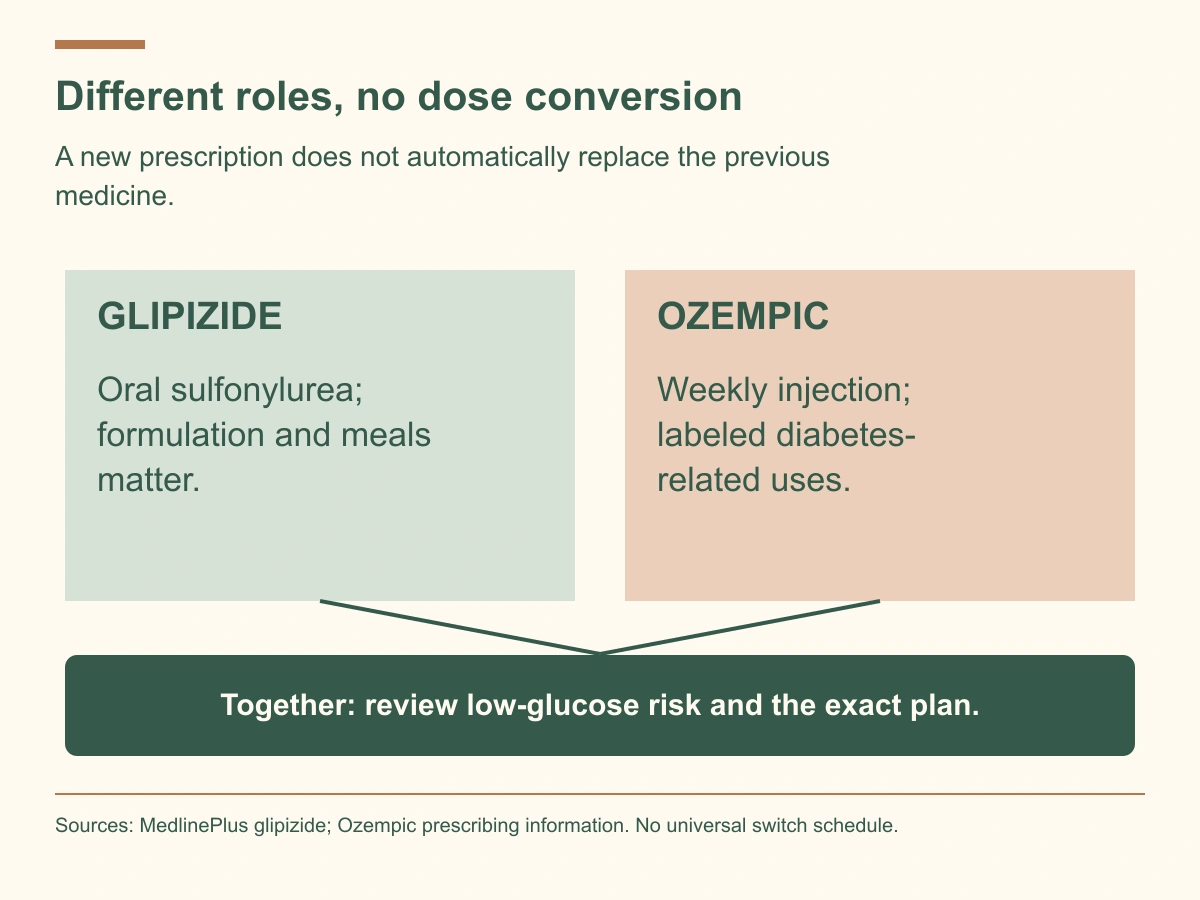
Both can be used in type 2 diabetes care, but they act differently and have different instructions and evidence. Glipizide is a sulfonylurea that stimulates insulin release from the pancreas. Ozempic is a semaglutide injection with specific labeled glucose, cardiovascular, and kidney-related uses. They are not milligram-for-milligram substitutes. Glipizide drug information, Ozempic prescribing information
| Comparison | Glipizide | Ozempic injection |
|---|---|---|
| Form | Oral regular or extended-release tablet | Once-weekly injection |
| Meal instructions | Depend on the tablet formulation | Can be administered with or without meals |
| Main treatment discussion | Glucose lowering through insulin release | Labeled type 2 diabetes care and specified risk-reduction indications |
| Low-glucose review | Important with missed meals and other risk factors | Risk increases with insulin or a sulfonylurea such as glipizide |
| Switching question | Requires a prescriber-directed plan | Does not provide a direct dose conversion from glipizide |
The table summarizes roles and practical differences, not a head-to-head trial or a ranking for every patient. Choice depends on the health problem, prior response, other medicines, adverse effects, preferences, access, and cost.
Regular and extended-release glipizide are not the same schedule
MedlinePlus describes regular glipizide as usually taken before breakfast or meals and the extended-release form as usually taken with breakfast. Follow the directions for the actual prescription rather than using one tablet’s routine for the other. Extended-release tablets should be swallowed whole. Glipizide use instructions
If you begin eating later, skipping meals, or following a fasting window, tell the prescriber. The intermittent-fasting hours guide explains clock schedules, but it cannot adjust a glucose-lowering prescription to make that schedule safe for you.
Does Ozempic automatically replace glipizide?
No. A clinician may add a medicine, reduce another, substitute treatment, or leave the regimen unchanged according to the individual situation. Ozempic’s label specifically identifies increased hypoglycemia risk with sulfonylureas and notes that reducing the other medicine’s dose may be necessary. That is a prescribing decision, not an instruction to stop glipizide yourself. Ozempic hypoglycemia warning
Ask for a written transition plan if a change is proposed. It should identify which medicines continue, any exact changes, monitoring, and who to contact about readings or symptoms. Do not infer the plan from receiving a new prescription while an old bottle still has tablets left.
Which is better for weight, heart, or kidney goals?
Those are separate outcome questions. Ozempic’s label includes specified cardiovascular and kidney risk-reduction indications, but a label-supported benefit in an eligible population does not automatically decide the best regimen for everyone. Glipizide’s role in lowering glucose should not be treated as proof of identical benefits for every other outcome. Ozempic indications
The sources reviewed for this comparison do not supply a single direct trial establishing an individual weight-loss advantage from switching between these medicines. Discuss your goals explicitly rather than turning a general drug comparison into a promised number on the scale.
Where does metformin fit?
Metformin may remain part of the clinician’s plan with either medicine, depending on suitability and tolerance. Its presence does not cancel glipizide’s low-glucose concern or remove the need to review kidney health and illness instructions. The sections below explain the combination discussion in more detail. Metformin information
If cost is the reason for considering a switch, bring the actual pharmacy estimate and coverage decision. The Ozempic cost guide can help organize those details. A cheaper or more convenient option still needs a plan for the condition being treated and for follow-up after the change.
How the three medicines differ
| Medicine | Basic role in a type 2 diabetes discussion | Important review point |
|---|---|---|
| Metformin | Helps manage glucose through effects including reduced liver glucose production and improved response to insulin | Kidney function, illness, tolerability, and formulation |
| Ozempic | Semaglutide injection with specific labeled diabetes-related indications | Dose schedule, stomach symptoms, and other glucose-lowering medicines |
| Glipizide | Sulfonylurea that stimulates pancreatic insulin release | Low-glucose risk and the relationship to meals and other treatment |
MedlinePlus describes metformin and glipizide as type 2 diabetes medicines with different actions and precautions. It also distinguishes their formulations and directs patients to follow their prescription instructions. Metformin drug information, glipizide drug information
If all three are on your list, ask the prescriber to explain each role in plain language. For instance: “Which result are we tracking for this medicine, and what would make us reconsider it?” That is more useful than assuming a third medicine always adds a necessary benefit.
What changes when glipizide is involved?
Ozempic’s label warns of increased hypoglycemia risk when it is used with an insulin secretagogue such as a sulfonylurea, or with insulin. The prescriber may need to reduce the dose of the other medicine. That is a clinician’s adjustment, not a direction to cut your tablets or stop them yourself. Ozempic hypoglycemia warning
A review becomes particularly useful if you recently started Ozempic, increased its dose, have repeated low readings, or are eating substantially less. Bring the actual timing of glipizide and meals, along with meter or continuous glucose monitor records if you have them. Ask which readings or symptoms require immediate contact and which should be discussed at routine follow-up.
Do not conclude that glucose is low simply because you feel tired or sweaty. Symptoms need interpretation alongside your readings and clinical situation. Our Ozempic side-effects guide helps organize common treatment questions. The Mounjaro night-sweats article explains why sweating also needs a broader review; it is not a reason to switch medicines on your own.
Less appetite can change the conversation about meals
An appetite change matters if your glucose treatment was planned around a previous eating pattern. NIDDK describes missed meals, insufficient carbohydrate intake, more activity, alcohol, and illness among factors that can contribute to low glucose in people using medicines that lower it. Sulfonylureas and insulin are especially relevant to that discussion. NIDDK low blood glucose information
Tell your care team what has actually changed. “I skipped dinner twice because I felt nauseated” gives more useful information than “I am eating healthier.” Ask for a plan that covers workdays, travel, activity, and days when you cannot eat normally.
Our first-month semaglutide guide covers early treatment questions. The protein and muscle guide can help frame nutrition questions, but nutrition advice does not replace a glucose safety plan. Avoid using a weight-loss goal as a reason to ignore poor intake or recurrent low readings.

Know your own low-glucose response plan
Ask the clinician which glucose target and treatment instructions apply to you, what supplies to keep available, and how people close to you should help during an emergency. NIDDK’s treatment information requires glucose or carbohydrate for a low-glucose episode and describes special considerations for medicines that slow digestion. Severe episodes that prevent self-treatment require emergency help and a clinician-prescribed rescue plan. Low-glucose treatment and emergency preparation
A zero-sugar sports drink does not provide the rescue carbohydrate in that guidance. Our Gatorade Zero label and hydration guide explains the difference between a routine beverage and low-glucose treatment. Ask your pharmacist which rescue product is appropriate for your regimen rather than relying on the color, flavor, or electrolyte content of a drink.
If you are unable to treat yourself or someone is having severe symptoms, get emergency help. Do not wait for an online appointment or attempt to resolve the episode by changing the next prescription dose.
Stomach symptoms and illness need medication review
Metformin and Ozempic can both raise questions about gastrointestinal tolerability. Timing alone does not identify the cause of nausea or diarrhea. Note when the symptom started, which medicine changed, whether you are eating and drinking, and whether there is another possible illness.
Metformin’s drug information includes an important lactic-acidosis warning and precautions involving kidney problems, significant illness, dehydration, procedures, and certain tests. Ozempic’s label also warns about kidney injury related to volume depletion, often involving nausea, vomiting, or diarrhea. These are reasons to ask for an individualized illness plan; they do not mean every stomach symptom is that complication. Metformin precautions, Ozempic volume-depletion warning
Contact your care team promptly for persistent vomiting or difficulty keeping fluids down. Ask how to handle each medicine during illness before the next episode happens. Do not apply a generic “stop all diabetes medicines” rule from a forum. Our Ozempic fever guide helps distinguish a symptom history from an assumed medication cause.
Do you need to separate the medicines by several hours?
Follow the directions for the exact prescriptions and formulations. Ozempic injection is labeled for weekly administration with or without meals; metformin and glipizide have their own formulation-specific directions. Those facts do not justify inventing a universal spacing interval for every regimen. Ozempic administration instructions, metformin use instructions, glipizide use instructions
Have a pharmacist review your complete schedule, including supplements and nonprescription medicines. If the printed directions and what you remember from an appointment disagree, ask for clarification. Our Ozempic dosage chart explains labeled dose stages, but your prescriber’s specific instructions govern your treatment.
If you miss a dose of one medicine, identify which medicine and which formulation before seeking advice. Do not double several medicines together to “catch up.” Keep the product-specific patient instructions accessible and ask the pharmacist how to handle uncertainty.
A useful checklist for your next appointment
For a broader review beyond these three medicines, see Ozempic medication interactions for insulin, oral medicines, supplements and procedure-related questions to bring to your pharmacist or prescriber.
Bring medication bottles or a current list with strengths, formulations, timing, and the prescriber for each medicine. Include insulin if used, along with your recent glucose records and symptoms.
Questions that make the review concrete include:
- Why is each medicine part of my current plan?
- Does glipizide or insulin change my low-glucose risk?
- How should I monitor after a new medicine or dose change?
- What is my treatment plan for a low reading or symptoms?
- What should I do if I cannot eat or drink normally?
- Which symptoms require urgent assessment?
- Does my kidney history change any precautions?
- Who should I contact between scheduled visits?
If cost or access is driving the question, say so. A clinician can discuss appropriate options without treating a pharmacy price as a medical reason to combine or substitute medicines. Our NovoCare access guide addresses dispensing and payment questions separately.
For people exploring CoreAge Rx care, the semaglutide treatment page provides a starting point for asking about the actual service. Review your current diabetes regimen with a qualified clinician; a product page does not approve a combination or establish brand equivalence.

Frequently asked questions
Is Ozempic with metformin automatically unsafe?
No. The label includes metformin-containing clinical regimens. Suitability still depends on your history, exact prescriptions, other medicines, and monitoring plan.
Can I take Ozempic, metformin, and glipizide together?
A prescriber may manage such a regimen for type 2 diabetes, but glipizide adds an important low-glucose consideration. Ask for a complete medication review and do not change doses yourself.
Will the combination make me lose more weight?
The existence of a diabetes combination regimen does not establish an individual weight-loss result. Review treatment goals and product indications separately from glucose outcomes.
Should I stop glipizide if my appetite falls?
Contact the prescriber for instructions. Provide your actual food intake, readings, symptoms, and medicine timing. A general article cannot select a safe change for your regimen.
Is sweating proof that my glucose is low?
No. Check according to your care plan and consider other causes with the clinician. Severe symptoms need prompt help regardless of whether you have identified the cause.
Sources checked for this update
Glipizide source; Ozempic source; Metformin source.
Educational information for adults; individual treatment decisions require a qualified clinician. Sources reviewed October 6, 2026. Original AI-generated article images depict fictional people and objects, not patient outcomes. Other editorial images are illustrative. Graphics summarize the cited sources.