
Cantaloupe can fit into a weight-management eating pattern. It provides a sweet fruit option with relatively few calories in a defined portion, but it does not burn fat, cancel another meal, or guarantee weight loss. Its usefulness depends on the amount you eat, what you eat alongside it, and the eating pattern you can maintain.
The practical questions are more interesting than whether melon is a “good” or “bad” food. How much is a serving? Does its sugar make it unsuitable? Is it enough for breakfast? What changes when appetite is lower on a weight-management medicine? This guide answers those questions and explains the food-safety steps that matter when cutting a melon.
What does cantaloupe provide?
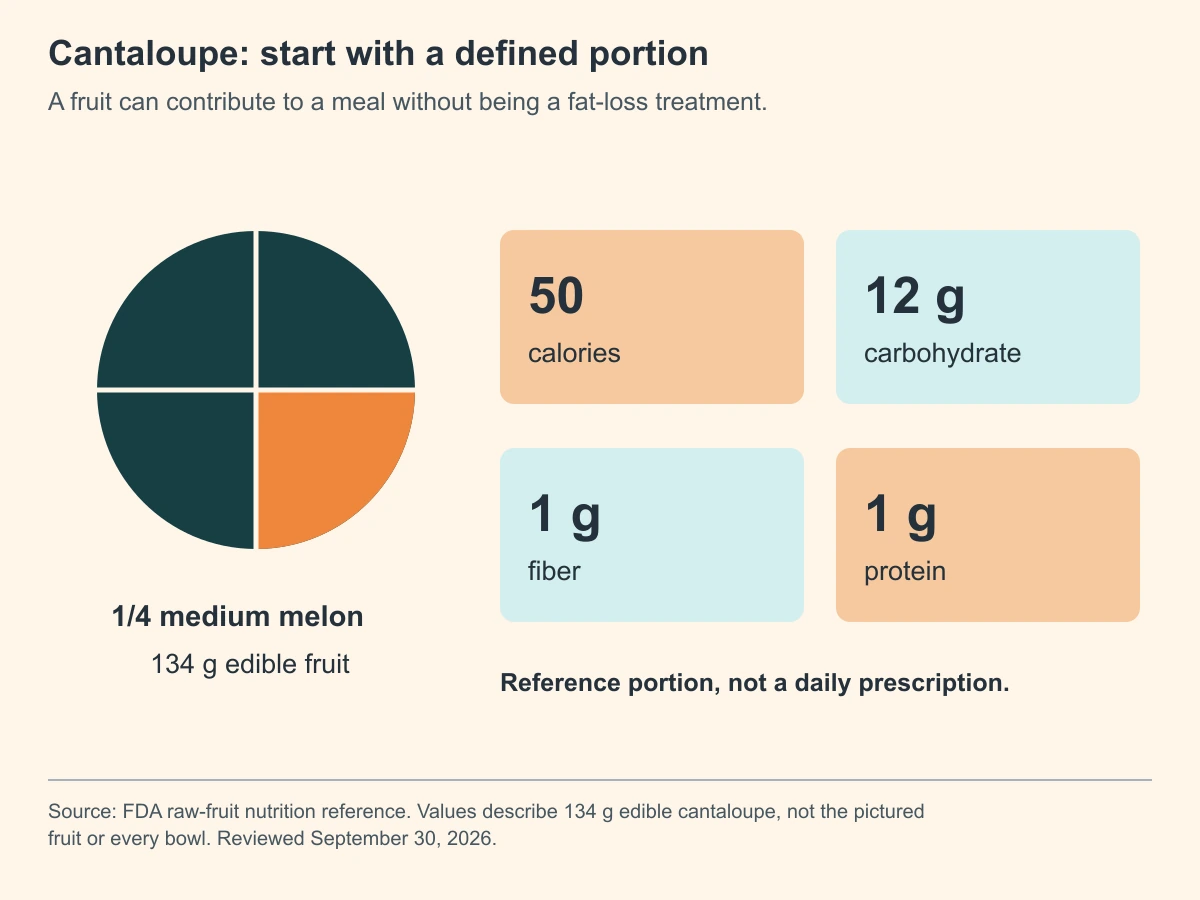
FDA’s raw-fruit reference lists a specific edible portion: one-quarter of a medium cantaloupe, weighing 134 grams. That portion has 50 calories, 12 grams of carbohydrate, 11 grams of sugars, 1 gram of fiber and 1 gram of protein. The reference also lists 240 milligrams of potassium. These numbers describe that portion, not any bowl, slice or whole melon. FDA raw-fruit nutrition reference.
| Nutrient | FDA example: 134 grams of edible cantaloupe |
|---|---|
| Calories | 50 |
| Total carbohydrate | 12 grams |
| Sugars | 11 grams |
| Dietary fiber | 1 gram |
| Protein | 1 gram |
| Total fat | 0 grams in the reference |
| Potassium | 240 milligrams |
The reference’s gram weight is particularly helpful because melons differ in size. A quarter of a very large melon may contain more edible fruit than a quarter of the medium melon used in the table. The rind and seeds are not part of the edible portion. A photograph also cannot establish the weight of the fruit on a plate.
This table uses the nutrient amounts rather than the poster’s older vitamin percentage figures. For packaged foods, use the current label on the product you buy. Our balanced-meals guide explains how individual foods can contribute to a meal without needing to carry the entire meal’s nutritional job.
Why can cantaloupe work in a weight-management routine?
A portion of cantaloupe offers a naturally sweet food that you may enjoy as part of a meal or snack. It can be a practical choice when you want fruit with breakfast, something cool alongside lunch, or a dessert that does not require preparation beyond cutting. None of those uses depends on treating the fruit as a supplement.
The effect on your overall intake depends on the change you make. Replacing a routinely larger dessert with a portion of fruit is different from adding a large bowl after the usual dessert. Likewise, enjoying melon with breakfast is different from using it as the only food for most of the day. NIDDK describes weight management in terms of a sustainable eating and activity pattern, rather than a single special food. NIDDK eating and activity guidance.
You do not need to calculate a promised number of pounds from one food substitution. Try a choice you can repeat comfortably, then consider the full pattern. If you are hungry soon afterward, the answer may be to make the meal more complete, rather than decide that fruit has failed.
Is the sugar in cantaloupe a reason to avoid it?
The FDA example contains sugars and carbohydrate, so cantaloupe is not a carbohydrate-free food. That does not make it interchangeable with a sweetened drink or require everyone pursuing weight management to remove it. Food choices also involve portion, fiber, protein, other nutrients and the rest of the meal.
If you have diabetes, the amount of carbohydrate and your individual meal plan matter. NIDDK’s diabetes nutrition guidance includes fruit within the foods that can form a healthy eating plan; portions and medicine-related needs should be discussed with your care team. A general “natural sugar is unlimited” rule is no more useful than a general “all fruit is forbidden” rule. NIDDK diabetes nutrition guidance.
Consider what is actually being served. Plain cantaloupe differs from fruit packed in syrup, a smoothie with several additions, or melon topped with a sweetened sauce. The additions can change the meal even when the first ingredient is fruit. Reading an ingredient list and portion information is more useful than judging a dish only by its name.
How much cantaloupe should you eat?
There is no single cantaloupe portion that guarantees weight loss. The FDA example gives a reference for understanding nutrition; it is not a daily prescription. Your appetite, meal size, other food choices and any clinical instructions should inform the portion you choose.
For an ordinary snack, start with an amount you expect to enjoy and notice whether it suits you. If the bowl is much larger than the reference portion, the nutrient amounts will also be larger. You can compare the edible weight with the reference once if you want a clearer picture, without turning every snack into a permanent weighing exercise.
People with a prescribed potassium restriction or another medical nutrition plan should use that plan. Fruit choices can need adjustment in kidney disease, and a general wellness article cannot determine the appropriate potassium intake for an individual. NIDDK kidney-disease nutrition guidance.

Is cantaloupe enough for breakfast?
A bowl of melon can be part of breakfast, but the reference portion contains only 1 gram of protein and 1 gram of fiber. It is worth asking what else you need from that meal. Cantaloupe alone may not provide the variety or staying power you want before a long morning.
Possible combinations include melon with yogurt and oats, melon alongside eggs and toast, or a fruit portion with a meal that includes another suitable protein source. These are illustrative ideas, not fixed menus or calorie targets. Choose foods that fit your preferences, allergies, budget and medical needs.
If breakfast regularly leaves you very hungry, review the whole meal and the time until your next opportunity to eat. Our persistent-hunger guide explores meal adequacy and other reasons appetite can feel difficult to manage. Adding enough nourishment can be more useful than repeatedly making breakfast smaller.
Cantaloupe, juice and smoothies: what changes?
Eating cut fruit lets you see the portion. A drink can contain a different amount of fruit plus juice, milk, sweeteners or other ingredients. It may therefore answer a different need than a simple bowl of cantaloupe.
For a homemade smoothie, list the ingredients you actually use rather than assuming the name describes the nutrition. For a packaged drink, check serving size, servings per container and the amounts relevant to your goals. A bottle may contain more than one serving. FDA Nutrition Facts guidance.
There is no need to declare every smoothie unsuitable. A smoothie can be convenient, especially when prepared as part of a planned meal. The useful distinction is whether you understand its ingredients and purpose. Our water and drinks guide provides more context for daily beverage choices.
Does eating cantaloupe at night cause weight gain?
A cantaloupe snack does not come with a special nighttime fat-storage rule. A more practical question is why you want the snack and how it fits your day. You might be hungry after an early dinner, enjoying a planned dessert, or eating because the bowl is available while watching television.
Those situations can call for different choices. If you are genuinely hungry, consider whether dinner was enough and whether a more complete snack would help. If you enjoy fruit after dinner, choose a portion that feels comfortable. The calorie-intake guide discusses why overall needs and patterns matter more than a food’s reputation.
If late eating causes reflux, disturbed sleep or another recurring symptom, talk with your clinician about timing and meal composition. Do not use a general melon article to diagnose the cause.
What if you take semaglutide or tirzepatide?
Lower appetite does not remove the need for varied nutrition. Cantaloupe may be appealing when you want a cool, simple food, but relying mainly on fruit can leave other nutritional needs unaddressed. Review protein-containing foods, regular meals and symptoms with the clinician supervising treatment.
The semaglutide protein and muscle guide and tirzepatide protein guide discuss nutrition questions during treatment. If nausea, vomiting or prolonged difficulty eating is making it hard to meet basic needs, ask for clinical advice instead of continuing to narrow your food choices on your own.
CoreAge Rx’s semaglutide service information explains an assessment-based option for eligible adults. It is a separate treatment decision from choosing a fruit snack. The service’s compounded medication should not be assumed to have the same regulatory status or trial evidence as an FDA-approved branded product. FDA information on unapproved GLP-1 drugs.

How should you prepare and store cantaloupe?
Food safety matters even though the rind is usually discarded. FDA advises washing produce under running water before cutting, including produce whose skin you do not plan to eat. A knife can transfer material from the outside to the edible portion. Scrub firm produce such as melons with a clean produce brush; do not use soap or detergent on the fruit. FDA produce-safety guidance.
Use clean hands, a clean knife and a suitable cutting board. Keep ready-to-eat fruit away from raw meat and utensils used for raw meat. Choose refrigerated pre-cut fruit and refrigerate produce sold pre-cut or packaged. Follow the package’s storage directions rather than assuming a sealed container can sit anywhere.
Washing reduces contamination; it does not sterilize a melon. Discard rotten produce, and contact a healthcare professional if you suspect foodborne illness. A weight-management goal is not a reason to overlook ordinary food handling.
Can I eat muskmelon or cantaloupe at night?
A nighttime portion can fit an eating pattern if it suits your needs and symptoms. The portion guidance reviewed here does not set a special fat-burning time or a blanket rule against evening fruit. Consider the amount, the complete meal and any individual glucose or symptom advice. Muskmelon can refer to different melon varieties; the cantaloupe reference used in this guide should not be assigned automatically to every variety or prepared drink. A clock time does not turn fruit into a weight-loss treatment. Food Portions: Choosing Just Enough for You – NIDDK.
Common questions
Is cantaloupe a high-protein snack?
The FDA’s 134-gram example has 1 gram of protein. If you want a protein-containing snack, consider another suitable food alongside it. The melon and the other food can contribute different things to the snack.
Does cantaloupe reduce belly fat?
No food in this guide has been established as a way to choose where your body loses fat. Cantaloupe can fit an eating pattern, but it should not be marketed as a targeted belly-fat treatment. Our water weight versus fat guide also explains why a short-term scale change does not identify the type of tissue lost.
Is fresh fruit automatically better than every packaged snack?
The best choice depends on the need. Fruit, cheese, nuts and other foods have different nutrients, storage requirements and practical uses. Compare the actual portion and ingredients, rather than relying on “fresh” or “packaged” as the entire answer.
What is a sensible first step?
Choose one meal or snack where cantaloupe would be enjoyable and practical. Prepare it safely, include other foods when the meal needs them, and keep the portion in context. You do not need a melon-only plan or a guaranteed weight-loss promise to make a useful food choice.
Educational information for adults; individual treatment decisions require a qualified clinician. Sources reviewed September 30, 2026. Original AI-generated article images depict fictional people and objects, not patient outcomes. Other editorial images are illustrative. Graphics summarize the cited sources.