Plain water is generally allowed during intermittent fasting for weight management and during many fasting blood tests. But “fasting” is not one universal instruction. Surgery, anesthesia, certain procedures, religious observances, and medical conditions can have different requirements.
Before deciding what to drink, identify the purpose of the fast and who set the instructions. Water permitted during a time-restricted eating plan is not automatically permitted at every point before a procedure. Likewise, a drink that fits a personal eating schedule may interfere with preparation for a laboratory test.
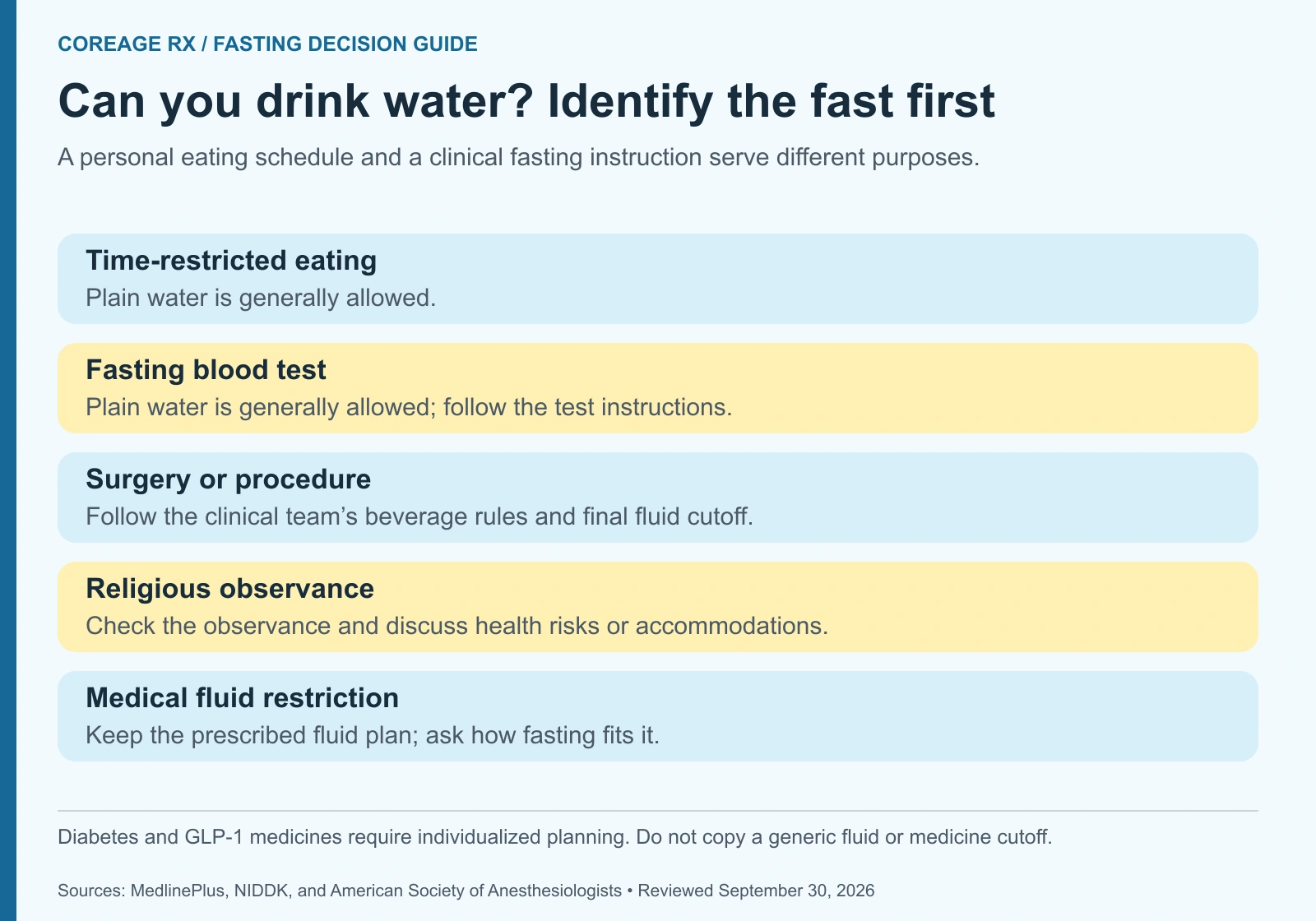
A quick guide to the different situations
| Reason for fasting | How to think about water |
|---|---|
| Intermittent fasting or time-restricted eating | Water is generally part of the fasting period; the plan usually restricts energy intake rather than fluid |
| A blood test requiring fasting | Plain water is generally allowed, but follow the test’s specific instructions |
| Surgery, anesthesia, or a procedure | Follow the clinical team’s fluid cutoff and beverage instructions |
| A religious fast | The observance may restrict water; discuss medical risks and possible accommodations separately |
| A prescribed fluid restriction | Keep the clinician’s fluid plan even if another fasting plan encourages water |
NIDDK describes time-restricted eating plans that permit water and other calorie-free drinks. MedlinePlus gives a narrower instruction for fasting blood work: plain water, with other drinks avoided unless the testing team says otherwise. NIDDK intermittent-fasting discussion, MedlinePlus blood-test guidance
Does water break an intermittent fast?
For a typical time-restricted eating plan aimed at managing food intake, plain water does not add calories and is generally allowed during the fasting window. NIDDK’s discussion of these plans includes water during periods without food. Time-restricted eating guidance
That answer does not establish a special metabolic benefit from a particular fasting duration, nor does it mean longer fasting is necessarily better. The practical question is whether the eating pattern is suitable, sustainable, and able to provide adequate nutrition during the eating period.
Claims that a sip of water “switches off fat burning” or that avoiding water guarantees a better weight-loss result are not a useful basis for care. Water intake and energy intake are separate decisions, and unnecessary fluid restriction can introduce risks.
What about sparkling water, coffee, or tea?
For a personal time-restricted eating routine, unsweetened calorie-free beverages may be allowed by the chosen plan. NIDDK describes water, black coffee, and tea as examples. Added milk, cream, sugar, juice, or other ingredients change what the drink contains. NIDDK fasting discussion
Plain sparkling water is different from a sweetened flavored drink, but carbonation may be uncomfortable for some people with belching or reflux. If symptoms are troublesome, the beverage’s effect on comfort matters as well as its calorie content.
Do not carry this flexible beverage list over to a medical fast. MedlinePlus advises plain water for fasting blood tests and specifically distinguishes it from coffee, juice, soda, and flavored drinks. Blood-test beverage instructions
Can you drink water before a fasting blood test?
Usually, yes. MedlinePlus explains that fasting for a blood test generally means avoiding food and drinks other than plain water for the specified period. Many tests use an eight-to-twelve-hour fasting period, but the clinician or laboratory should provide the actual instructions. MedlinePlus fasting guidance
Not every blood test requires fasting. Do not fast automatically because someone else did for a similar appointment. The ordered test, its purpose, and the laboratory’s instructions determine what preparation is needed.
Ask about prescription medicines, over-the-counter products, vitamins, and supplements. Do not stop a medicine unless the healthcare team directs you to. If you ate or drank something outside the instructions, tell the laboratory rather than concealing it; the team can decide whether to proceed or reschedule.
Why is plain water different from a zero-calorie drink for a test?
A fasting laboratory instruction is about obtaining an interpretable test under specified conditions, not simply staying below a calorie threshold. Coffee, flavored beverages, supplements, and other ingredients may not fit those conditions even when marketed as low-calorie or sugar-free.
Use the actual instruction: if it says plain water, choose plain water. An electrolyte mix, flavored packet, lemon addition, or “fasting supplement” should not be assumed acceptable just because the front label says zero sugar.
If you have a prescribed reason to use a particular drink or need treatment for low blood sugar, address that medical need and tell the testing team. Preserving the appointment’s fasting status should never take priority over treating a significant symptom.

What changes before surgery or anesthesia?
The procedure team determines when food and liquids must stop. These instructions depend on the procedure, anesthesia plan, medical history, and medicines. Do not substitute a general internet fasting schedule for the instructions you were given.
This is particularly relevant for medicines such as semaglutide and tirzepatide because they delay stomach emptying. The American Society of Anesthesiologists advises telling the team about GLP-1 medication use. Most patients can continue their medicine under the current multi-society approach, while some need additional precautions based on their risk. ASA patient guidance
For selected patients, the team may recommend avoiding solid food for 24 hours before a procedure, with specific clear-liquid and final fasting instructions. That is an individualized procedural plan, not a general recommendation to fast for 24 hours whenever taking a GLP-1 medicine.
See our semaglutide and anesthesia guide for the medication questions to raise. Do not independently stop, delay, or restart treatment based on an older blanket rule.
Is fasting safe if you have diabetes?
It requires a plan tailored to the type of diabetes, medicines, glucose pattern, and purpose of fasting. NIDDK identifies low blood sugar, high blood sugar, and dehydration among the concerns. Insulin and other glucose-lowering medicines can require special planning; cutting back too much can also be dangerous. NIDDK fasting-with-diabetes guidance
Ask the treating team whether the proposed fast is appropriate, how to monitor glucose, which symptoms or readings mean it should end, and how medicines should be handled. Do not improvise insulin changes from a general article.
Water can help with fluid intake, but it does not prevent or treat every problem associated with fasting. Follow your prescribed low-glucose treatment plan if symptoms or readings indicate hypoglycemia; maintaining a fasting window is not the priority in that situation.
What if you take semaglutide or tirzepatide?
Lower appetite can make a shorter eating window feel easy, but it can also make it harder to fit in enough food. Review the combined effect of the medicine, meal timing, nausea, and any other glucose-lowering treatment with the clinician.
A fasting routine should not become a way to avoid food because eating feels uncomfortable. Persistent vomiting, inability to drink normally, marked weakness, or substantially reduced urination needs medical review. The current labels include warnings about dehydration-related kidney injury and other significant adverse effects. Wegovy label, Mounjaro label
Our semaglutide protein guide and tirzepatide protein guide discuss maintaining nutrition and function when appetite changes. If considering CoreAge Rx semaglutide care or tirzepatide care, bring your eating pattern into the assessment rather than treating it as a separate issue.
How much water should you drink?
There is no single large-volume target that fits every person and every fast. Needs vary with activity, climate, food intake, illness, and medical conditions. People with kidney disease, heart conditions, or a prescribed fluid restriction should ask how the fasting plan fits their existing instructions.
Avoid forcing excessive water in an attempt to suppress hunger or accelerate weight loss. Also avoid deliberately withholding fluid merely to make a fast feel more intensive. NIDDK notes that dehydration risk increases when a fast restricts fluids and can be affected by diabetes and medicines that increase urination. Fasting and dehydration
If thirst, dizziness, weakness, vomiting, or a change in urination is significant or worsening, review the situation medically rather than judging it only as a test of willpower.

Does dry fasting produce better weight loss?
This guide does not establish an advantage from avoiding water. A short-term change on the scale during fluid restriction is not proof of greater fat loss. Fluid restriction can increase dehydration risk, particularly with illness, heat, diabetes, or certain medicines. NIDDK fasting safety discussion
For a religious observance, discuss medical concerns and possible accommodations with the relevant clinician and faith adviser. The medical question and the observance’s rules are related but distinct; a general weight-management article cannot decide either person’s individual plan.
What should you clarify before starting a fast?
Write down the purpose, start and end times, permitted drinks, medicine instructions, and the reason you would stop or seek help. For a medical test or procedure, obtain those directions from the team performing it. For weight management, discuss suitability and nutrition with the treating clinician when health conditions or medicines are involved.
The most useful rule is to match the drink to the specific fast. Plain water is commonly permitted, but the exact medical instructions and your health needs take priority over a generic fasting label.
Clarify gum rules for the purpose of your fast
- Gum, intermittent fasting, blood tests and procedures — Compare an actual gum label with medical preparation instructions and personal fasting definitions.
Educational information for adults; individual treatment decisions require a qualified clinician. Sources reviewed September 30, 2026. Original AI-generated article images depict fictional people and objects, not patient outcomes. Other editorial images are illustrative. Graphics summarize the cited sources.