There is no reliable universal timeline for copper-peptide skin-care results. The answer depends on what you are measuring, which formula you use, the condition of your skin, and what else changes in the routine. Early softness after a cream and a later change in fine-line appearance should be tracked as different outcomes.
For a provider-guided product such as Bounce Back, agree on a review point and a specific goal before starting. That gives you a useful way to judge the experience without assuming a marketing timeline is a promise or increasing the amount when progress seems slow.
Decide what counts as a result
Start with a sentence you could explain without skin-care jargon. Examples include less tightness after cleansing, a smoother-feeling cheek, or a modest change in a defined area of fine lines. Avoid goals such as reversing aging, which combine many different biological and visual changes into one impossible measure.
Separate comfort from appearance. Your face can feel better without a visible change in photographs, and a photograph can look smoother while the skin remains irritated. Both observations matter, but they should not be merged into a single impression that the product is working.
Also distinguish a change you can observe from one that requires research equipment. You cannot measure collagen production from a mirror. A cream’s feel, color, or tingling sensation does not provide that information either.
Why an immediate effect may come from the cream base
Moisturizing changes the surface of skin. Fine dryness lines can look less pronounced, rough areas can feel smoother, and the finish can reflect light differently. Those effects may occur before any slower biological process could reasonably be evaluated.
The AAD’s moisturizer guide explains how product texture and ingredients influence hydration and comfort. In a multi-ingredient cream, an early improvement cannot automatically be assigned to the copper peptide rather than the base or another ingredient.
This does not make early comfort unimportant. It simply changes the claim you can make. “My skin feels less dry after application” is an honest result. “The peptide rebuilt my skin overnight” goes beyond what that observation can establish.

What study timelines can tell you
The GHK-Cu research review discusses small cosmetic studies conducted over weeks, including reports using twelve-week periods. A review of topical GHK delivery highlights the limited clinical evidence and formulation challenges. Those findings do not define one countdown for every commercial preparation.
A study’s final assessment date is not necessarily the first day anyone improved. Nor does it mean that everyone should see the same result by that date. Participants, products, concentrations, and outcome measures differ, and some studies cannot isolate the active’s contribution from the vehicle.
Use a study timeline to understand how the researchers evaluated their particular question. Do not turn it into a personal dosing schedule or a reason to continue through substantial irritation.
Build a baseline before changing the routine
Take a few unfiltered photographs in consistent light if your goal involves appearance. Use the same distance and facial expression. Note whether the skin is freshly cleansed or covered with moisturizer, because the finish can affect how the surface looks.
Write down the main concern and its location. If you are tracking comfort, record when tightness or stinging usually occurs. Include your current cleanser, moisturizer, sunscreen, and active treatments so that later changes are easier to interpret.
This baseline need not be elaborate. A dated photograph and several factual notes are enough. The purpose is to avoid relying on memory, which can be influenced by expectations, changing light, and the desire to justify a purchase.
Use a simple progress record
| What to record | Example | What it helps you discuss |
|---|---|---|
| Prescribed use followed | Applications completed as instructed | Whether exposure matched the plan |
| Comfort | Tightness after cleansing is less frequent | A meaningful daily-life outcome |
| Appearance | Comparable photographs of the same cheek | Whether a visible change is consistent |
| Other changes | New sunscreen or a drier climate | Possible contributors besides the cream |
| Problems | Burning that lasts or a new rash | Whether the regimen needs review |
Keep the record brief enough that you will use it. A weekly summary can be more useful than repeated close inspection each day. If a concerning reaction occurs, contact the clinician promptly rather than waiting to complete the record.
Avoid changing the test while you assess it
Adding a retinoid, vitamin C serum, exfoliant, and peptide cream at the same time makes it difficult to understand the outcome. The combined routine may help, irritate, or do both. It rarely tells you which individual product deserves credit.
When practical, make planned changes with the prescriber and keep the rest of the routine consistent. If other treatment is medically necessary, follow that plan and acknowledge that the assessment concerns the regimen as a whole.
Do not increase the amount or frequency to make up for a missed application. Use the product’s directions and ask the pharmacist about uncertainty. More exposure is not a valid shortcut to a result, especially when irritation can make the routine impossible to maintain.
Understand common reasons the timeline seems confusing
Lighting and camera processing can change how fine lines appear. Weather, indoor humidity, cleansing habits, and moisturizer use can alter surface dryness. Sun exposure can affect pigment and redness. Facial expression changes the visibility of dynamic lines.
These factors do not mean every improvement is imaginary. They mean a single photograph or one unusually good skin day is weak evidence. Repeated, comparable observations are more informative than the most flattering image in the camera roll.
Also consider whether the original goal was realistic for a topical product. Marked skin laxity, deep scars, and an unexplained rash raise different questions from ordinary dryness or fine texture. If the goal and product are mismatched, waiting longer may not solve the problem.
Set a review decision, not just a review date
At the outset, ask what should happen at follow-up. Will you compare photographs, discuss comfort, assess a particular area, or review whether another diagnosis is likely? Knowing the decision makes the appointment more useful than simply asking whether enough weeks have passed.
Three questions can organize the review: did the intended concern improve, was use tolerable and manageable, and is the benefit meaningful enough to continue? The answers may differ. A product can feel pleasant but not address the reason it was prescribed.
If improvement is unclear, ask whether to continue, change the formulation, simplify the routine, or consider another approach. Do not assume that an uncertain result means you should automatically buy another active to layer on top.
Apply the timeline discussion to Bounce Back
Bounce Back lists copper peptide 2%. The public page’s general expectations should be discussed alongside your individual instructions and the limited ability to predict finished-formula outcomes from ingredient studies.
Confirm the exact peptide identity if you are comparing it with GHK-Cu research. Ask how the formulation was chosen for your goal and which outcome the provider expects to monitor. The Bounce Back ingredients guide outlines the product information and the gaps worth clarifying.
If firmness is the goal, read the firmness evidence guide. If you are mainly trying to make a reactive face comfortable, the sensitive-skin discussion may be more relevant than an anti-aging timeline.
Do not wait out a significant reaction
Persistent burning, spreading rash, swelling, blistering, or increasing pain requires advice. Stop a newly introduced product that causes a marked reaction. Severe facial swelling or difficulty breathing needs urgent medical care.
An adjustment period is not a universal explanation for worsening symptoms. A copper-peptide product does not need to peel or sting to be useful, and discomfort does not prove tissue remodeling. The appropriate response is to reassess the product and the skin condition.
Keep long-term care grounded
Consistent sun protection and a tolerated basic routine remain useful whether or not you choose copper peptides. The AAD sunscreen guidance recommends broad-spectrum SPF 30 or higher, supported by clothing and shade. Peptide products do not replace sunscreen.
The most honest timeline is a monitored period with a defined goal and room to change course. Track what you can actually observe, acknowledge other changes, and review the result with the provider. That produces a clearer answer than treating an advertised week number as a guarantee.
Explore Bounce Back™
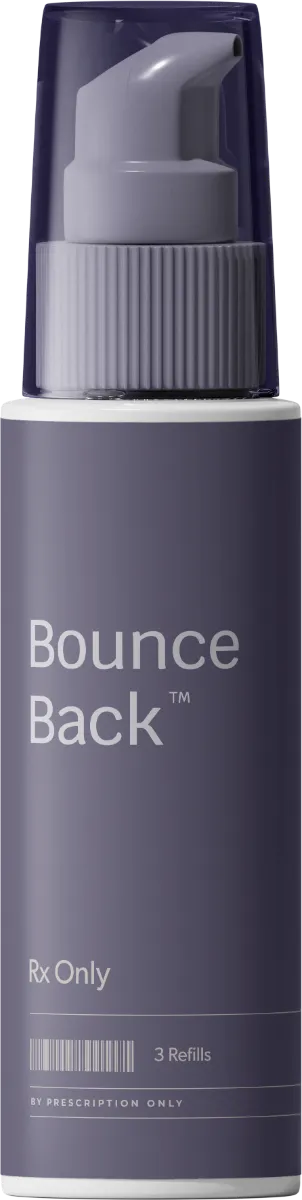
Bounce Back lists copper peptide 2%. Confirm the precise peptide identity, complete formulation, and directions with the dispensing pharmacy and prescribing provider. Review the current Bounce Back™ page and bring your existing skin-care products to the provider discussion.
Related reading
- Copper Peptides for Skin: Evidence, Uses, and Routine Basics
- Can Copper Peptide Cream Improve Skin Firmness?
- Bounce Back Copper Peptide Cream: A Product and Evidence Guide
- Copper Peptides vs. Retinoids: Different Roles in Skin Care
- Tretinoin for fine lines: evidence and daily care
Educational information; your prescription and clinician’s instructions guide individual care. Product details and linked sources checked September 15, 2026. Ingredient research does not establish identical results for a finished compounded formula. Photographs are illustrative and do not show treatment outcomes.