
Bifidobacterium infantis on an ingredient list does not identify every detail needed to match a clinical study. A specific strain, dose, formulation, and population can change the result. The word “infantis” also does not make a supplement an appropriate product for infants.
Why strain 35624 appears in research
A 2006 trial in women with irritable bowel syndrome evaluated the strain then named B. infantis 35624 in several amounts. One studied dose improved several symptom measures compared with placebo, while the other tested doses did not show the same result; formulation issues complicated the highest-dose group.
The lesson is more specific than “B. infantis helps every gut problem.” It shows why the exact preparation and amount need to be connected to the outcome. A species-only label cannot establish that the same strain or formulation is present.
A different population produced a different result
A later trial in people with abdominal discomfort and bloating who were not being treated as IBS patients did not find a significant improvement in average symptom severity compared with placebo. It did find a difference in bloating-free days.
These results can coexist. Different participants and endpoints can produce different findings even when the strain name is familiar. Do not select only the favorable result and apply it to every reader.

What to look for on a bottle
| Detail | What it helps establish |
|---|---|
| Complete identity | Whether the strain can be matched to research |
| Quantity per serving | Whether the amount is comparable |
| Final dosage form | Whether the preparation matches the evidence |
| Storage and expiration | How the product should be handled |
| Intended outcome | Whether the study asked your question |
The NIH probiotic guidance explains why these distinctions apply broadly. More organisms or a higher CFU count does not automatically mean better results.
The GLP-1 Support label question
CoreAge Rx lists Bifidobacterium infantis among three bacterial species. The reviewed public material does not identify strain 35624 or another strain designation, and does not disclose viable CFUs. It should not therefore be described as the exact probiotic tested in the trials above.
The finished formula also includes Akkermansia, Clostridium butyricum, inulin, and resistant starch. Evidence for one isolated preparation cannot establish the effect of that combination.
Keep symptoms in clinical context
Persistent bloating, pain, or a new bowel change may need assessment rather than a succession of supplements. Discuss bacterial products first if you are seriously ill or immunocompromised. An adult wellness product should not be given to an infant because of an ingredient’s species name.
Use the strain-and-CFU label guide and probiotic bloating article to prepare a focused discussion about the actual product and the symptom you want to address.
The strain is part of the identity being studied
When a clinical paper names strain 35624, those characters are not decorative detail. They help identify the preparation connected to the findings. A product listing only Bifidobacterium infantis does not provide the same level of identification.
This matters because consumers often encounter an ingredient name first and then search for any positive study containing that name. The search can provide useful background, but the result still needs to be matched to the bottle. A shared species-level name is not enough to establish the same intervention.
The NIH probiotic guidance explains why specificity is central to evaluating probiotics. Ask for the full identity rather than assuming the most familiar strain is present whenever the broader name appears.

Read the IBS trial without turning one dose result into a universal rule
The 2006 trial in women with IBS evaluated the strain then named B. infantis 35624 at several amounts. One studied amount improved several symptom measures compared with placebo, while the other tested amounts did not produce the same pattern. Formulation issues complicated interpretation of the highest-dose group.
That result is useful because it challenges a simple “more is better” assumption. It also shows why preparation can matter alongside the organism name. The result should not be simplified into a recommendation to choose the largest CFU count available.
The participants had a defined clinical context. The original study therefore provides evidence about that intervention and population, not about every adult with occasional gas or every product sold under a gut-health label.
Compare the later study’s population and endpoints
The later trial involved people with abdominal discomfort and bloating who were not being treated as IBS patients. It did not find a significant improvement in average symptom severity compared with placebo, while it did find a difference in bloating-free days.
Average severity and number of symptom-free days are different endpoints. A summary should not replace one with the other. Someone may care about both, but the study’s findings should be reported according to what was actually measured.
The later trial also illustrates why a familiar strain name does not guarantee the same result across populations. Differences in participants, baseline symptoms, preparation, and outcome measures can affect interpretation. Keep the comparison specific rather than selecting only the most favorable finding.
Use a symptom question that can be answered
“Improve gut health” is broad. “Reduce the frequency of bothersome bloating” is more specific. “Treat diagnosed IBS under a clinician’s plan” is more specific still and involves a clinical context. The clearer the question, the easier it is to assess whether a study is relevant.
Describe the symptom, its duration, severity, and effect on daily life. Note whether bowel habits changed and whether a medicine or diet change occurred at the same time. Persistent symptoms may need assessment rather than a sequence of supplement trials.
A clear symptom record does not diagnose IBS or identify a bacterial imbalance. It helps a clinician decide what further questions or evaluation are appropriate. Do not use an ingredient article to self-diagnose the condition studied in a trial.
Compare the evidence with GLP-1 Support
CoreAge Rx’s reviewed page lists Bifidobacterium infantis among three bacterial species. It does not identify strain 35624, provide a viable count, or establish that the dosage form matches the cited trials. The finished formula also includes other microbial ingredients and fibers.
These differences mean the research cannot be presented as direct proof for this particular product. The studies are relevant background on specific preparations, while the product comparison remains incomplete without more information.
Ask for the current full label, strain identities, relevant amounts, and preparation details. Keep the front image’s 36 mg statement in its proper role as a blend weight. It does not identify how many organisms of this species are supplied.
Do not let the species name imply an age indication
The word “infantis” in a scientific name does not make an adult supplement suitable for infants. Age suitability, dosing, formulation, and clinical circumstances are separate matters. A product should not be given to a child based on the apparent meaning of a species name.
For adults, suitability also depends on health context. Serious illness, weakened immune function, and other higher-risk circumstances should be reviewed with the care team before using bacterial supplements. General reassurance about probiotic categories is not enough for every situation.
The NCCIH safety overview provides useful context, while the actual decision should concern the exact product and person. A clearer label supports that discussion but does not replace it.
A practical evidence checklist
| Check | What to look for |
|---|---|
| Identity | The exact strain or preparation in the research |
| Amount | A disclosed, comparable quantity |
| Formulation | Whether the product form matches relevant study details |
| Population | Whether the participants resemble the clinical question |
| Endpoint | Symptom severity, symptom-free days, or another specific measure |
| Product match | Whether the finished blend was actually studied |
Use the checklist to preserve nuance. A result can be promising for a defined question while leaving a different question unanswered. That is more informative than labeling the entire species universally effective or ineffective.
Frequently asked questions
Does a species-only label prove strain 35624 is included?
No. Ask for the strain designation. The reviewed GLP-1 Support material does not identify 35624, so it should not be described as the exact preparation used in those trials.
Does a higher CFU count guarantee better IBS results?
No. The evidence depends on the strain, amount, preparation, and population. The dose findings and formulation issues in the cited trial make a simple higher-is-better rule particularly inappropriate.
Can I use it to diagnose why I am bloated?
No. A response or lack of response to a supplement does not establish a diagnosis. Persistent or concerning symptoms deserve appropriate clinical assessment and a clear description of the whole routine.
Is an adult supplement suitable for a baby because of the name?
No. A scientific species name is not an age indication. Infant and child supplement decisions require appropriate pediatric guidance and a product suitable for that specific use.
Explore GLP-1 Support™
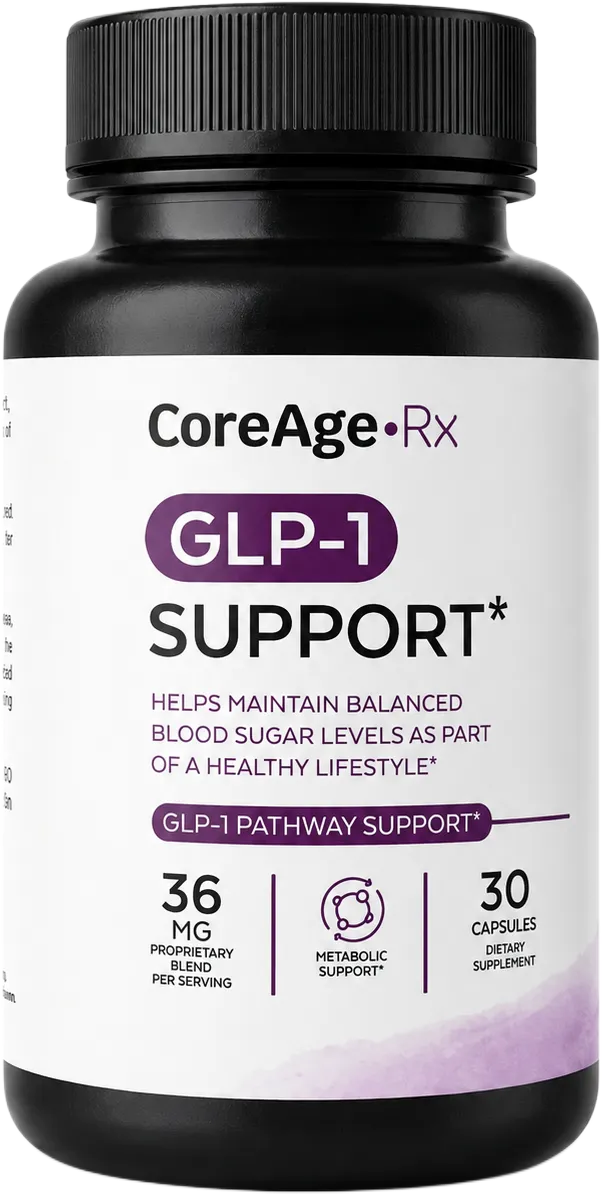
CoreAge Rx GLP-1 Support combines the three listed bacterial species with chicory inulin and potato resistant starch. It is a dietary supplement; it does not replace a GLP-1 prescription. See the current GLP-1 Support™ page and check the bottle you receive before use.
Related reading
- GLP-1 Support Supplements: Ingredients, Evidence, and Expectations
- How to Read a Probiotic Label: Strains, CFUs, and Storage
- Probiotics and Bloating: What to Watch After Starting
- How fiber supplements differ from probiotic products
Educational information, not individualized medical advice. Product information and linked research checked September 15, 2026. Ingredient research does not establish identical effects for a finished supplement.