Nello Supercalm is a dietary supplement, not an approved weight-loss treatment. Its current manufacturer label includes L-theanine, ashwagandha, magnesium, and vitamin D. Some ingredients have been studied for particular stress or sleep outcomes, but ingredient research does not automatically establish that this finished drink mix causes weight loss or treats a cortisol disorder.
This review uses the actual manufacturer formula and primary research rather than a personal product test. It explains the named scoop-based label checked October 1, 2026, what small ingredient trials can tell you, and the questions to ask before adding a supplement to an existing medicine or wellness routine.
What is in the reviewed Supercalm formula?
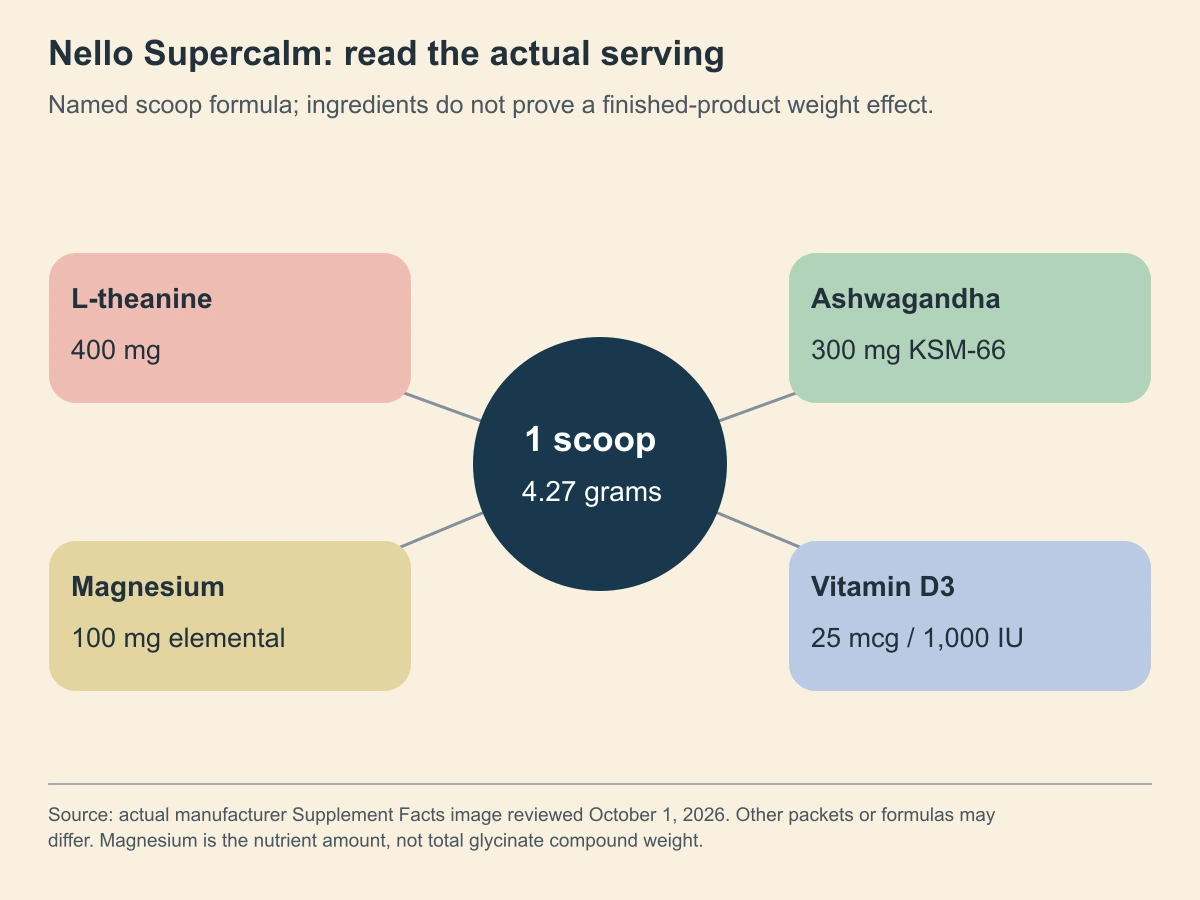
The manufacturer label reviewed here defines one serving as one 4.27-gram scoop, with 30 servings per container. It lists five calories and two grams of carbohydrate per serving. These are the values on that named label; a packet, another flavor, or a future formula should be checked separately. Nello manufacturer product and label
| Ingredient on the reviewed label | Amount per scoop | Important reading detail |
|---|---|---|
| L-theanine | 400 mg | Ingredient amount, not proof of a finished-product outcome |
| KSM-66 ashwagandha root extract | 300 mg | Named extract; not identical to every ashwagandha preparation |
| Magnesium, as magnesium glycinate | 100 mg | Elemental magnesium listed in Supplement Facts |
| Vitamin D3 | 25 mcg, or 1,000 IU | Count it with vitamin D from other products |
The label also lists citric acid, natural flavors, organic beetroot extract, and rebaudioside A stevia. Check the container you would actually purchase for ingredients relevant to allergies or tolerability.
One easy mistake is calling the magnesium line “100 mg of magnesium glycinate.” Supplement Facts identifies the amount of the nutrient magnesium, with the source form in parentheses. The full compound weight and the elemental nutrient amount are different. NIH magnesium fact sheet
Does the formula have a weight-loss indication?
No approved weight-loss indication is established by the supplement label. A marketing statement about supporting stress or healthy cortisol does not make the product a prescription obesity treatment or a treatment for an endocrine disease.
The NIH Office of Dietary Supplements explains that supplements have different levels of evidence and that FDA does not determine their effectiveness before they are marketed. A quality claim or third-party testing statement should also be separated from proof of clinical benefit. NIH supplement guidance
Stress, sleep, appetite, and weight can interact in a person’s life. That relationship does not prove a drink will reduce body fat. If better sleep makes a routine easier to maintain, that is a different outcome from a direct weight-loss effect measured in a clinical trial.
Our sleep and weight-management guide and food-noise article discuss these concerns without assuming they share one supplement solution. Persistent symptoms deserve assessment rather than a self-diagnosed “cortisol belly.”
What has L-theanine research actually shown?
One original randomized, double-blind, placebo-controlled crossover study involved 30 healthy adults taking 200 mg of L-theanine daily during a four-week intervention. Researchers assessed stress-related symptoms and cognitive measures. Some sleep subscales improved compared with placebo, while many measured changes were not significantly different between conditions. Original L-theanine study
The authors described important limitations, including the small population and real-world factors that were not fully controlled. They also noted that only a portion of the evaluated measures showed significant differences versus placebo. The findings should not be summarized as proof that all anxiety, sleep, or cognitive outcomes improved.
The study did not test the finished Supercalm mixture or establish an adult weight-loss effect. Its ingredient amount differed from the reviewed scoop’s 400 mg. A different amount is not automatically a better effect, and a trial does not justify increasing or adjusting a supplement yourself.
Read the outcome as specifically as the study measured it: a small short-term ingredient trial with some findings. It is not evidence that a commercially available mixture will produce the same result for every person.
What about ashwagandha and stress?
NCCIH says some ashwagandha preparations may help stress and insomnia, while evidence for anxiety is unclear. Preparations vary, and many studies are relatively small. Evidence for one extract and regimen should not be assigned to every product containing the plant. NCCIH ashwagandha overview
There is also a small original trial relevant to weight questions. It enrolled 52 chronically stressed adults with BMI in the overweight-to-obesity range, used a named ashwagandha root extract for eight weeks, and compared it with placebo. Stress and food-craving measures were primary outcomes, with body weight and BMI assessed as secondary outcomes. Original ashwagandha trial
The study reported favorable changes, but its short duration, small single-center sample, and selected population limit what can be concluded. The extract supplier provided the ingredient. It was not a trial of Nello Supercalm.
The research regimen used 300 mg twice daily, which differs from the reviewed product’s 300 mg per scoop. That comparison explains a study limitation; it is not advice to take two scoops or recreate the trial. The mixture also contains other ingredients, so simply matching an extract amount would not make the formulations equivalent.
Does that mean there is no evidence at all?
The better distinction is between preliminary ingredient evidence and established finished-product outcomes. It would be inaccurate to say no human ingredient studies exist. It would also be inaccurate to turn those studies into a guaranteed product benefit.
Ask three separate questions: Was the actual mixture tested? Were the people in the study similar to the intended user? Was the outcome the one you care about? Stress questionnaires, a sleep subscale, appetite reports, and sustained fat loss answer different questions.
This review has not verified a finished-Supercalm clinical trial establishing sustained weight loss. It also has not personally tested taste, mixing performance, or subjective effects. Customer reviews can describe experiences, but they cannot isolate the product from other changes or supply the controls of a clinical trial.
If a claim uses “clinically studied,” look for the exact study and formulation. The phrase may refer to one ingredient rather than the whole container. A before-and-after story cannot settle that distinction.
What roles do magnesium and vitamin D play?
Magnesium and vitamin D are nutrients with established physiological roles. Correcting a documented deficiency is a different question from promising that a person with adequate intake will lose weight or sleep better after adding them.
The reviewed scoop’s nutrient amounts should be counted alongside food, multivitamins, separate supplements, and fortified drinks. Taking several products can create a larger total than any individual label suggests. NIH supplement guidance
Magnesium supplements can interact with medicines, including certain antibiotics and oral bisphosphonates. Kidney function and other health conditions can change the risk of excess intake. The specific product form does not remove the need for review. NIH magnesium interactions
Vitamin D’s presence is not proof of a cortisol or weight-loss effect. Ask whether testing or supplementation is relevant to your own history rather than using a social-media symptom list to diagnose deficiency. NIH vitamin D fact sheet
What safety questions matter most?
Ashwagandha deserves particular attention. NCCIH describes gastrointestinal effects and drowsiness, reports of rare liver injury, and uncertainty about long-term safety. Short-term use studied for up to about three months should not be presented as proof of indefinite safety. Ashwagandha safety information
NCCIH advises avoiding ashwagandha during pregnancy and says it should not be used while breastfeeding. It is not recommended for some people with thyroid or autoimmune disorders or around surgery, and interactions may occur with several medicine categories. A generic manufacturer suggestion to “ask your doctor” should not be used to imply these cautions are unimportant.
Tell a clinician or pharmacist about medicines for sleep, anxiety, thyroid disease, blood pressure, diabetes, immune conditions, and other supplements. The mixture should be reviewed as a whole. Do not stop a prescription in order to replace it with a supplement.
If symptoms suggest a serious reaction, seek medical care. Persistent unusual illness, yellowing of the skin or eyes, or a concerning new symptom should not be treated as a normal “detox” phase. Report the actual product and when it was started.
Is a cortisol-support claim a hormone diagnosis?
No. A commercial phrase about healthy cortisol does not tell you whether cortisol is high, why it might be abnormal, or whether an endocrine disorder is present. Feeling stressed, sleeping poorly, or carrying abdominal fat is not a complete diagnostic evaluation.
Consider the symptoms individually. Disrupted sleep, menopausal hot flashes, medication effects, and changes in eating can each call for different care. Our HRT and sleep guide discusses symptom treatment in the menopause context; it does not establish that a supplement replaces HRT or that everyone needs hormone treatment.
If symptoms are persistent or interfere with daily function, discuss them with a qualified clinician. A useful question is “What should we evaluate?” rather than “Which powder will lower this hormone?” The answer may involve more than a supplement purchase.

Can you take it with a GLP-1 medicine?
There is no blanket yes-or-no answer for the mixture and every patient’s medicines. Review the exact formula, current gastrointestinal symptoms, other supplements, and health conditions with the prescribing team. A product being sold without a prescription does not establish that combinations are suitable.
If you already have nausea, diarrhea, or poor intake, adding several new ingredients can make it harder to identify what is causing symptoms. Our supplements while taking GLP-1 medicines guide offers a framework for defining a product’s purpose before adding it.
CoreAge Rx’s Green Scene product page describes a different greens powder with its own ingredients. It is not an equivalent calming formula or a replacement for varied foods. Current Green Scene product identity Comparing categories helps prevent one supplement label from borrowing another product’s claims.
How should you assess whether a purchase is worthwhile?
Define the goal and the evidence you would need. If the goal is a convenient drink you enjoy, flavor and cost may matter. If the goal is treating persistent insomnia, anxiety, unexplained symptoms, or weight gain, clinical assessment and relevant outcome evidence matter more than testimonials.
Check the serving definition and total cost, including any subscription terms. Do not assume a scoop and a packet contain identical amounts. Keep the actual label available for an interaction review.
Our sustainable habits guide and realistic goal-setting article can help define useful outcomes beyond a supplement promise. The most defensible review conclusion is specific: Supercalm contains studied ingredients, but their evidence and safety limits do not establish a universal finished-product weight-loss result.
Educational information for adults; individual treatment decisions require a qualified clinician. Sources reviewed October 1, 2026. Original AI-generated article images depict fictional people and objects, not patient outcomes. Other editorial images are illustrative. Graphics summarize the cited sources.