
There is no well-established universal timetable for the benefits advertised for NAD+ injections. A change in a blood metabolite, an immediate sensation during administration, and a sustained improvement in daily function occur on different timescales and answer different questions.
That does not make progress impossible to discuss. It means the review should begin with a defined goal, an understandable baseline, and a clinician-agreed decision point. This guide explains how to evaluate a possible response without treating a marketing calendar as a biological deadline.
Start with the result you actually want
“More energy” can mean staying awake, completing an afternoon of work, tolerating exercise, or recovering from ordinary tasks. “Healthy aging” is broader still. A goal becomes more useful when it names an activity or symptom that can be observed repeatedly.
For example, a person might want to complete a familiar shopping trip without an unusual need to rest. Another might be concerned about concentration during a normal work block. These are different outcomes and may require different medical assessments.
The fatigue article explains how to describe the concern before assigning it to NAD+ metabolism. A treatment timeline cannot replace investigating the reason for the symptom.
Separate exposure, tolerance, and benefit
Exposure concerns what happens to a preparation after it is administered. Tolerance concerns unwanted experiences and whether administration is manageable. Benefit concerns an improvement that matters to the person’s health or function.
A treatment can produce a measurable exposure without a proven clinical benefit. A person can tolerate it without responding. A transient sensation can occur without indicating either a useful response or a harmless process.
These distinctions prevent a common mistake: using the speed of an immediate sensation as evidence that a longer-term goal has been achieved. The review should name which kind of change is being discussed.

Read research timeframes in their original context
The 2019 IV metabolome pilot collected information over hours around an infusion. Its observation period was appropriate for studying metabolites, not for establishing a months-long improvement in fatigue or healthy aging.
The 2026 injection preprint provides preliminary short-term safety and tolerance information, with small NAD+ comparison groups. Its duration and endpoints do not establish that every person should feel a particular benefit within the first week.
A research follow-up period describes when investigators measured something. It is not automatically the time required for a patient to respond. Our NAD+ guide explains the evidence more broadly.
Establish a baseline before several things change
A baseline is a short record of the current situation. It should include the main symptom or activity, its usual variation, and relevant circumstances. Choose observations that are easy to repeat rather than a large collection of scores.
You might record sleep, the workload of a familiar activity, the effort required, and whether symptoms worsen afterward. Note medication changes, illnesses, unusual stress, or a change in food intake. These details provide context when reviewing later observations.
If treatment has already started, be honest about the missing baseline. Reconstructing a perfectly precise “before” score from memory can create false confidence in the size of a change.
Use a small and repeatable record
| Review area | Example of a useful observation |
|---|---|
| Main goal | Ability to complete the same ordinary task |
| Symptom burden | Frequency, intensity, and effect on the day |
| Tolerance | Local symptoms, generalized symptoms, and duration |
| Context | Sleep, activity, illness, or medication changes |
| Practical burden | Administration, appointments, cost, and storage |
The record should support a conversation, not dominate the person’s day. If it becomes difficult to maintain, simplify it. Consistent useful observations are preferable to a detailed form completed only once.

Compare similar circumstances
An unusually easy week can make energy feel better without identifying a treatment effect. A more demanding week can mask a real improvement. Compare observations under reasonably similar workloads and routines when possible.
This does not require freezing normal life. It means noting changes rather than ignoring them. If you began sleeping longer, reduced alcohol, recovered from an illness, and started NAD+ in the same week, all of those belong in the interpretation.
The same principle applies to an exercise measure. A new route, cooler weather, or a different training load can change performance. Repeated practical observations help keep these influences visible.
Understand expectation and ordinary variation
People often seek a new treatment when symptoms are particularly troublesome. Symptoms may subsequently move closer to their usual level even without a treatment effect. Expectations and the additional attention that comes with care can also influence reported experience.
These influences do not mean that a person’s improvement is imaginary. They explain why controlled research is needed to establish causation and why individual tracking should remain modest about what it can prove. The NIH clinical-trial overview describes the role of comparison groups and planned outcomes.
A helpful statement is “I have been able to do this more comfortably during the last several weeks,” accompanied by context. It is more defensible than concluding that a particular cellular process has been restored.
Laboratory changes need their own interpretation
If the clinician orders a test, ask what decision it will support. A change in a biomarker may help describe exposure or a safety parameter without establishing improved daily function. Different sample types and testing conditions may also affect interpretation.
The NAD+ testing guide explains why a blood result is not a complete measurement of NAD+ throughout the body. Avoid turning a higher number into the only goal of treatment.
Similarly, a normal result does not mean that persistent symptoms should be ignored. Clinical review should connect the laboratory finding to the person’s history and current condition.
Agree on a decision point before an open-ended course
A follow-up appointment is most useful when it has a purpose. Discuss what would support continuing, what would prompt further investigation, and what would lead to changing or stopping the plan. The timing should reflect the individual prescription and clinical situation.
An automatic refill is an administrative event, not proof that the treatment is helping. The review should consider the intended outcome, unwanted effects, adherence to the actual directions, and practical burden together.
If the goal remains vague, refine it before extending the course. A broad promise of future benefit can otherwise make it difficult to recognize when the evidence for continuing is insufficient.
Do not increase the amount to meet a deadline
A lack of a noticeable effect by an advertised date is not a reason to add injections, change the route, or increase the amount independently. More exposure can change risk without producing the desired benefit.
Likewise, an early favorable day does not establish that a larger amount would work even better. The prescription-label article explains why each administration must remain tied to the actual concentration, route, and directions.
If the plan is not producing a useful result, describe that honestly. The appropriate response may be reassessment of the symptom rather than escalation of the same intervention.
Unwanted effects should not wait for the scheduled review
Record new symptoms, but do not use a tracking plan as a reason to delay care. Severe chest pain, breathing difficulty, fainting, or a significant generalized reaction needs prompt medical attention. Persistent or worsening less severe symptoms should be discussed with the treating team before changing the regimen.
The side-effects guide explains why local discomfort, systemic symptoms, and product-quality concerns need different consideration. A severe reaction should never be interpreted as evidence that treatment is “working.”
A practical review should also consider whether the original goal is still the right one. A newly identified sleep disorder, medication effect, or nutritional problem can change the plan. Updating the goal in response to new information is a sign of useful follow-up, rather than a failure to complete a predetermined course.
Summarize progress in a way that supports a decision
Before follow-up, prepare a short summary: the original goal, what changed, what stayed the same, unwanted effects, and other changes in care or routine. Include difficulties with administration or cost if they affect the plan.
A useful review can acknowledge uncertainty while still making a clear decision. NAD+ research continues to evolve, and an individual’s treatment should be evaluated against the actual clinical goal rather than a promised day-by-day transformation.
Explore NAD+ Injectable
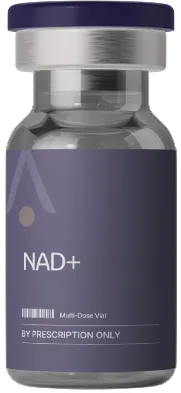
CoreAge Rx lists NAD+ Injectable as a provider-guided compounded treatment. The dispensed label must identify the concentration, route, and individual directions; clinical findings from another NAD+ preparation do not establish the same result for this product. Review the current NAD+ Injectable page and bring a complete medication and supplement list to the provider discussion.
Related reading
- NAD+ Injections: Evidence, Uses, and Questions to Ask
- NAD+ Injections for Energy and Fatigue: What to Evaluate
- CoreAge Rx NAD+ Injectable: A Product and Evidence Guide
- NAD+ nasal spray versus injections
Educational information; your prescription and clinician’s instructions guide individual care. Product details and linked sources checked September 15, 2026. Studies of another preparation or delivery route do not establish identical results for a finished compounded product. Photographs are illustrative and do not show treatment outcomes.