
Endometriosis can involve bloating, pain, bowel symptoms, and changes in daily routines that make weight concerns harder to interpret. A larger-feeling abdomen does not necessarily mean an increase in body fat, and a weight change should not automatically be attributed to endometriosis. The useful next step is to describe the pattern and discuss possible causes with your clinician.
This article uses “endo” to mean endometriosis. If you mean an endocrinology condition or another diagnosis, the explanation may be different. It also separates treatment for endometriosis from prescription weight management: a GLP-1 medicine is not an established treatment for endometriosis simply because it can affect appetite or weight.
Why bloating and weight gain can feel similar
Bloating is a sensation of fullness or swelling in the abdomen. It can change how clothing fits over a day or around symptoms. Weight gain describes a change on a scale, and even that measurement does not identify whether the change is fat, fluid, bowel contents, or something else.
ACOG includes bloating and constipation among possible endometriosis symptoms. Its guidance also describes pelvic pain and other symptoms that can overlap with different conditions. Those symptoms deserve assessment; they cannot determine the diagnosis or the amount of body fat a person has. ACOG endometriosis information.
Notice the timing rather than trying to diagnose the cause from appearance. Does abdominal discomfort fluctuate during the day? Does it track with bowel movements, meals, menstrual symptoms, or a medicine change? Is the scale trend also changing over weeks? You do not need to weigh yourself repeatedly to provide useful information.
| What you notice | What it can help describe | What it cannot establish by itself |
|---|---|---|
| Abdomen feels fuller by evening | Timing of bloating or discomfort | A gain in body fat that day |
| Constipation and a tighter waistband | Bowel symptoms needing discussion | Endometriosis as the only cause |
| Weight trend rises over several weeks | A longer-term change to evaluate | The exact tissue or reason for the change |
| Pain limits normal activities | A change in function and routine | A particular calorie need or treatment |
| Symptoms start after a new medicine | A useful clinical timeline | Proof that the medicine caused everything |
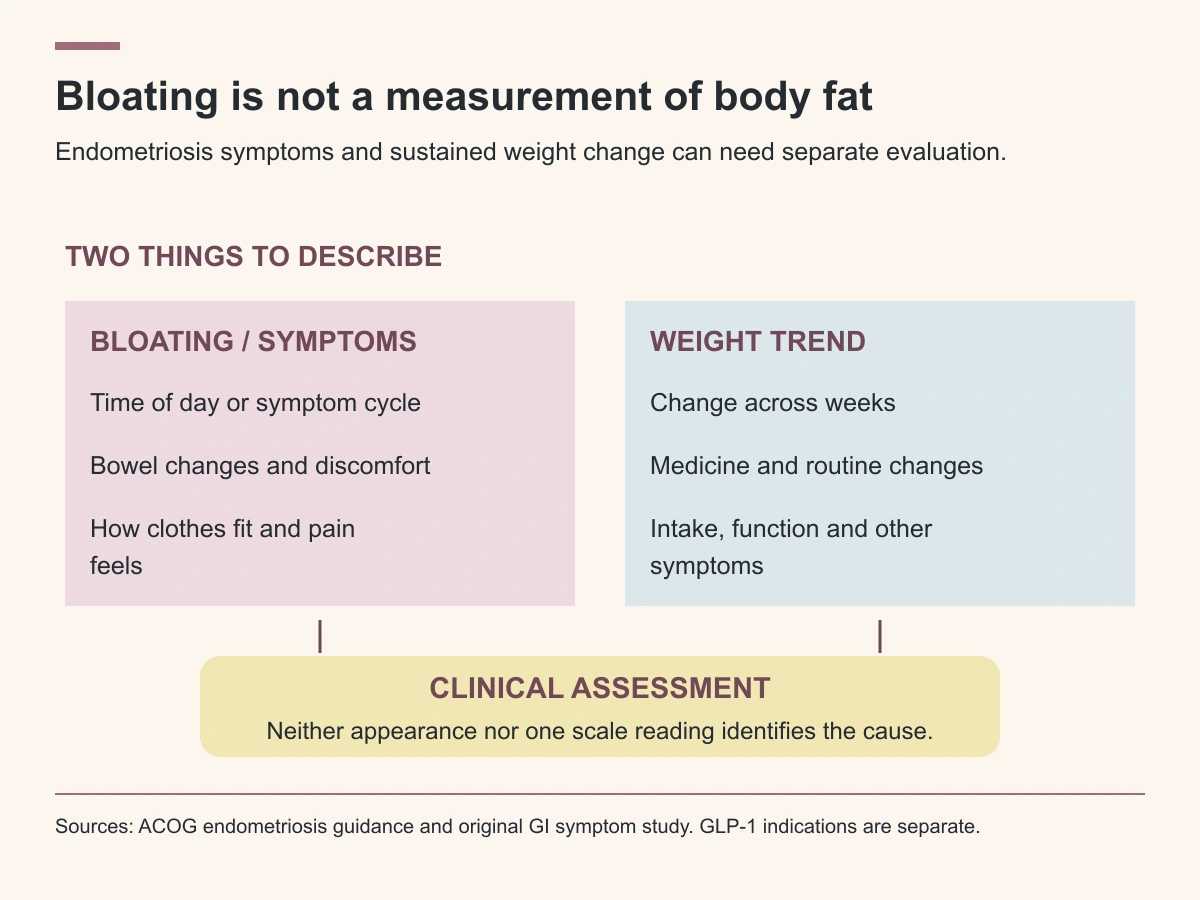
What research says about digestive symptoms
An original clinical study compared 109 people with endometriosis with 65 controls. The endometriosis group reported more problems including abdominal pain, constipation, bloating, and flatulence. The study examined gastrointestinal symptoms; it was not a trial proving that endometriosis causes fat gain or that a weight-loss drug treats it. Original gastrointestinal symptom study.
That distinction matters when interpreting a headline about “endo belly.” A finding about symptom scores cannot tell an individual why their abdomen is larger or whether they should pursue weight loss. A diagnosis can coexist with unrelated digestive problems, medication effects, and other causes of a new symptom.
Bring persistent or changing symptoms to the clinician who manages your care. If the response so far has focused only on the scale, explain the pain, bowel changes, and interference with everyday life. If the response has focused only on endometriosis, mention any sustained weight change that also needs evaluation.
Daily routines may change when pain is difficult
Pain can make shopping, cooking, sleep, work, and movement harder to manage. These are practical circumstances to discuss, rather than evidence that someone has failed to follow a plan. Your meal pattern might change because preparing food is difficult, or you might miss meals and become very hungry later.
Start with one solvable problem. If cooking is the obstacle, keep a few convenient meal components available. If long gaps without food are the issue, consider whether a predictable meal or snack would help. If activity triggers symptoms, ask for a plan that reflects your condition and current function.
Our balanced meals guide offers flexible ideas, and the food noise and hunger guide can help describe appetite concerns. Neither replaces endometriosis care. A dietitian can help adapt food choices when symptoms or restrictions make it difficult to eat adequately.
Avoid making an extensive elimination diet the default response to unexplained bloating. Removing several food groups at once can make it harder to identify what changed and harder to meet nutrition needs. Keep a clear record of any restrictions you already follow so your team can assess the full picture.
Could treatment be part of the weight change?
The exact medicine, dose, start date, and symptoms matter. “Hormone treatment” covers different products and purposes. Ask the prescriber about the known effects of your specific treatment rather than assuming that every hormonal medicine has the same relationship with weight, appetite, or fluid changes.
ACOG describes hormonal options that can help control endometriosis-related symptoms and explains that treatment decisions depend on factors including symptoms and pregnancy goals. It does not provide a universal prediction of how much weight an individual will gain. ACOG treatment overview.
Before your appointment, list prescribed medicines, pain medicines, supplements, and any treatment obtained through another service. Include the dates of changes and what you noticed afterward. Ask what needs monitoring and whether another cause should be assessed.
Do not abruptly stop a prescribed treatment because of a scale change or a social-media story. Discuss the tradeoff between symptom control, side effects, and alternative options. If your symptoms are affecting food intake or daily function, that is important even if your weight has not changed.

You do not always need surgery before discussing care
ACOG’s February 2026 guidance emphasizes clinical evaluation, including symptoms, history, examination, and appropriate imaging, to help reduce delays in diagnosis and management. Surgical confirmation is not a universal prerequisite to beginning an individualized care discussion. ACOG 2026 clinical guidance announcement.
This does not mean a symptom checklist can diagnose endometriosis at home. It means persistent symptoms deserve a clinical conversation rather than being dismissed until a particular procedure occurs. Your clinician can explain the role and limits of examination, imaging, medication, and surgery in your situation.
Ask what the working diagnosis is, which other explanations are being considered, and how the plan will be reviewed. Knowing the next step can be more useful than trying to force every symptom into one label.
Do semaglutide or tirzepatide treat endometriosis?
The current U.S. labels for Wegovy and Zepbound do not list endometriosis as an indication. Their approved uses and patient requirements are separate from treatment for pelvic pain or endometriosis lesions. Evidence about another condition, such as endometrial cancer, cannot be treated as endometriosis evidence. Wegovy prescribing information, Zepbound prescribing information.
A person with endometriosis may also have a separate reason to discuss weight-management treatment. That assessment should address their health history, other medicines, reproductive plans, current intake, and digestive symptoms. It is not an automatic recommendation based on the endometriosis diagnosis.
CoreAge Rx’s semaglutide service information and tirzepatide service information describe separate prescription care options. Our semaglutide questions guide and tirzepatide questions guide explain common treatment questions. Service availability does not establish that a particular product treats endometriosis or that a compounded product is equivalent to an approved brand.
Why existing digestive symptoms matter before a GLP-1 medicine
Wegovy’s label includes digestive adverse reactions and warnings about severe gastrointestinal problems. It is not recommended in severe gastroparesis. Vomiting or diarrhea can also lead to dehydration and kidney injury. Those warnings are reasons to describe baseline symptoms clearly before starting treatment. Wegovy safety information.
Record what is already happening so that a new symptom is easier to interpret. Tell the prescriber about constipation, recurring abdominal pain, vomiting, previous digestive diagnoses, and difficulty eating. A follow-up plan should explain whom to contact and what requires urgent assessment.
Persistent severe abdominal pain, repeated vomiting, inability to keep fluids down, fainting, or another major change deserves prompt medical assessment. Do not decide that severe new pain is simply your usual endometriosis or an expected appetite effect.
Pregnancy planning should also be discussed before prescription weight management. Use the instructions for the exact medicine and indication with your care team; do not borrow a stopping schedule from a different product.

Make the appointment more useful
A concise record can help you communicate without tracking every detail of your life. Include the main symptom, when it began, how often it occurs, what makes daily activities harder, and any treatment changes. Add the weight trend only if it is relevant and useful for you.
Consider asking:
- Are we assessing bloating, a sustained weight change, or both?
- Which symptoms fit the current diagnosis, and which need another explanation?
- Could a medicine change be relevant, and what should we monitor?
- Would a dietitian or another specialist help with the current problem?
- What is the plan if the initial approach does not improve symptoms?
- Which symptoms should lead to urgent care rather than a routine follow-up?
If you are also approaching menopause, the HRT and body composition guide addresses a different set of questions. Menopause care and endometriosis treatment need to be coordinated rather than assumed to be interchangeable.
Frequently asked questions
Does endometriosis always cause weight gain?
No universal weight-gain prediction follows from the diagnosis. Bloating can change abdominal size without proving fat gain, and sustained weight changes can have several explanations. Describe both the symptoms and the trend to your clinician.
Will losing weight cure endometriosis?
Weight loss should not be presented as a cure or a condition for receiving symptom care. Discuss weight-related health goals separately from assessment and treatment of pain, lesions, and reproductive concerns.
Is “endo belly” the same as belly fat?
The phrase is commonly used for bloating or abdominal swelling associated with symptoms. It is not a measurement of body fat or a diagnosis. A new or worsening abdominal change should be evaluated in context.
Should I start a GLP-1 medicine for bloating?
Bloating alone does not establish an approved indication or an appropriate treatment choice. These medicines can themselves cause digestive problems. Start with an assessment of the symptom and discuss prescription weight management only when there is a separate clinical reason.
Can I discuss treatment before having a laparoscopy?
Yes. A clinical consultation can begin with your symptoms and history, and your clinician can explain which tests or treatments are appropriate. Current ACOG guidance supports reducing delays through individualized clinical evaluation.
What should I track if weighing myself is stressful?
Focus on symptoms, bowel changes, ability to eat, sleep, and everyday function. Tell your clinician that frequent weighing is unhelpful for you so that necessary clinical measurements and follow-up can be handled thoughtfully.
Educational information for adults; individual treatment decisions require a qualified clinician. Sources reviewed October 2, 2026. Original AI-generated article images depict fictional people and objects, not patient outcomes. Other editorial images are illustrative. Graphics summarize the cited sources.