
Rybelsus can be associated with weight loss in people treated for type 2 diabetes, but it is not an FDA-approved weight-management medicine. It contains oral semaglutide. Its approved indications, tablet strengths, administration rules, and trial results should be distinguished from Wegovy tablets and semaglutide injections.
That distinction matters when reading a headline about “oral semaglutide weight loss.” A result from an obesity trial of a different product or dose is not automatically a Rybelsus result. The useful starting point is the actual Rybelsus evidence and the reason a clinician is considering it.
What is Rybelsus approved to treat?
The current U.S. label describes Rybelsus as an adjunct to diet and exercise to improve glucose control in adults with type 2 diabetes. It also includes reducing major cardiovascular events in adults with type 2 diabetes who are at high risk for those events. See the current Rybelsus and Ozempic tablet prescribing information.
Weight change can be a relevant outcome during diabetes treatment without being the product’s approved indication. A clinician may sometimes consider an off-label use, but that does not create an approval for weight management or guarantee insurance coverage.
For someone primarily seeking obesity treatment, the consultation should explain why a particular product fits the clinical situation. Our semaglutide questions guide distinguishes the ingredient from its different brands and formulations.
How much weight loss did one Rybelsus-dose trial show?
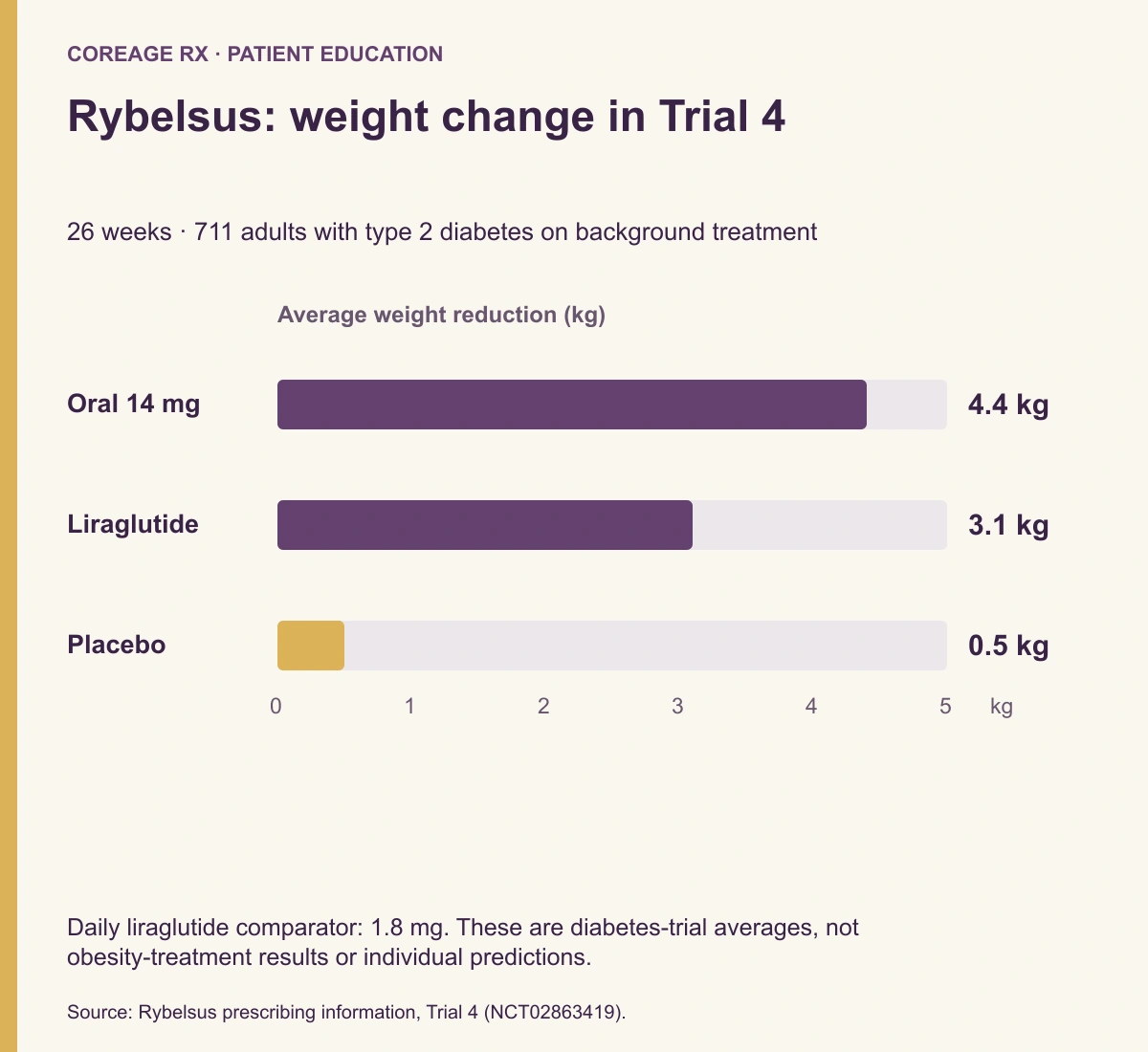
The current label describes a 26-week trial involving 711 adults with type 2 diabetes who were taking metformin alone or with an SGLT2 inhibitor. Participants were assigned to oral semaglutide 14 mg daily, injected liraglutide 1.8 mg daily, or placebo.
The average weight changes at week 26 were:
| Treatment in this trial | Participants assigned | Average weight change |
|---|---|---|
| Oral semaglutide 14 mg daily | 285 | −4.4 kg |
| Liraglutide 1.8 mg daily | 284 | −3.1 kg |
| Placebo | 142 | −0.5 kg |
Source: Rybelsus label, Trial 4. Mean starting weights were approximately 93 to 96 kg across the groups. These are group averages from a diabetes trial, not a prediction of what a particular person will lose.
The comparison also used liraglutide’s 1.8 mg diabetes dose. It should not be described as a direct comparison against every liraglutide regimen or against a different medicine’s obesity-treatment dose.
Why the study context changes the meaning
The trial population had type 2 diabetes and was already receiving specified background treatment. The participants’ diagnosis, starting weight, other medicines, follow-up period, and assigned treatment all affect how the results should be interpreted.
A person without diabetes, taking a different dose, or unable to tolerate the treatment is not identical to that study population. The average also includes variation: it does not mean every participant lost exactly 4.4 kg or that weight changed at a constant rate each month.
Ask which study a claim comes from before accepting a percentage or timetable. An advertisement that combines a Rybelsus product name with a Wegovy obesity-trial result can make the expected outcome look more certain than the evidence supports.
Rybelsus, Ozempic tablets, and Wegovy tablets differ
The current Rybelsus label lists 3 mg, 7 mg, and 14 mg tablets. The same prescribing-information document describes Ozempic tablets at 1.5 mg, 4 mg, and 9 mg, with specific switching instructions. It explicitly says the products are not substitutable milligram for milligram.
Wegovy tablets have separate labeling and adult weight-management indications. They should not be treated as another name for a Rybelsus tablet or as a reason to take extra Rybelsus. See the Wegovy prescribing information.
Our oral semaglutide versus injections guide explains why route, formulation, and administration matter. The semaglutide dosage chart provides an overview of the different labeled products without creating a universal conversion.
Does the starting dose tell you whether treatment will work?
Rybelsus begins with 3 mg daily for 30 days under the current label. That introductory dose is not effective for glucose control. The labeled plan then increases to 7 mg; after the initial period at that dose, a clinician may consider 14 mg if additional glucose control is needed.
The gradual introduction is intended to reduce gastrointestinal adverse reactions. It is not a competition to reach the highest amount as quickly as possible. Early appetite changes, or their absence, do not establish that the patient should skip the starting phase or change the prescription.
Discuss response using the goals actually being treated. For diabetes, glucose information and relevant health outcomes matter alongside weight, tolerability, and the ability to take the medicine consistently. There is no separate approved Rybelsus weight-loss dose to select from an internet chart.

Why the morning routine matters
Rybelsus has specific administration instructions. The label directs taking one tablet whole in the morning on an empty stomach, with plain water up to four ounces, then waiting at least 30 minutes before food, other drinks, or other oral medicines.
Do not split, crush, chew, or dissolve the tablet. Do not take more than one tablet per day to reproduce another product’s strength. If a dose is missed, the label directs skipping it and taking the next dose the following day. Source: oral semaglutide administration instructions.
If this routine is difficult because of another medicine or daily schedule, ask the pharmacist and prescriber to help reconcile it. A treatment cannot be evaluated fairly if the prescribed administration instructions are repeatedly unclear or impractical. Changing the timing or combining tablets yourself is not a substitute for that review.
What should you expect after one, three, or six months?
The cited trial reports a 26-week average. It does not provide a personal one-month target or a formula for dividing the final result into equal monthly portions. The introductory phase and differences in response make that approach misleading.
At follow-up, discuss the time spent at the actual prescribed dose, consistency of use, glucose response, appetite, nutrition, side effects, and any missed or interrupted treatment. A single weigh-in cannot describe all of those factors.
If progress is disappointing, the clinician may need to review the treatment goal, diagnosis, other medicines, administration routine, or an alternative plan. Our Ozempic alternatives guide illustrates how the right comparison changes when the goal is diabetes treatment versus weight management.
What side effects can affect the experience?
Oral semaglutide can cause nausea, abdominal symptoms, diarrhea, vomiting, constipation, and other effects. Being a tablet does not remove the medicine’s systemic effects or important warnings. The semaglutide side-effects guide provides broader context.
Do not interpret persistent nausea or an inability to eat as proof of a better weight response. Report symptoms that interfere with fluids, food, daily function, or continued treatment. A clinician may need to reconsider the plan rather than simply encouraging the patient to tolerate more discomfort.
Our guide to the duration of GLP-1 nausea explains why a single episode and an entire escalation period are different questions. A duration estimate from a different product or study does not create a deadline by which every Rybelsus symptom should stop.
Which risks deserve a separate discussion?
The label contraindicates Rybelsus in people with a personal or family history of medullary thyroid carcinoma or MEN2 and in people with a prior serious hypersensitivity reaction to semaglutide or its ingredients. The thyroid warning is based on rodent findings; whether these tumors are caused in humans is unknown.
Other important concerns include pancreatitis, gallbladder disease, dehydration-related kidney injury, severe gastrointestinal problems, diabetic retinopathy, and low blood sugar when used with medicines such as insulin or sulfonylureas. Pregnancy plans and procedures involving anesthesia or deep sedation also require discussion. Source: current oral semaglutide label.
Severe or persistent abdominal pain, repeated vomiting with inability to drink, fainting, or serious allergic symptoms need prompt assessment. Do not delay care to see whether a weight-loss milestone is reached. Tell the treating team the exact medicine and formulation you use.

What does a useful progress record include?
Use the measures agreed with your clinician. For someone receiving diabetes treatment, glucose readings or laboratory results may be more clinically informative than a photograph. Weight, food intake, energy, symptoms, and practical difficulties can add context.
Record important changes in other medicines, illness, or activity. If photographs are used, keep the conditions consistent and avoid treating differences in lighting or clothing as a reliable measure of treatment effect.
Discuss the continuing plan early, including refills, cost, monitoring, and what happens if treatment is interrupted. The online prescription guide offers questions about access to follow-up and pharmacy support. A successful first fill is only the beginning of ongoing care.
Frequently asked questions
Is Rybelsus approved for weight loss in people without diabetes?
No. Its current U.S. indications concern adults with type 2 diabetes. An off-label prescription is a separate clinical decision and does not establish that the insurer will cover it.
Is 14 mg of Rybelsus stronger than a smaller semaglutide injection dose?
The milligram numbers cannot be compared that way. Formulation and absorption differ, and the products have specific instructions. Switching belongs with the prescriber and pharmacist.
Can I take extra tablets if weight loss slows?
No. Follow the prescription and the one-tablet-per-day instructions. Discuss a slower response with the clinician rather than increasing exposure on your own.
Where should I start if my main goal is weight management?
Ask which approved or otherwise clinically appropriate options fit your history and goals. If you explore CoreAge Rx’s semaglutide care information, confirm the exact preparation, indication, pharmacy, and follow-up plan. Evidence for a Rybelsus diabetes trial should not be presented as proof of identical results for a different preparation.
Educational information for adults; individual treatment decisions require a qualified clinician. Sources checked September 27, 2026. Original AI-generated article illustrations depict fictional people and objects, not patient outcomes. Other editorial images are illustrative. Graphics summarize the cited sources.