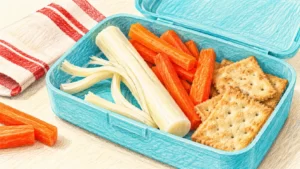
There is no single best fruit for every weight-loss plan, and no fruit guarantees fat loss. Bananas, pears, oranges, berries, and other fruits can fit into an eating pattern that meets your needs. Portions, the rest of the meal, preferences, and medical considerations are more useful than a ranking of “fat-burning” fruits.
This guide uses defined FDA raw-fruit references and answers common banana questions: whether two or three a day is too much, whether timing matters, and how chips, dried fruit, juice, or a smoothie change the discussion. The examples are nutrition references and meal ideas, not a prescribed daily fruit count.
What makes a fruit choice useful?
Consider a fruit you enjoy, can access, and can use in a meal or snack. Cost, season, storage, convenience, and tolerance matter. A fruit that is easy to eat consistently may fit your routine better than an expensive option promoted as uniquely effective for weight loss.
Ask what role the fruit plays. It might be part of breakfast, a snack alongside another food, or a component of lunch. Adding fruit does not automatically determine the day’s energy intake or make another meal nutritionally complete. Our balanced-meal guide explains how several components can fit together.
Medical needs can affect the choice. If you have diabetes, a nutrient restriction, a food allergy, or a medicine with a food interaction, use your individual care plan. A general healthy-food description does not settle every person’s situation.
Compare defined portions rather than fruit names alone
For another fruit example, see mandarin portions and nutrition with USDA reference weights and comparisons between whole fruit, juice and snack combinations.
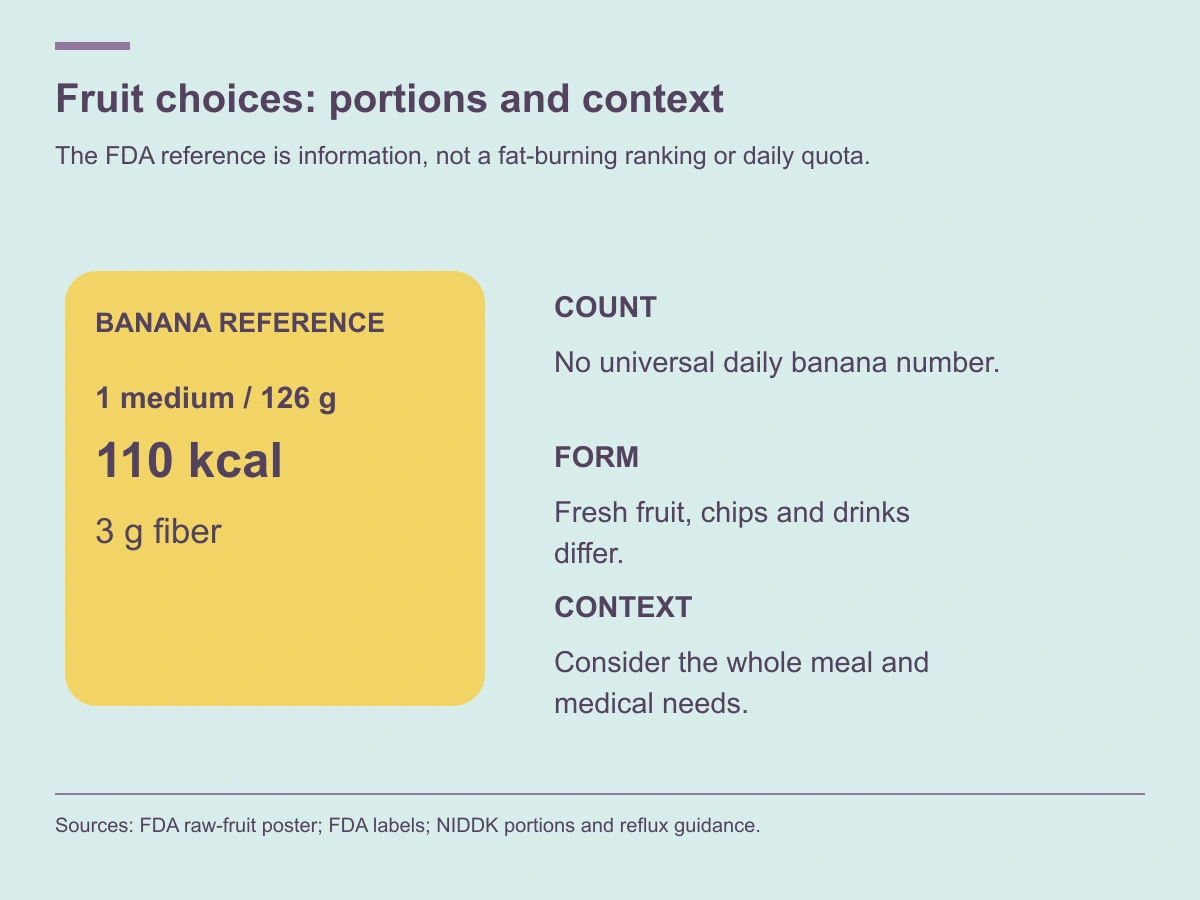
The FDA raw-fruit poster lists edible-weight reference portions. The table below retains those amounts. The rows are not equal weights, a ranking of health benefits, or the amounts everyone should eat.
| Fruit | FDA edible-portion reference | Calories | Dietary fiber |
|---|---|---|---|
| Banana | 1 medium, 126 g | 110 | 3 g |
| Apple | 1 large, 242 g | 130 | 5 g |
| Pear | 1 medium, 166 g | 100 | 6 g |
| Orange | 1 medium, 154 g | 80 | 3 g |
| Strawberries | 8 medium, 147 g | 50 | 2 g |
| Watermelon | 2 cups diced, 280 g | 80 | 1 g |
Source: FDA raw-fruit nutrition reference. Actual fruit size and variety can differ. “Medium” in one reference does not make every banana or pear in a grocery bag identical.
Use a table to understand an amount without deciding that the lowest-calorie row is automatically the best food. Fiber, variety, preferences, adequacy, and the complete meal matter. A reference serving and your chosen portion are different concepts. NIDDK portion guidance.
Are bananas bad for weight loss?
The named medium-banana reference provides carbohydrates, fiber, and other nutrients. That does not establish that bananas either prevent or cause weight loss. Review the amount and the overall eating pattern rather than assigning the fruit a permanent diet label.
A banana might accompany yogurt, be sliced onto oats, or be eaten alongside another food you enjoy. Those are different meals from a banana alone. Our yogurt guide and breakfast ideas explain related protein and meal questions without turning a banana into a complete breakfast for every person.
Claims that an underripe banana guarantees fullness or a ripe one automatically causes fat gain go beyond the reference table. Ripeness can affect the food experience, but it does not create an individual prescription or prove a predictable glucose (blood sugar) response.
Can I eat two or three bananas a day?
There is no universal daily banana number for weight loss. Consider fruit size, your needs, the rest of the food you eat, variety, and any medical restrictions. Two or three bananas should not be interpreted as either a required strategy or an automatic problem.
For arithmetic only, three bananas matching the FDA’s 126-gram reference would total 330 calories. That is a calculation from three defined portions, not a guarantee about three actual bananas or a recommended intake. It excludes yogurt, nut butter, milk, cereal, or anything eaten with them.
If several bananas replace most other foods because they are easy to tolerate, discuss nutritional adequacy. The concern is the narrow eating pattern, not proof that the fruit itself is harmful. If you enjoy bananas within varied meals, review the overall pattern before deciding that a particular count must be forbidden.
Is there a best time to eat a banana?
A clock time alone does not establish a weight-loss advantage. Choose a time that fits your routine, hunger, meals, and comfort. You do not need to eat a banana before a particular hour to prevent it from becoming body fat.
If eating close to bedtime worsens reflux, review that symptom pattern. NIDDK notes that finishing meals at least three hours before lying down may help people with nighttime reflux. NIDDK reflux guidance. This is a symptom-management discussion, not a banana-specific fat-loss finding.
If fruit is convenient around activity, consider it within your broader food and hydration plan. Do not assume the same banana amount fits every activity or person. The useful question is whether the routine helps you eat adequately and comfortably.
What about banana chips?
Read the actual package. Check whether oil, sugar, salt, or other ingredients are included, the serving amount, and the number of servings in the bag. Packaged chips should not receive the raw-banana reference simply because banana appears in the name. FDA label guidance.
Consider your portion and what the food accompanies. A snack bowl, a full package, and chips used as a small topping are different amounts. Do not assume a product labeled “natural” has a fixed calorie count or the composition of fresh fruit.
The plantain guide addresses a related distinction between raw references, cooked dishes, and chips. Plantain and banana are separate database foods; do not silently substitute them in an estimate.
Whole fruit, juice, dried fruit and smoothies
Our guide to watermelon portions and nighttime eating uses a defined USDA raw-fruit reference and discusses evening hunger, reflux and sleep without a special fat-burning hour or blanket fruit ban.
Our guide to fresh, dried and soaked fig questions compares exact USDA food records, explains count-versus-weight estimates and keeps soaking separate from unverified detox or weight-loss claims.
These forms need their own descriptions. Juice is not the same portion as the whole fruit used to make it. Dried fruit has a different weight and water content from fresh fruit. A smoothie includes whatever ingredients and quantities you add: fruit, milk, yogurt, nut butter, oats, or other foods.
Read labels for packaged products and describe the actual recipe for homemade drinks. Do not transfer the whole-fruit table to an unspecified glass or bowl. A beverage may be useful in a meal, but words such as “detox,” “cleanse,” or “fat-burning” do not establish a benefit.
You do not need to ban every form except fresh fruit. Consider the amount, ingredients, tolerance, and role in your pattern. Our PB&J guide explains why a fruit spread is also distinct from a raw-fruit serving.
How can fruit fit a more complete meal?
Try fruit with a protein-containing food or as one component of a larger meal when that suits your needs. Examples include berries with yogurt, an orange alongside breakfast, pear slices with an appropriate sandwich, or banana in oats with another food you enjoy.
These combinations are flexible ideas rather than promises of longer fullness or a guaranteed glucose pattern. The amount depends on appetite, medical needs, and the rest of the meal. If you remain hungry after a fruit-only snack, consider what else you need rather than assuming you selected the wrong fruit.
Our balanced-meal guide and breakfast article offer further examples. Variety can include foods you already like. You do not need a special imported fruit, a powder, or a branded smoothie to plan regular meals.
Grapefruit needs a medication check
Grapefruit and grapefruit juice can affect some medicines. The interaction depends on the drug and other factors; it does not apply identically to every medicine in a category. Ask the pharmacist about your exact prescription and read its directions. FDA grapefruit-interaction information.
Do not recommend grapefruit as a universal breakfast addition without that check. Our grapefruit guide keeps nutrition and medication questions separate. If your medicine requires avoiding grapefruit or related fruits, follow the instructions rather than trying a timing gap yourself.
What if you use semaglutide or tirzepatide?
Lower appetite does not remove the need for adequate food. Fruit may be convenient, but a diet consisting mainly of a few easy foods can need review. Describe what you can eat, what causes discomfort, and whether nausea or vomiting limits intake.
Our semaglutide nausea guide explains warning signs. Do not interpret poor intake as a successful outcome that should be intensified. Persistent vomiting, inability to keep fluids down, or significant weakness warrants clinical contact.
The CoreAge Rx semaglutide page and tirzepatide page describe care services for eligible patients. Neither makes a particular fruit a treatment requirement or establishes that medication is appropriate for everyone with a food question.
Practical planning without a fruit ranking
Keep options you enjoy available and choose forms that fit your routine. A portable whole fruit, frozen fruit used in a recipe, or a packaged option with a clear label can serve different needs. Account for storage, cost, and how much you realistically use.
If you prepare fruit with perishable foods such as yogurt or milk, follow appropriate cold-storage and food-handling guidance for the complete meal. USDA leftovers guidance. Do not judge the safety of a prepared bowl or drink solely by one ingredient.
Frequently asked questions
Which fruit burns the most fat?
The reviewed references establish no such ranking. Choose fruit within an adequate, sustainable eating pattern instead of seeking an ingredient that guarantees fat loss.
Is fruit sugar the same as added sugar on a label?
Labels distinguish total sugars and added sugars. Check the actual product, especially dried fruit, drinks, or spreads. Do not assume every fruit-containing product has the same label as fresh fruit.
Can I compensate for extra fruit by skipping dinner?
A food choice does not require a compensatory fast. Return to regular, nourishing meals and discuss recurrent eating distress or restriction with a qualified professional. The calorie-intake guide explains why adequacy matters alongside a weight goal.
Educational information for adults; individual treatment decisions require a qualified clinician. Sources reviewed October 3, 2026. Original AI-generated article images depict fictional people and objects, not patient outcomes. Other editorial images are illustrative. Graphics summarize the cited sources.